AI-aided analysis helped doctors find a treatment for a newborn with an ultra-rare disease
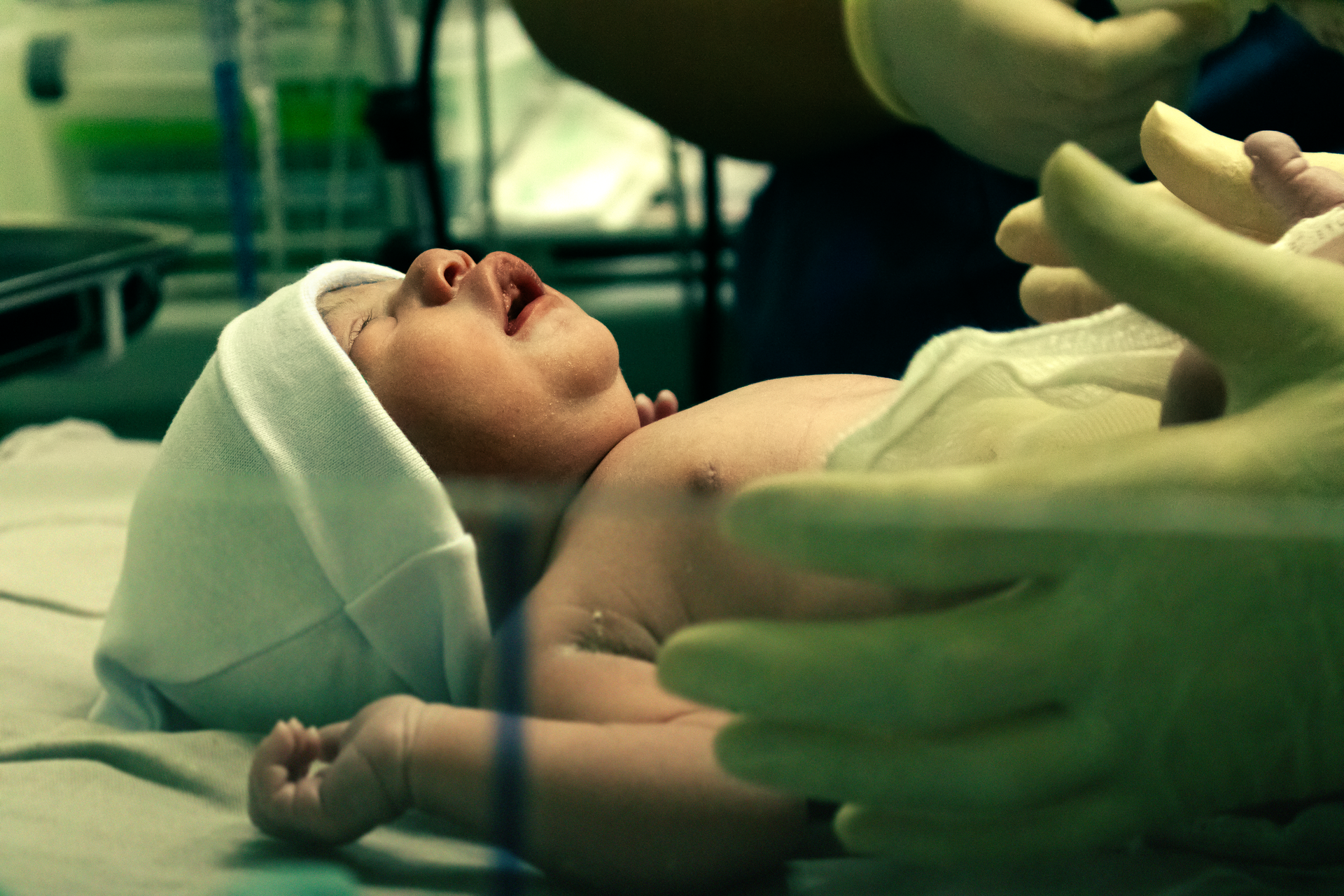
At STAT's Breakthrough Summit West in San Francisco, the family of baby Jorie Kraus told their story on stage. Hours after birth she was admitted to intensive care with low muscle tone, feeding difficulty and irregular breathing. Standard tests came back inconclusive, and rapid genome sequencing was requested.
The genetic test pointed to an ultra-rare mutation that had previously been reported in only a small number of patients globally. The clinical picture of the disease had been pieced together from such a narrow patient group that no standard treatment protocol existed. The clinical team faced a scenario in which the existing case series had to be analysed rapidly for the best individual patient fit.
This is the point at which the hospital's AI-assisted clinical decision system became involved. The system runs on a bioinformatics engine that screens whether the molecular pathology underlying a disease matches any known therapeutic target. It scanned candidate molecules and suggested an existing drug — approved for another disease, but with a molecular target that overlapped with the rare genetic condition.
The Kraus family told the audience about the anxious weeks they lived through; STAT's reporting on the case foregrounds family courage as much as scientific excitement. Mother Andrea Kraus told the audience: "When I first heard the term AI, I imagined some sort of automation; in fact our doctor was very careful, very meticulous, and did not simply apply the system's suggestion as-is." The proposed therapy was reviewed individually by an institutional ethics board and a panel of genetics specialists.
The treatment was administered slowly and in stages, per hospital protocol. After the first dose, several of the baby's laboratory values stabilised; over a two-week follow-up the time on respiratory support shortened. The doctors emphasised that the therapy does not cure the disease but reduces symptoms to a clinically manageable level.
The case provided a concrete example for the "AI in medicine" theme at STAT's annual Summit. The hospital's chief information officer, speaking at the event, said the system had been used on more than 4,000 rare-disease cases over the past year and had suggested a useful match in roughly 12 percent of them. That percentage also reflects the methodological limits of the field: the large majority of suggested medicines are still rejected by clinical ethics boards.
Experts emphasise that AI-supported treatment suggestions need a supervisory framework. The US Food and Drug Administration has updated procedures around individual "off-label" drug use in rare-disease cases twice in the past three years, but the supervisory mechanism for hospital systems that use AI is still under discussion. The American Academy of Pediatrics, in a position paper last year, said: "AI is valuable as a suggestion system, but the final decision always belongs to the physician and the family."
The Kraus family's appearance on stage was described as one of the most emotional moments of the event. Father Sam Kraus told the audience their daughter is approaching a goal of beginning to walk in the coming year; "we live a life in which we are learning a new balance every day, but we have Jorie's smile back," he said. His words were highlighted in STAT's account as the example that ties the role of AI in the clinic to the human dimension.
Rare diseases affect roughly 30 million people in the US and approximately 300 million globally. More than half of these conditions have no defined treatment protocol. AI-assisted systems are producing their most concrete results in the area of repositioning existing drugs rather than designing new ones — a fact that keeps the clinical ethics debate alive.
Jorie Kraus's story points to an important truth that a single case can carry: AI can give physicians a new tool in the clinical picture of rare diseases, but the tool's reliability gains meaning only when combined with physician experience, ethical oversight and family participation. A single line from the family on STAT's stage summed it up: "AI did not look after us; our doctor did. AI gave him a clue."