What was daily life like in the 14th century? A survival guide
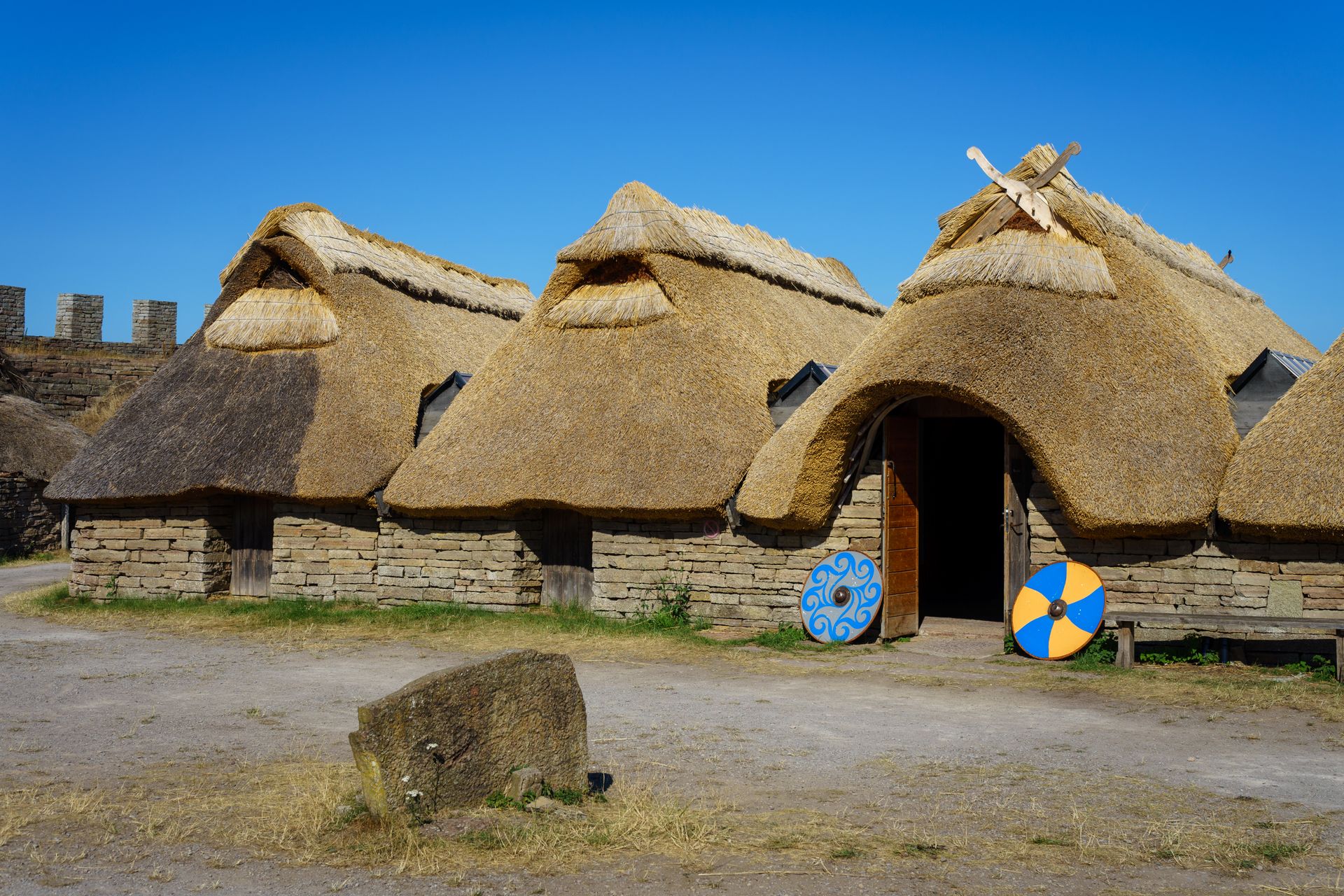
Picture waking up in the 1300s and the first difference from modern life is immediate: there is no bed frame with a mattress in the way most people imagine one today. For the majority of the population, sleeping arrangements meant a straw-filled pallet on the floor, often shared with several family members or, in poorer households, with the family's animals nearby for warmth. Waking itself was governed not by an alarm but by daylight and the ringing of church bells, which structured the rhythm of both religious observance and daily labor across medieval Europe.
Hygiene, by modern standards, was minimal and often unpleasant. Running water and indoor plumbing did not exist for ordinary households, and washing typically meant a basin of cold water rather than anything resembling a bath. Towns and villages relied on cesspits and open drains for waste disposal, and the resulting smells, by every historical account, were a constant, unremarkable feature of daily life that residents had simply adapted to, in ways that would overwhelm a modern visitor within minutes.
Breakfast, for those who had the luxury of a dedicated morning meal at all, commonly included bread and small ale, a low-alcohol brewed beverage consumed by people of all ages, including children, largely because the brewing process made it considerably safer to drink than untreated water from local wells and streams, which frequently carried disease. Diet varied enormously by social class and season: peasants relied heavily on bread, pottage, a thick vegetable and grain stew, and whatever produce and livestock the season allowed, while wealthier households had far more regular access to meat, spices, and imported goods.
For most of the population, the day's work began at first light and continued until dusk, structured entirely around agricultural labor for the roughly nine in ten people who lived and worked in the countryside. Sowing, harvesting, tending livestock, and the endless maintenance work of a subsistence farm dictated the rhythm of the year far more than any single day, with the intensity of labor rising and falling sharply with the agricultural calendar. In towns, a smaller share of the population worked within the guild system, apprenticing into specific trades that governed nearly every aspect of how goods were produced and sold.
Illness and injury carried a weight almost unimaginable today. Medical understanding was grounded in humoral theory, the idea that health depended on a balance of four bodily fluids, and treatments ranged from herbal remedies with genuine, if limited, efficacy to bloodletting and other interventions with little or no medical basis by modern standards. Life expectancy at birth was low by today's measures, heavily skewed by high rates of infant and child mortality, and childbirth carried substantial risk for both mother and child throughout the period.
The 14th century was also marked by catastrophic disease on a scale that reshaped European society: the Black Death, arriving in the late 1340s, killed an estimated third or more of Europe's population within a few devastating years, a demographic shock whose social and economic aftershocks, including labor shortages that shifted bargaining power toward surviving peasants and workers, reverberated for generations afterward. For anyone living through the century, the plague represented an ever-present possibility rather than a distant historical abstraction.
Personal safety involved hazards largely absent from modern daily life. Law enforcement, in the modern sense of an organized police force, did not exist; local justice relied on a patchwork of manorial courts, community obligation, and, in towns, a limited number of officials with modest actual capacity to prevent crime before it occurred. Fire posed a constant threat in towns built largely of timber and thatch, capable of destroying entire neighborhoods within hours, a risk taken seriously enough that many towns maintained specific regulations governing hearths and cooking fires.
Social position in the 14th century was largely fixed at birth and shaped nearly every aspect of daily experience, from diet and clothing to legal rights and mobility. The feudal structure organizing much of rural Europe bound peasants to land and obligations owed to a local lord, while a strict, legally enforced hierarchy governed what different social ranks were permitted to wear, eat, and own, reflecting a worldview in which social order was understood as a fixed and largely unquestioned feature of how society functioned.
Evenings, without artificial lighting beyond candles or firelight, tended to be short and centered on the household, involving shared meals, conversation, and storytelling, since sustained activity after dark was limited both by the expense of candles and by the practical dangers of moving around without reliable light. Bedtime came correspondingly early by modern standards, dictated less by choice than by the simple fact that there was little useful to do once darkness fell.
Reconstructing an ordinary day in the 1300s, drawn together from court records, household accounts, religious texts, and archaeological evidence, offers more than historical curiosity. It provides a measure of how recent, in the sweep of human history, many of the conveniences now taken for granted, clean water, reliable medicine, artificial light, and organized law enforcement, actually are, and how differently daily survival itself had to be approached in their absence.
Read next
The Indian maharaja who gave hundreds of Polish orphans a home during World War II
When hundreds of Polish children, survivors of Soviet labor camps, found themselves stranded with nowhere to go during World War II, the ruler of the small princely state of Nawanagar in India opened his realm to them, an act of refuge later commemorated across Poland.
On this day: Ulysses S. Grant dies while racing to finish his memoirs
On July 23, 1885, former US president and Civil War general Ulysses S. Grant died of throat cancer at Mount McGregor, New York, days after completing the memoirs he raced to finish in order to provide for his family after a financial collapse left him bankrupt.

What happened to the bones of millions of slaughtered American bison
The near-extinction of the bison sparked an unusual industry that left almost nothing of the animals behind. The history of this bone trade shows how ecological devastation was turned into an economic opportunity.

On this day: John Dillinger is killed by federal agents outside a Chicago theater
On 22 July 1934, John Dillinger, then the nation's most wanted fugitive, was shot dead by federal agents as he left Chicago's Biograph Theater. His death marked the end of the Depression era's most notorious bank robber and became one of the defining moments in shaping the modern FBI's public image.
Why did Henry VIII boil his cook alive? Grisly tales from Tudor England
Tudor England is remembered for its palaces and portraits, but its criminal codes could be startlingly brutal. Historians point to the case of a royal cook sentenced to death by boiling as one of the era's strangest, and most revealing, punishments.