The prisoner who escaped the Nazis armed with only a knife and fork
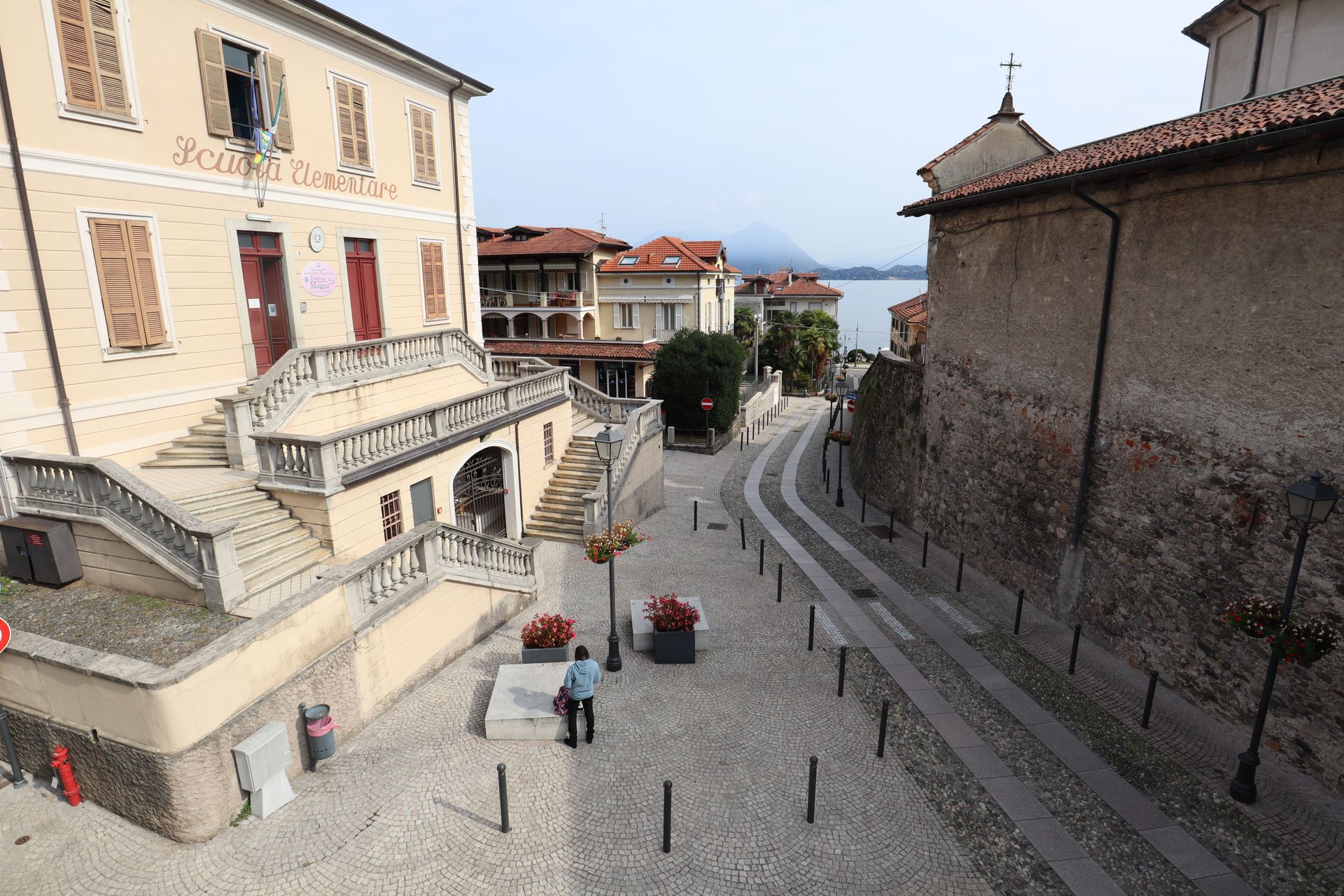
The armistice Italy signed with the Allies on 8 September 1943 created a sudden and chaotic situation in the prisoner-of-war camps scattered across Italian territory. With the collapse of the Mussolini regime and the disintegration of the Italian army, the Italian guards holding thousands of Allied prisoners were left to decide for themselves, camp by camp, whether to release their prisoners or let them escape.
In that chaos, thousands of prisoners fled the camps and scattered into Italy's mountainous countryside. They faced two options: try to reach the advancing Allied forces in the south, or make the far riskier journey north into territory still controlled by German forces occupying much of Italy at the time.
One of those escape stories belongs to Ralph, the great-uncle of historian Malcolm Gaskill. Over the course of several years, Gaskill travelled across Italy step by step, trying to reconstruct the route his relative followed during and after his captivity — a project blending family history with academic research methods.
A common element in many of these escape stories is that fleeing prisoners often set out with almost no equipment at all. Military supplies stayed behind in the camps; prisoners typically had little more than the clothes on their backs and everyday personal items — under those conditions, even an ordinary knife and fork could become a survival tool.
The survival of escaping prisoners depended heavily on the help of Italian civilians. Historians have documented that farming families in mountain villages, despite the danger, sheltered escaped prisoners, fed and clothed them, and sometimes guided them along safe routes through mountain passes — an informal support network later remembered as the "assisted escape line."
That assistance carried real risk: German forces could punish civilians who helped escaped prisoners severely. Despite that, many Italian families accepted the risk — a pattern historians regard as a striking example of how much individual conscience mattered amid the chaos of war.
Gaskill's research aims to surface not just the major strategic events but also the small, everyday moments of an escape: a piece of bread given by a peasant family, a barn where a prisoner spent the night, a makeshift shelter found along a mountain trail. Details of that kind rarely appear in official war histories.
Personal research of this kind has become an increasingly valuable resource for historians, since most escaped prisoners never wrote their experiences down. Family memories, letters, and oral accounts preserve details that official archives fail to capture.
Ralph's story offers an example of quiet courage far from the war's major battles — courage defined not by medals but by sheer determination to survive and by trusting the kindness of ordinary people who helped him in a foreign land.
Gaskill's work suggests that individual escape stories of this kind add an important layer to the broader narrative of the war: alongside fronts and command decisions, the everyday choices of ordinary people also shaped the fabric of history.
Read next

The Pompeii survivors: what happened to the people who escaped Mount Vesuvius
Pompeii usually conjures images of bodies frozen in ash, but thousands of the city's residents also managed to escape the catastrophe of 79 CE. In recent years, archaeologists have increasingly turned their attention to the survivors — where they went, what they lost, and how they rebuilt their lives. Here is the often-untold story of those who escaped Vesuvius's shadow.

On this day, 29 July 1958: the act that created NASA is signed into law
On 29 July 1958, US President Dwight D. Eisenhower signed the National Aeronautics and Space Act, paving the way for the creation of NASA, the country's civilian space agency. The act took shape rapidly in the aftermath of the Soviet Union's launch of Sputnik, and it cemented a decision to run America's space program under civilian rather than military control. It marked the founding of one of the most recognisable scientific institutions in human history.

Why the Washington Monument looks the way it does
For nearly a century, Americans argued over how to honor George Washington, and the monument they eventually built still bears the marks of that debate. From the obelisk's stripped-down design to the decades-long construction delays, every detail reflects a nation wrestling with its own identity. The monument millions of visitors see today is, in fact, the product of a compromise between competing visions.

On this day: Austria-Hungary's declaration of war on Serbia begins World War I
On July 28, 1914, the Austro-Hungarian Empire declared war on Serbia following the assassination of Archduke Franz Ferdinand. A chain of alliances swiftly pulled Europe's great powers into the conflict within weeks. It marked the beginning of World War I, a four-year war that would claim tens of millions of lives.
Why has Venus obsessed astronomers for centuries?
Every so often, Venus slips across the face of the Sun as a small black dot, a transit so rare it comes only in pairs more than a century apart. Astronomers have chased the spectacle since the 17th century, mounting some of history's first global scientific expeditions to time it. Here's why the transit of Venus has fascinated observers for centuries.