Why has Venus obsessed astronomers for centuries?
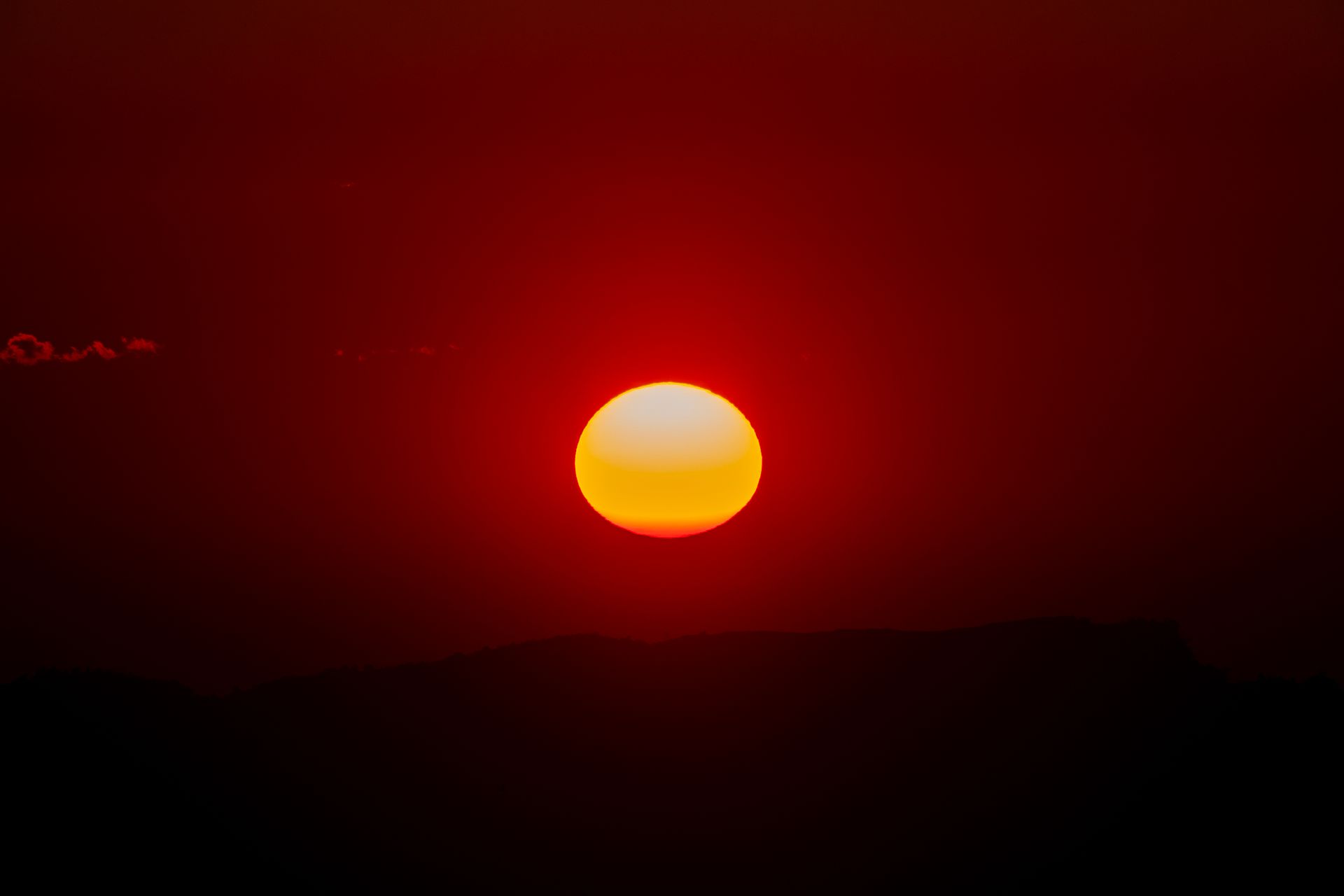
Every so often, the planet Venus slips directly between the Earth and the Sun, appearing for a few hours as a small black dot creeping across the solar disc. This event, known as a transit of Venus, is one of the rarest predictable phenomena in the solar system, and for centuries it has drawn astronomers into elaborate, sometimes perilous, efforts just to watch it happen, chasing a spectacle that lasts only a few hours and then vanishes from view for generations.
The first transit ever observed and recorded was in 1639, when the English astronomers Jeremiah Horrocks and William Crabtree independently tracked Venus's passage across the Sun from their homes in England, having calculated, against the predictions of the era's leading astronomers, that the event was about to occur. Horrocks was reportedly still in his early twenties at the time, and accounts of the observation describe him projecting the Sun's image through a simple telescope onto a screen to trace Venus's path safely. Their observation confirmed that transits could be predicted with enough precision to plan for.
It was not until the following century that transits of Venus became the object of genuinely global scientific ambition. Ahead of the 1761 and 1769 transits, the English astronomer Edmond Halley's decades-old proposal, that timing a transit from widely separated points on Earth could be used to calculate the distance between the Earth and the Sun, spurred an unprecedented international effort involving dozens of observing stations across several continents.
Halley's method relied on parallax: observers at different latitudes would see Venus trace a slightly different path across the Sun, and by comparing the timings of contact from multiple locations, astronomers could triangulate the astronomical unit, the baseline distance underpinning virtually every other measurement in the solar system, from the size of stars to the scale of the Milky Way itself.
Governments and scientific academies across Europe dispatched expeditions to remote corners of the globe to capture those measurements, including the voyage that carried Captain James Cook to Tahiti in 1769, alongside teams sent to Siberia, Norway, and other far-flung outposts, in what historians of science often describe as one of the earliest coordinated international scientific projects, one that required cooperation between rival empires even as some of them remained at war.
The expeditions were not easy. Long sea voyages, disease, and unpredictable weather ruined many planned observations, and even successful sightings were complicated by the "black drop effect," an optical distortion that made it hard to pin down the exact moment Venus's silhouette touched the edge of the Sun. Historians of science note that at least one astronomer, dispatched to a remote observing post, reportedly missed the transit entirely after travelling for months only to find the sky clouded over. The resulting distance estimates varied more than astronomers had hoped.
A second pair of transits, in 1874 and 1882, brought even larger international campaigns, this time aided by photography, as astronomers sought to refine those earlier estimates of the astronomical unit with sharper precision than timing by eye alone could offer, deploying specially built photographic apparatus to fix the moments of contact on glass plates.
Transits of Venus are so rare because of the tilt of Venus's orbit relative to Earth's, roughly 3.4 degrees. A transit can only occur when Venus passes between the Earth and the Sun at the precise moment it also crosses the plane of Earth's orbit. That alignment produces an unusual pattern: transits arrive in pairs eight years apart, followed by gaps of roughly 105 and then 121 years before the cycle repeats, a rhythm sometimes summarised as the 243-year Venus cycle.
The most recent pair of transits, visible from Earth in 2004 and 2012, drew far larger public audiences than any of their historical predecessors, thanks to safe solar-viewing technology and global media coverage, even though the scientific need to measure the astronomical unit by this method had long since been superseded by radar and spacecraft measurements.
The next transit of Venus will not occur until 2117, meaning no one alive today is likely to see it. That rarity is central to the phenomenon's enduring hold on the imagination: a fleeting black teardrop crossing the Sun, visible for only a few hours at a time, and then gone from the sky for more than a century.
Read next

Magna Carta myths debunked: what the 1215 charter actually said
Magna Carta is often remembered as history's first bill of rights, but historian Nicholas Vincent says the 1215 charter was really a peace deal between King John and rebel barons. Here are the biggest myths about Magna Carta, and the messier medieval reality behind them.
Korean Armistice Agreement: how a 1953 ceasefire still divides Korea
On 27 July 1953, military commanders signed the Korean Armistice Agreement at Panmunjom, ending open combat in the Korean War without a peace treaty. The truce created the Demilitarized Zone near the 38th parallel and set up prisoner exchanges. More than 70 years later, North and South Korea remain technically at war.

The Public Sandbox: How a 19th-Century Play Experiment Shaped American Cities
The public sandbox began as an 1880s experiment in Boston, where reformers placed piles of sand in vacant lots to give working-class children a safe place to play. The idea helped launch the American playground movement, but standalone sandboxes later fell out of favor over sanitation, liability, and design concerns.

On this day: Louise Brown, the world's first IVF baby, is born
Louise Brown was born in Oldham, England, on 25 July 1978, becoming the first human conceived through in vitro fertilisation. Her birth was the culmination of decades of reproductive research and reshaped how millions of families would go on to have children.
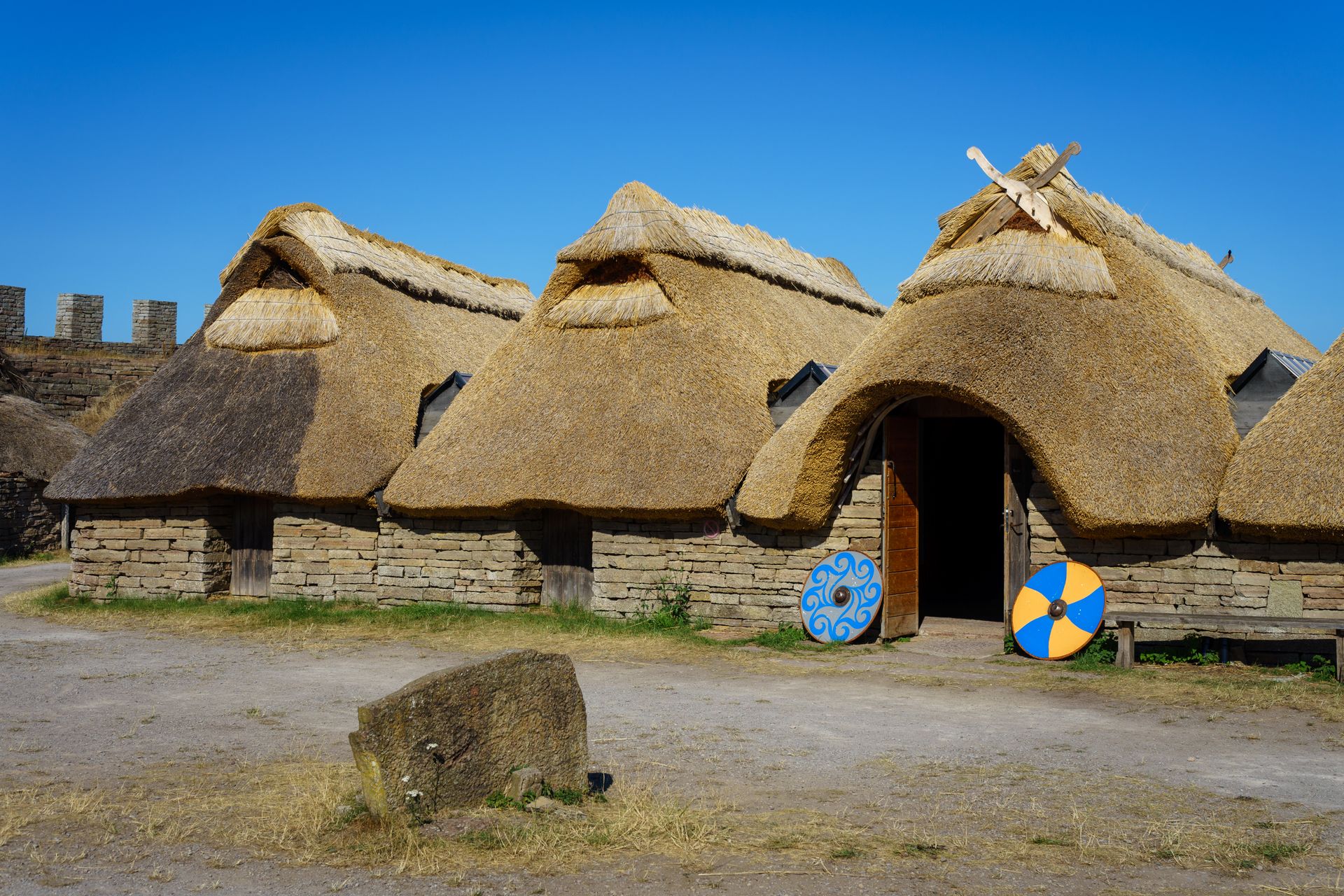
What was daily life like in the 14th century? A survival guide
From straw mattresses to ale for breakfast, life in the 1300s ran on rules and hazards almost entirely unfamiliar to a modern reader. Historians have pieced together what an ordinary day actually involved, and how people navigated a world without plumbing, antibiotics, or reliable law enforcement.