Korean Armistice Agreement: how a 1953 ceasefire still divides Korea
On 27 July 1953, military representatives meeting in the village of Panmunjom signed the Korean Armistice Agreement, bringing an end to three years of fighting on the Korean Peninsula. The document stopped the shooting, but it did not, and still does not, formally end the Korean War. Historians often describe it as one of the twentieth century's most consequential unfinished endings, a truce that froze a conflict rather than resolving it.
The war had begun in June 1950, when North Korean forces crossed the 38th parallel and advanced into South Korea, prompting a United Nations Command led by the United States to intervene alongside South Korean troops. China entered the conflict later that year in support of North Korea, sending large numbers of troops known as the Chinese People's Volunteers. By 1951, after dramatic swings up and down the peninsula that saw Seoul change hands more than once, the front lines had stabilised roughly along the original dividing line, setting the stage for a long and difficult negotiation rather than a decisive military victory for either side.
Armistice talks opened at Kaesong in July 1951 and later moved to Panmunjom, dragging on for two years over issues including the exact location of a new demarcation line and, most contentiously, the fate of prisoners of war who did not wish to be repatriated to their home countries. Fighting continued along the front even as delegates negotiated, adding urgency, and bitterness, to every session.
The agreement was signed by US Army Lieutenant General William K. Harrison Jr. on behalf of the United Nations Command, and by North Korean General Nam Il on behalf of the Korean People's Army and the Chinese People's Volunteers. South Korean President Syngman Rhee refused to sign, having opposed any settlement that left the peninsula divided, and South Korea has technically remained a non-signatory to the truce ever since, even as its forces observe it.
The armistice established a Military Demarcation Line running close to the 38th parallel and created a roughly four-kilometre-wide buffer straddling it on both sides, known as the Demilitarized Zone, or DMZ. It also set up the Military Armistice Commission, made up of representatives from both sides, tasked with supervising the truce, investigating alleged violations, and providing a direct channel of communication between two militaries that otherwise had almost none.
A separate process, later known as Operation Big Switch, handled the exchange of prisoners of war in the weeks after the signing. A Neutral Nations Repatriation Commission, with India in a leading role, was created to manage the cases of POWs who declined repatriation, an unusual and closely watched feature of the settlement that reflected how deeply the war had divided loyalties on both sides of the front.
Crucially, the 1953 agreement is a ceasefire between military commands, not a peace treaty between governments. No formal peace treaty has ever followed it, which means that, in a strict legal sense, North and South Korea remain in a continuing state of war more than seven decades on, even though no major battle has been fought since the signing.
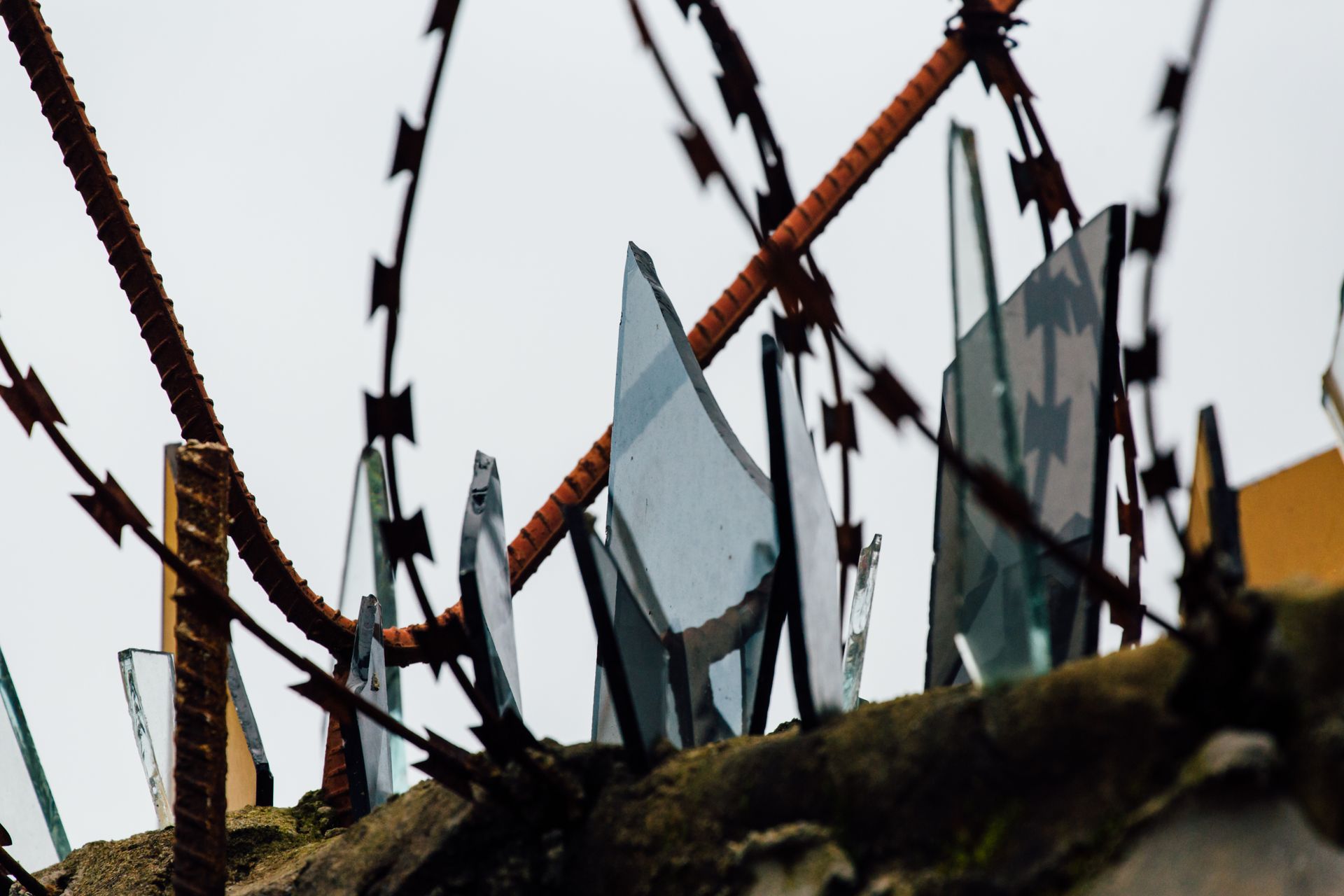
In the years since, the DMZ has become one of the most heavily fortified borders in the world, lined with minefields, guard posts, and barbed wire despite its name. Periods of tension along it, including naval skirmishes and isolated border incidents over the decades, have repeatedly tested the truce without formally breaking it, and both governments have used the anniversary to reinforce very different narratives about the war. North Korea marks 27 July each year as "Victory Day," a state holiday commemorating what it presents as a triumph over the United States and its allies.
Diplomatic efforts to move from armistice to peace have surfaced periodically since. Perhaps the best known is the 2018 Panmunjom Declaration, signed by South Korean President Moon Jae-in and North Korean leader Kim Jong Un at the same border village, in which both sides said they would pursue talks toward a permanent peace regime and, eventually, a formal end to the war. As of today, none of these initiatives has produced a signed peace treaty, and the armistice's Military Armistice Commission framework remains the primary mechanism for managing incidents along the border.
More than seventy years after the guns fell silent, the Korean Armistice Agreement remains the only legal document governing the conflict, a reminder that a ceasefire meant to be temporary can end up outlasting the war it paused by generations.
Read next
Why has Venus obsessed astronomers for centuries?
Every so often, Venus slips across the face of the Sun as a small black dot, a transit so rare it comes only in pairs more than a century apart. Astronomers have chased the spectacle since the 17th century, mounting some of history's first global scientific expeditions to time it. Here's why the transit of Venus has fascinated observers for centuries.

Magna Carta myths debunked: what the 1215 charter actually said
Magna Carta is often remembered as history's first bill of rights, but historian Nicholas Vincent says the 1215 charter was really a peace deal between King John and rebel barons. Here are the biggest myths about Magna Carta, and the messier medieval reality behind them.

The Public Sandbox: How a 19th-Century Play Experiment Shaped American Cities
The public sandbox began as an 1880s experiment in Boston, where reformers placed piles of sand in vacant lots to give working-class children a safe place to play. The idea helped launch the American playground movement, but standalone sandboxes later fell out of favor over sanitation, liability, and design concerns.
On this day: Louise Brown, the world's first IVF baby, is born
Louise Brown was born in Oldham, England, on 25 July 1978, becoming the first human conceived through in vitro fertilisation. Her birth was the culmination of decades of reproductive research and reshaped how millions of families would go on to have children.
What was daily life like in the 14th century? A survival guide
From straw mattresses to ale for breakfast, life in the 1300s ran on rules and hazards almost entirely unfamiliar to a modern reader. Historians have pieced together what an ordinary day actually involved, and how people navigated a world without plumbing, antibiotics, or reliable law enforcement.