The Inselbergs of French Guiana: 1.7-billion-year-old granite domes that hide a rainforest microclimate
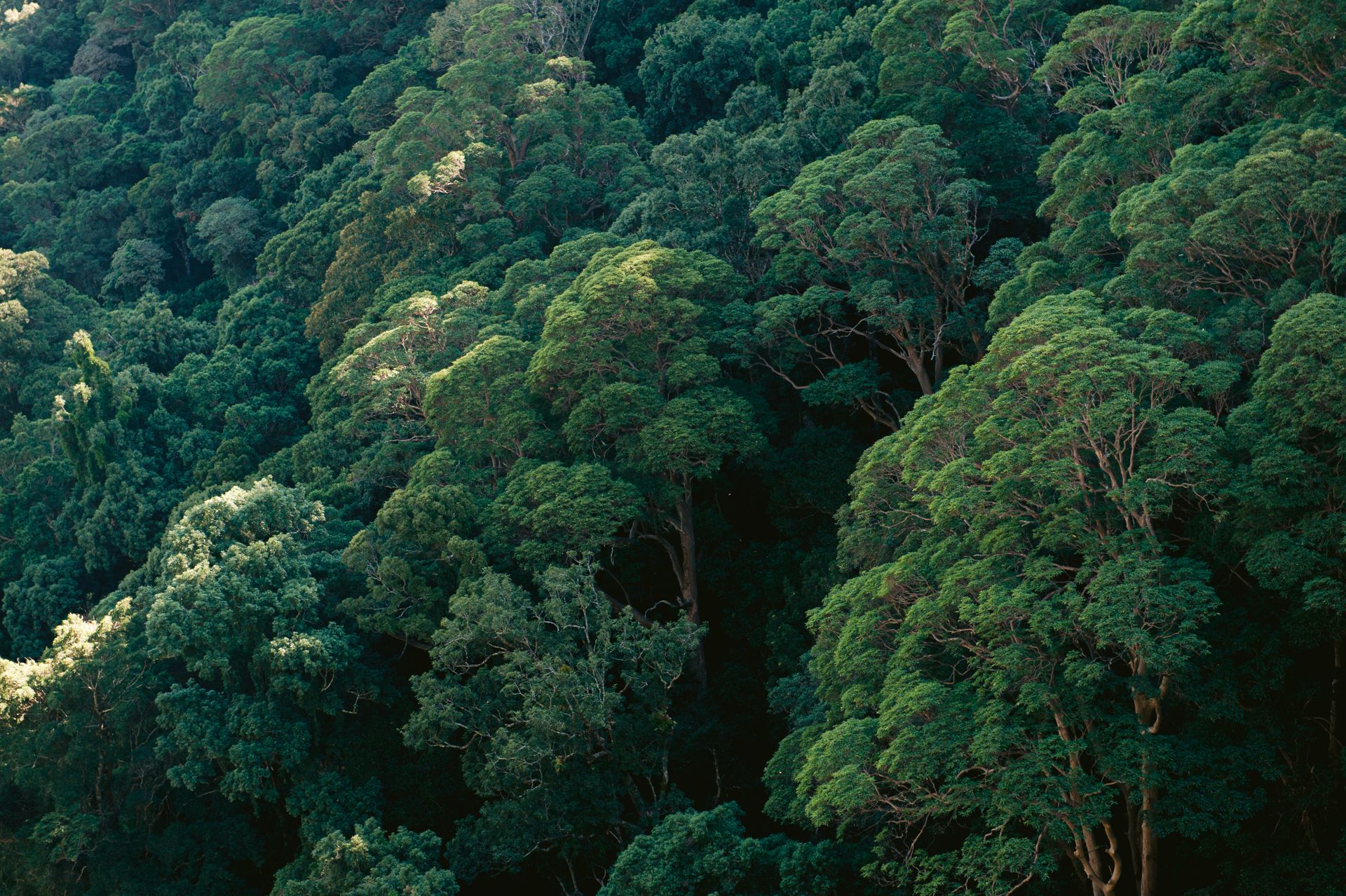
Scattered through the interior of French Guiana, more than two hundred Inselbergs, or "jungle rocks," rise out of the rainforest. These granite domes are the last visible remnants of the Guiana Shield, around 1.7 billion years old, a shield that extends from Venezuela to the Amapá state of Brazil.
The word Inselberg is German and means "island mountain." Rising 200 to 400 metres above the surrounding rainforest, these granite domes form a sky-island ecosystem. Even after heavy rain, the granite surfaces dry within minutes and the rock heats rapidly under direct sun. The contrast with the humid forest beneath is dramatic.
The most striking group of these formations in the Guiana Shield is known as Inselberg Savane-Roches. Their summits are entirely bare of forest cover — bare granite. That nakedness reflects sustained periods of drought and extreme radiation on the rock's surface. Only a few plant and animal species have adapted to the harsh microclimate.
Until the completion of the road between Regina and St Georges in 2003, reaching the Inselbergs was extremely difficult. Long boat journeys or helicopter expeditions were the only options. This meant that the biodiversity of tens of thousands of years had not been systematically studied.
France's Muséum National d'Histoire Naturelle has run a systematic mapping project of Inselberg ecosystems since 2018. So far the project has shown that around 18% of the bird, reptile and insect species on these summits are not yet recorded in the scientific literature.
The museum's biodiversity director, Professor Olivier Pascal, told Le Monde: "The rainforest canopy is a well-studied ecosystem; the granite-dome summits are not. Each expedition turns up another species that has been outside science. These summits are a kind of frozen laboratory."
Geologically, the rock that forms these Guiana Shield granite domes is Palaeoproterozoic magma, about 1.7 billion years old. Over the next 800 million years, sedimentary layers formed on top and have since been eroded. The visible domes today are the resistant inner core left behind.
For indigenous peoples, the meaning is different. Oral tradition among Wayampi and Teko communities refers to Inselbergs as "stone ancestors." Specific rituals are reported to involve the gathering of endemic plant roots on the summits. French anthropologist Pierre Grenand has suggested that these practices may go back about 4,000 years.
French Guiana is administratively an overseas territory of France. The Inselberg natural-reserve area, established in 1986, today covers 85,000 hectares. It joined the European Union's Natura 2000 network in 2015. Within the area tourist access to fourteen of the Inselbergs is restricted, while eco-tourism received €5 million in additional investment in 2025.
For education, the Université de la Guyane in Cayenne has offered a master's programme in Inselberg ecology since 2024. The programme takes 25 students a year, half of them on European Union scholarships. The university hopes within a decade to become one of the strongest ecology research centres on the continent.