Three medieval shipwrecks found off Menorca's 'Cove of Mysteries'
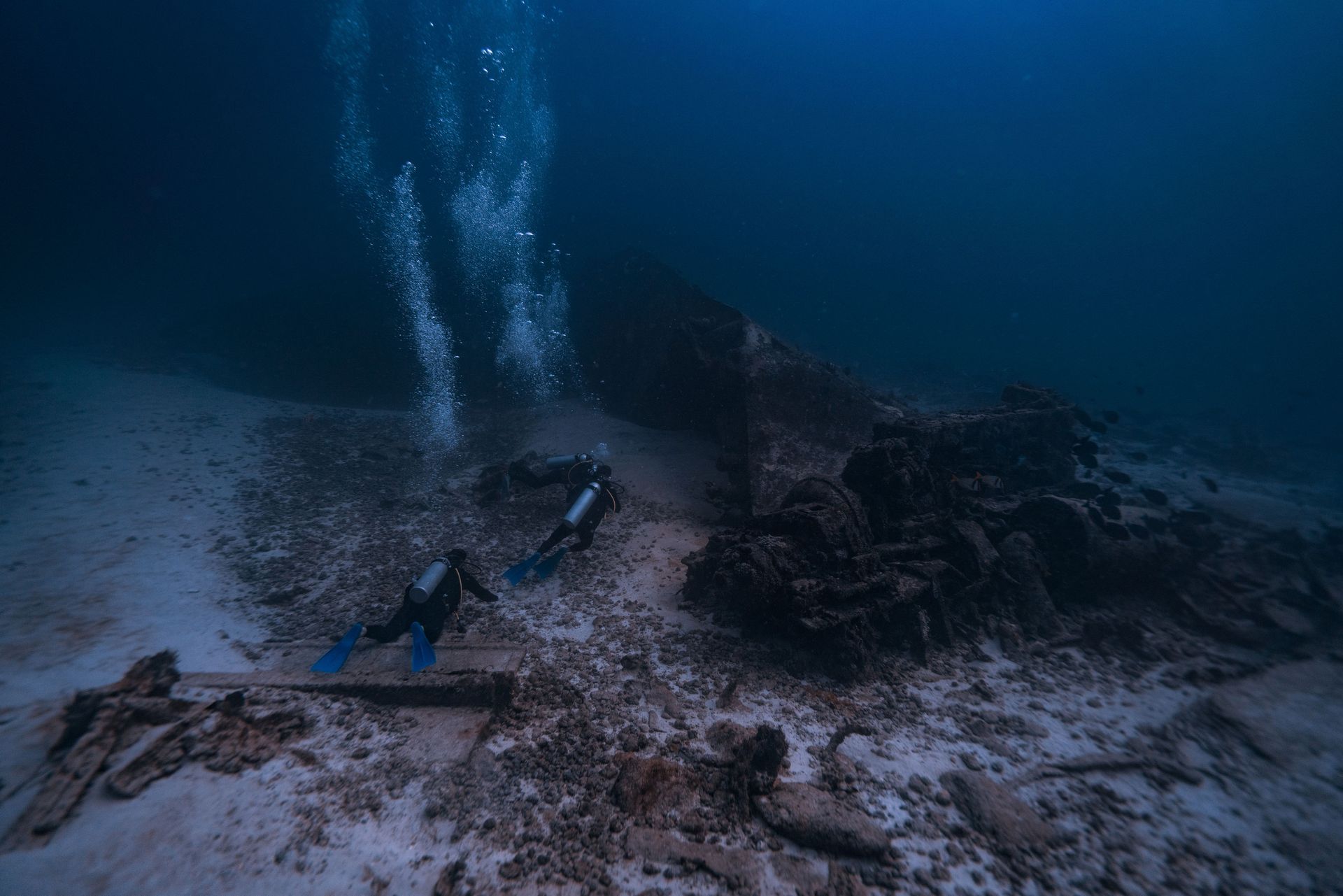
Marine archaeologists have discovered three previously unknown shipwrecks dating to the 13th century in a cove off the coast of Menorca that researchers have nicknamed the "Cove of Mysteries" for the string of historical finds it has yielded over the years. The three trading vessels appear to have sunk within the same general period, based on the style and dating of the cargo recovered from the site.
Researchers believe meteorological tsunamis, sudden and often localized waves generated by rapid atmospheric pressure changes rather than earthquakes, are the most likely explanation for how three separate ships came to rest in roughly the same underwater area. Menorca's coastline is known among oceanographers for occasionally producing this rare and still not fully understood phenomenon, sometimes called "rissaga" locally.
What has drawn particular attention from historians is the cargo recovered from the wrecks, which includes objects associated with both Christian kingdoms and Moorish communities on the Iberian Peninsula. The mix reflects the genuinely multicultural trading networks that operated across the medieval western Mediterranean, where goods, and the people who carried them, routinely crossed the political and religious boundaries that divided the region.
By the 13th century, the Iberian Peninsula was a patchwork of Christian kingdoms in the north and Moorish, or Muslim-ruled, territories concentrated in the south, a division that had shaped the peninsula's politics for centuries but did not prevent extensive trade between the two spheres. Ceramics, metalwork and other goods moved along maritime routes that connected ports regardless of who controlled the land behind them.
Menorca's position in the western Mediterranean made it a natural stopping point for ships moving between the Iberian coast, mainland Europe and North Africa, placing the island at a crossroads of medieval trade even though it was, at various points in its history, itself under different political and religious rule.
Archaeologists say the condition of the wreck sites, preserved for centuries under water, offers a level of detail about everyday medieval trade goods that is difficult to recover from land-based excavations alone, where organic materials and fragile items are far more likely to have decayed or been disturbed over time.
Detailed cataloguing and conservation work on the recovered artifacts is ongoing, a process that in underwater archaeology typically takes considerably longer than excavation itself, since waterlogged materials require careful, gradual treatment to prevent them from deteriorating once removed from the seabed environment that has preserved them.
Researchers say the find adds meaningfully to the historical record of medieval Mediterranean trade, an area of history often reconstructed primarily from written sources such as merchant contracts and customs records, which tend to describe transactions in the abstract rather than showing the physical goods themselves.
The wrecks are expected to be the subject of further study for years to come, with researchers hoping that continued excavation of the site, and comparison of its cargo with wrecks and archaeological finds elsewhere in the Mediterranean, will help refine understanding of exactly which trade routes and communities these particular ships were connecting.
For now, the discovery stands as a reminder that even well-studied coastlines can still yield major archaeological surprises, and that the waters around Menorca in particular appear to hold considerably more medieval history than researchers had previously mapped.
Read next

Was Shakespeare a secret political radical? What new research on his plays suggests
New research argues that William Shakespeare embedded a coded political message supporting the controversial Earl of Essex into one of his best-known plays. The findings add to a long-running scholarly debate over how much of Shakespeare's work reflects the turbulent politics of the Elizabethan court he wrote for.

On this day, 10 July 1962: Telstar, the first active communications satellite, launches
On 10 July 1962, Telstar 1 launched from Cape Canaveral, becoming the first active satellite to relay television signals, telephone calls and data across the Atlantic. The satellite's brief but historic mission kicked off the era of live intercontinental broadcasting and helped establish the technical foundations of modern satellite communications.

The Ming dynasty: why one of history's greatest empires remains so hard to know
The Ming dynasty ruled China from 1368 to 1644 and was one of the largest and most sophisticated states of its age. An Aeon essay argues that despite its power and rich records, much of daily Ming life remains obscure, captured in the old saying that heaven is high and the emperor far away.

What did people eat in Georgian London? A guide to the food of the 18th-century city
Georgian London, roughly the century after 1714, fed a booming population on everything from street-sold pies to lavish aristocratic dinners. A HistoryExtra podcast explores how coffee houses, new imports and stark class divides shaped what Londoners ate, drank and could afford in the 18th century.

On this day, 9 July 1816: Argentina declares independence at the Congress of Tucumán
On 9 July 1816, delegates gathered in the city of San Miguel de Tucumán declared the independence of the United Provinces of South America from Spain. The date remains Argentina's Independence Day and marks a defining moment in the wider collapse of Spanish rule across the continent.