Château de Meung-sur-Loire: the dungeon where one of medieval France's greatest poets wrote
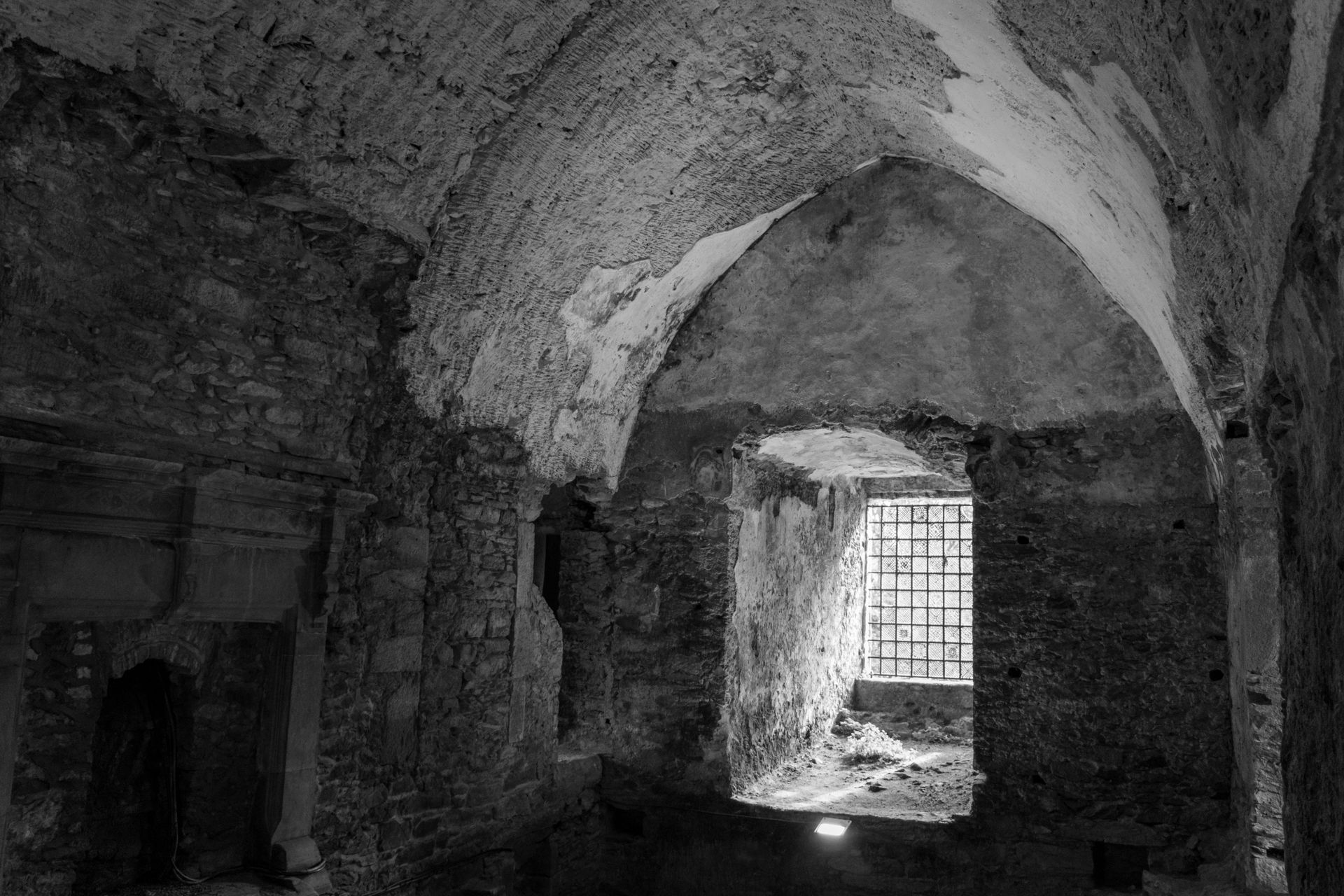
Set on the western side of the Loire Valley, 17 km west of Orléans, the town of Meung-sur-Loire is a stop off the standard Loire tourist route, with its imposing château. In the deepest part of the building — below ground level, in a cell restored in the 19th century — François Villon (c. 1431-after 1463), one of the most celebrated poets of medieval France, was imprisoned for a year. His imprisonment stands at the centre of a rare tradition of prison poetry in literary history.
François Villon (whose real name was probably François de Montcorbier or François des Loges) was adopted as an orphan in Paris by a churchman named Guillaume de Villon. After receiving a master's degree at the University of Paris in 1452, he began his poetic career, but his life was interlaced with charges of brawling, theft and several killings. In 1462, after a brawl outside Paris, he was brought to Meung-sur-Loire and thrown into the château's dungeon by Thibaut d'Aussigny, then bishop of Orléans. The exact nature of the offence is disputed; the most accepted view holds it was theft and heretical behaviour at a religious ceremony.
Thibaut d'Aussigny was one of the harsher ecclesiastical judges of his time. Villon's own writings make plain his anger at the bishop: one of the opening stanzas of the Testament is a curse on Thibaut. Scholars indicate that the bishop's treatment of Villon was particularly severe for the period, including long stretches with only water and bread, and being summoned to canonical inquiries for further interrogation. Villon was held for 14 months in this dungeon in the damp ground of the Loire Valley.
The poems Villon wrote during those 14 months are among the most enduring works in French literature. His great collection "Le Testament" (The Testament) is dated to 1461-1462; the academic consensus is that a significant portion came from his time in prison. The Testament runs to 2,023 lines and contains emotional and philosophical commentary on the poet's life in Paris, his friends, his enemies, his love for a deceased mother and Christian theology. Many of his best-known ballads, such as the "Ballade des dames du temps jadis" (Ballad of the Ladies of Times Past), sit within the Testament.
His moment of release came through a historical coincidence in 1462. There was a royal tradition, debated for sceptical reasons over Villon's later case, of pardoning new prisoners: King Louis XI, on a visit passing through Meung-sur-Loire, pardoned all the prisoners held in the château's dungeons. Villon returned to Paris with a gratitude poem he wrote on the banks of the Loire, recording his release from the bishop. The relief did not last long; just five months after returning to Paris, Villon was caught up in another brawl and condemned to death. The court commuted the sentence to exile, and Villon left Paris in January 1463. His date of death is unknown; historians generally place it at the end of 1463 or early 1464.
Villon's Testament is a rare composition of its genre in medieval Europe. Most poets wrote prison poems as a single ode; Villon's is both autobiographical and theological in shape. The work's broad circulation came about 30 years after composition, when Pierre Levet printed it in 1489; printed copies spread across Europe. In his 2002 translation, the Pulitzer Prize-winning American poet and critic Anthony Hecht described the Testament as "the first modern example of prison poetry in European literature."
Visitors today at Meung-sur-Loire château can see part of the cell where Villon was held. The château's current owner, the comte Marius Boitelet, told Atlas Obscura in an interview that only 60 percent of the original stone of the cell has been preserved; the upper parts were rebuilt in line with the original plans during the 19th-century restoration. The cell, four square metres in area, is lit only by natural light coming through a single high window. Visitors reach it by passing beneath stone paving.
Villon's legacy left a deep mark on modern French literature. Charles Baudelaire makes explicit reference to Villon in his 1857 collection Les Fleurs du Mal; Marcel Schwob produced a modern biography of the poet in his 1894 essay "François Villon: poète." In the 20th century, Paul Verlaine, Stéphane Mallarmé and later Pablo Neruda all acknowledged Villon as one of their primary influences. In the United States, Charles Bukowski mentioned Villon in a 1970 poem as one "who wrote not because he was imprisoned, but in spite of being imprisoned."
The technical features of the Meung-sur-Loire château matter for the preservation of the dungeon. Founded in the 12th century, the château has been held in turn by the bishopric, the Crown and the private sector; in 1962 it was listed as a protected national monument by France's Monuments Historiques Commission. The château's gardens are known for their 18th-century design in the typical "jardin à la française" tradition of the Loire Valley. The château receives around 87,000 visitors a year and, besides Villon's dungeon, is also known for a historic dining room, a music salon and a vast wine cellar.
François Villon's year-long imprisonment at Meung-sur-Loire is a paradoxical example of the creative conditions produced by a period of French literature. The poet's most enduring works were written at the time he was most physically dependent — a theme much studied in literary history. As Atlas Obscura's guide notes, travellers who visit Villon's dungeon are invited to pause in the small cell and reflect that "poetry can come even from a thousand-year-old stone." The château's annual literary festival includes evenings of readings dedicated to Villon, held every third Saturday in September.