Google bets the next AI wave on agents, not chatbots, with Gemini 3.5 Flash
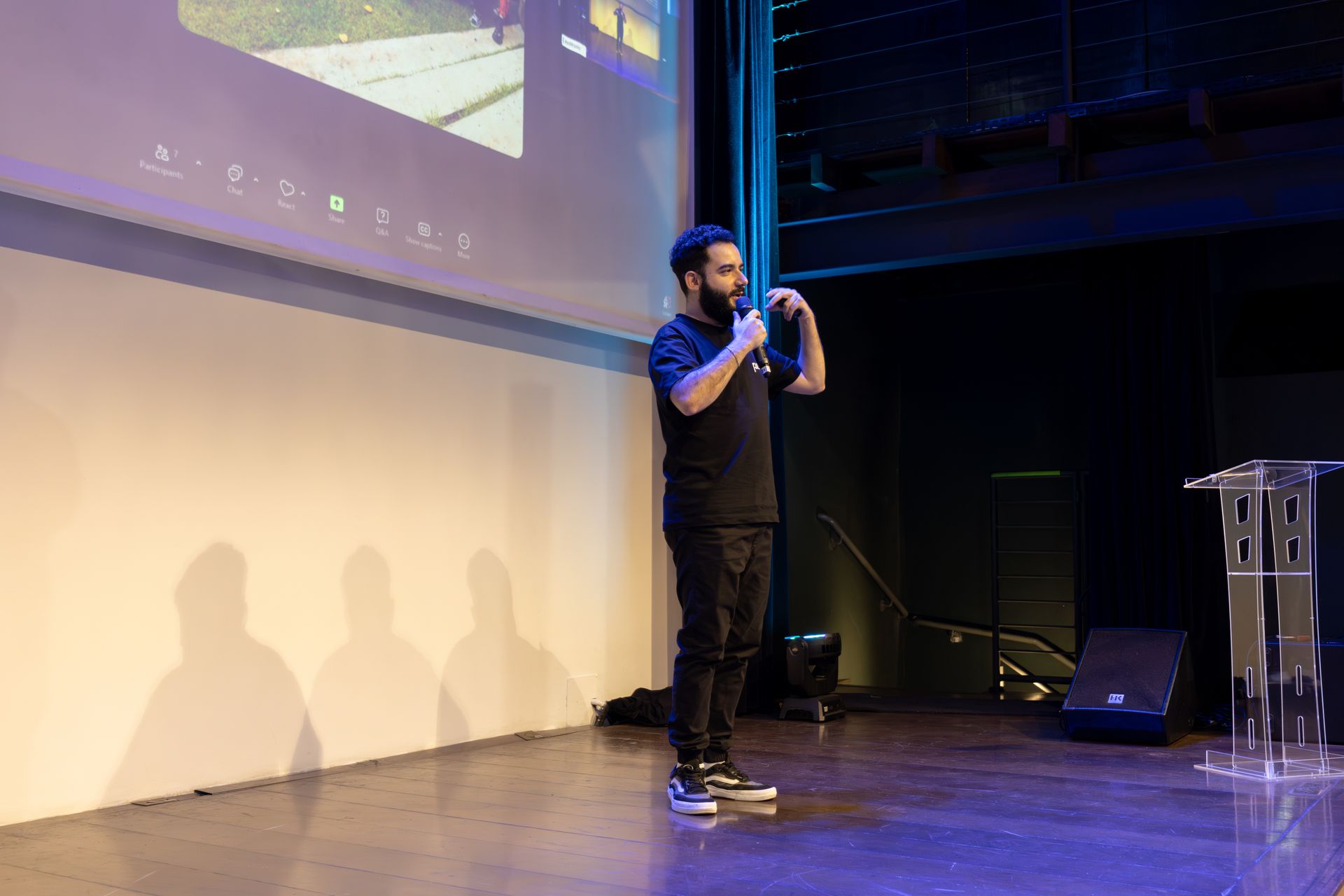
Google announced its next-generation model Gemini 3.5 Flash in the opening keynote of its San Francisco I/O 2026 developer conference. The company's chief executive Sundar Pichai presented it from the stage: "This is our most powerful model yet for code writing and autonomous task execution." TechCrunch's impression was that the room was quieter than in previous Gemini launches; but the model's demo, which wrote code from scratch, tested it and fixed its own errors in stages, quickly warmed the room.
Gemini 3.5 Flash was positioned as the principal product of Google's "agent-first" approach this year. The company argues that the chatbot paradigm is approaching a saturation point and that the next growth will come from AI's automated task-execution capability. Pichai used the framing more than once: "not a system that answers questions, but a system that completes tasks."
DeepMind chief scientist Demis Hassabis took the stage when speaking on the technical foundations. Hassabis said Gemini 3.5 Flash "brings a bigger model into efficiency with a smaller parameter count"; the model's inference cost is roughly 40 percent lower than previous versions. That is a critical matter for the economic scaling of agent-based applications.
In a demo scenario, a developer gave Gemini 3.5 Flash the command "make a Streamlit app on GitHub; connect a SQL database to it; create sample data; deploy it." The model wrote the application, tested it, pushed it to GitHub and deployed it on Cloud Run, in 4 minutes 18 seconds. That is an automation level well beyond traditional chatbot use.
But technical limits were also stated openly at the conference. Hassabis said the model can accumulate "hallucinations" and earlier-step errors over the course of a task; for agent-style use, Google is foregrounding the concept of intermediate validation points called "checkpoints." Developers will be able to take a second opinion in the middle of a task and change the model's direction.
For enterprise use, Google identified three main application areas: software development, financial analysis and customer service automation. The company has launched pilot projects with Mastercard, Sanofi and Vodafone through its partner programmes. Mastercard is using Gemini 3.5 Flash in automated code review of fraud detection models; Sanofi's R&D team is running the model in pilot on automated analysis of laboratory data.
Google Cloud chief Thomas Kurian announced a new approach to pricing the model: a "per task" pricing option has arrived for agent use, offered as an alternative to traditional token-based pricing. Enterprise customers will be able to estimate the cost of an agent's task in advance.
The security side of agent AI was another focus point at the conference. DeepMind announced a new security layer for Gemini 3.5 Flash called "Sentinel Guard"; the system automatically halts the process if the agent attempts to access an unpermitted area. Many security researchers stress that safety testing of agent-based AI needs to become an industry standard.
Competitor responses came quickly. Anthropic CEO Dario Amodei said on X that Claude Code Plus's "continuous agent" features will compete with Gemini. OpenAI's technology chief noted that GPT-5.5 is due in Q3. There is near-consensus across the industry that agent AI is the next major competitive arena.
Google's strategy positions Gemini 3.5 Flash not just as a model but as an infrastructure layer to carry the developer ecosystem into agent-based applications. The company has put the AI Studio tool, free of charge, in the hands of any developer at a level capable of building an Android app; this means that Gemini reaches not just Pixel phones but the entire Android ecosystem. TechCrunch's assessment is that Gemini 3.5 Flash is a junction that will test the concrete economic return of Google's years of investment in AI.