Vela Spila cave in Vela Luka, Croatia: 20,000 years of human occupation
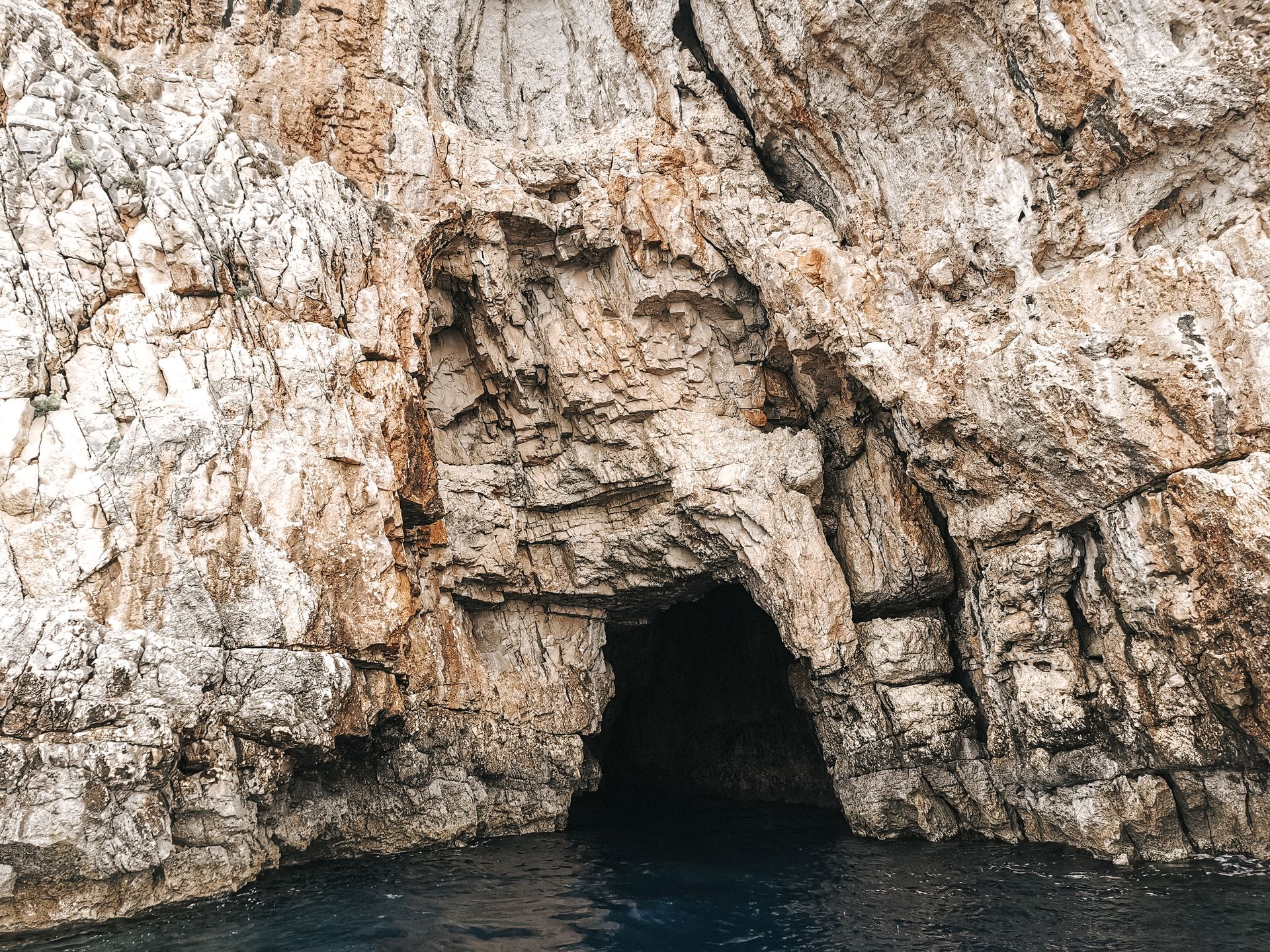
Perched on the hills above the town of Vela Luka, on the western tip of Croatia's Korčula island in the Dalmatian coastal chain, the Vela Spila cave hosts one of the longest histories of human occupation in Europe. According to editorial notes from Atlas Obscura, the cave's stratified excavation files offer an archaeological record covering every phase of the past 20,000 years.
Access to the cave is achieved on foot from the town of Vela Luka, along a steep climb. As Atlas Obscura's description notes, the trail leads through Adriatic vistas and past fig and olive trees; in April, wild irises are another distinctive feature of the route. The hour-long climb reminds visitors of the relationship between the archaeological site and the surrounding regional geography.
The primary archaeological significance of the cave lies in how its stratified layers have preserved human settlement through changing climatic conditions. Excavation reports led by Professor Dinko Radić of the University of Zagreb Archaeology Department since 2013 have shown that the cave's layers span from the Early Mesolithic (approximately 18,000 BCE) to the Early Bronze Age (approximately 1800 BCE). Radić, in a 2014 study published in the journal Antiquity, characterised Vela Spila as 'a reference point for the western Adriatic coast.'
Among the cave's most notable finds are small human figurines dating to the Upper Palaeolithic period. A 2012 review in the journal Antiquity announced that the 17 figurines found in the cave are among the earliest terracotta art finds in Europe. One of these figurines was presented to international audiences as part of a temporary exhibition at the British Museum in 2014. The documentation of ceramic-use practices among Upper Palaeolithic human communities in Europe so early in the timeline is rarely encountered.
The 2017-2022 excavation work jointly conducted by the University of Cambridge and the University of Zagreb under Professor Preston Miracle analysed dietary evidence in the Vela Spila layers. According to the study results, human communities living in the cave during the Mesolithic period made their living primarily through wild goat hunting and gathering of marine molluscs. The transition to the Early Neolithic saw documented increases in cereal cultivation and remains of domestic animals.
A particularly interesting aspect of the cave is that humans lived here in periods when the Adriatic sea was approximately 100 metres south of the current shoreline during the last glacial period. Cambridge University researcher Dr Emily Holt, in commentary on the excavation, said 'the cave is an exceptional record of how human communities adapted to the environment in the transition from the end of the glacial period to Holocene warming.' This process of adaptation has been documented in detail through palaeobotanical remains and animal bones.
In terms of cultural significance, another important find is the inscriptions on the cave walls from the Greek and Roman periods. Donat Petricioli, manager of the archaeology collection of the town of Vela Luka, said via Atlas Obscura that 'there were periods when the cave was used both as a place of worship and refuge and as a practical living space.' In the Classical period, Vela Spila is thought to have functioned as a rest point in the Adriatic maritime network.
Protection of the cave was established in 1951 under the Croatian cultural heritage law framework; today it has the status of a national cultural monument. Dr Ivana Težak, chair of the Croatian Ministry of Culture excavation permits committee, noted that the excavation process 'requires a careful approach balancing the principles of sustainable archaeology with environmental protection needs.' The geological instability of the cave's interior structure keeps the area open to visitors limited.
In terms of local tourism, Vela Spila is among the leading archaeological attractions of the island of Korčula. Vela Luka municipality tourism director Marina Žiža said that 'visiting the cave is at the same time an experience that includes the collection of figurine replicas and excavation finds on display in the town museum.' In 2024, 18,000 people visited the cave, representing approximately 12 percent of the annual tourist visitor count to Vela Luka.
In contemporary scientific circles, Vela Spila is a central reference point in discussions of the continuity of human occupation in Europe. A 2024 summary study in the Annual Review of Anthropology accepted Vela Spila as 'a foundational archaeological record for behavioural adaptation of Mesolithic human communities on the Croatian coast.' The cave's still-ongoing excavation files will provide new data for Adriatic prehistory studies over the next 10 years. This article has been prepared for historical analysis; for archaeological visits it is recommended to contact the official site.