The forgotten medieval Muslims of al-Andalus who transformed European culture, from science to architecture
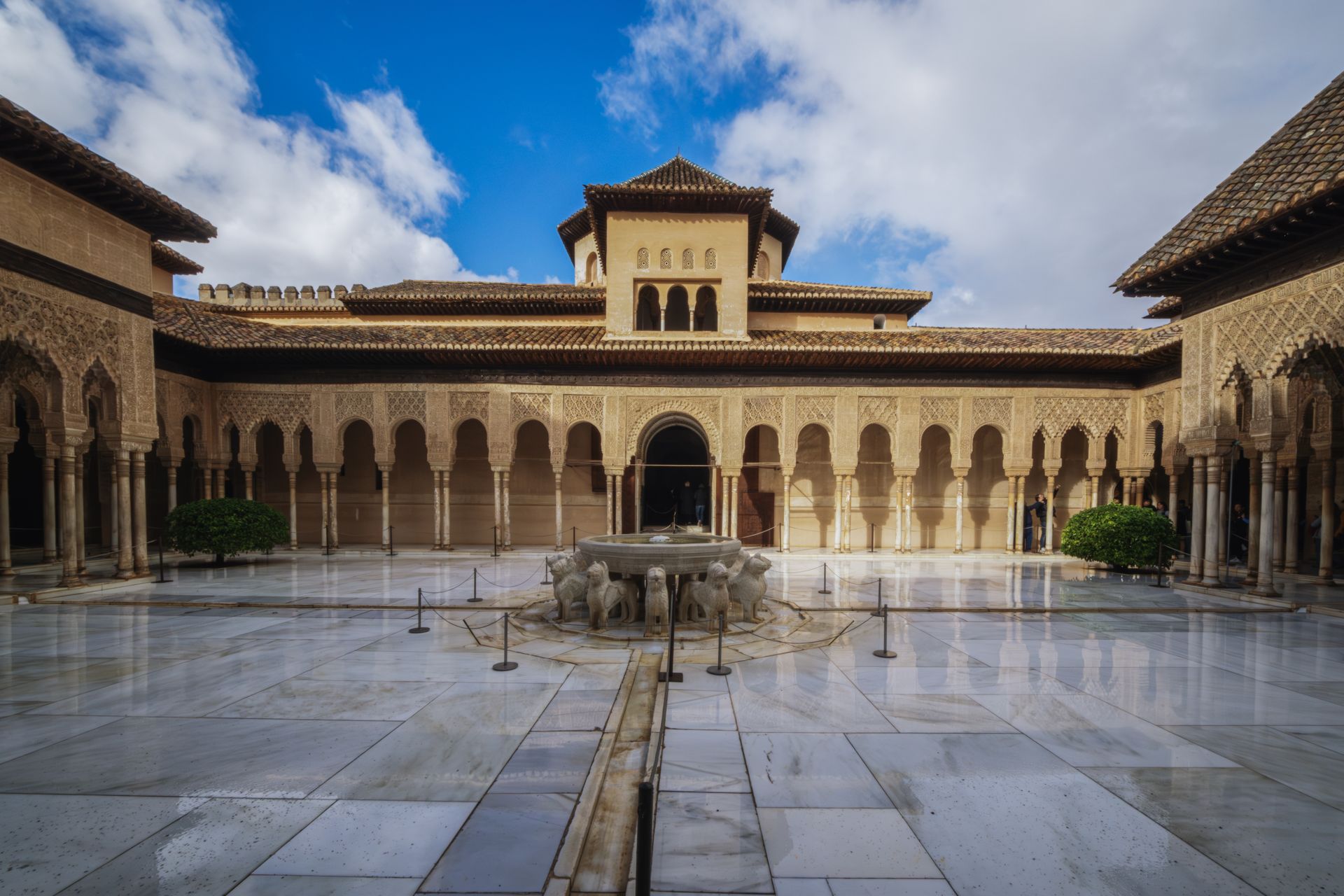
A comprehensive HistoryExtra article presents a scholarly reassessment of the cultural legacy that the al-Andalus period, which began with the Umayyad commander Tariq ibn Ziyad's crossing into the Iberian Peninsula in 711 and continued until the fall of Granada in 1492, bequeathed to European civilisation. This roughly eight-century period was one of the fundamental bridges between Latin Europe and the Mediterranean Islamic world.
Cambridge University Medieval History Professor Hugh Kennedy, in commentary in the article, said, 'Al-Andalus plays a poorly understood role in the intellectual revival of medieval Europe; rather than being treated solely as Islamic history, it should be reassessed as part of Europe's academic history.' Kennedy's historical view reflects the new research direction in recent years at Oxford and Cambridge's Medieval Studies institutes.
In medicine, Abu al-Qasim al-Zahrawi (Albucasis), who worked in Cordoba in the 10th century, is, as recounted by HistoryExtra, regarded as 'the father of modern surgery'. His thirty-volume encyclopaedia, Kitab al-Tasrif, was used as a standard reference in European medical education until the 16th century. His writings on instruments, surgical techniques and pharmacology were transmitted to the medical schools of Bologna and Padua.
In astronomy, Said al-Andalusi, who worked in Toledo (Tulaytula) in the 11th century, and his student al-Zarqali, made pioneering contributions to correcting the Ptolemaic system in light of observations. These works, translated into Latin, deeply influenced the pre-Galileo astronomical tradition in Europe. Granada University's Prof. Maribel Fierro said, 'Medieval Europe's learning of mathematical astronomy came largely from Latin translations of al-Andalus texts.'
The agricultural revolution was perhaps al-Andalus's most practical impact. Approximately 50 agricultural products introduced by Muslim farmers to the peninsula — rice, citrus, almonds, cotton, sugar cane, spinach, aubergine, artichoke, watermelon — broadly changed the European diet and the agricultural economy. The irrigation engineering developed by al-Andalus farmers (the acequia system) is still in use in the Valencia region today.
In architecture, the Great Mosque of Cordoba (construction begun in 785), the Alhambra Palace in Granada (expanded from 1238 onwards) and the Giralda tower in Seville (1184) are among the most developed examples of Islamic architecture observed in Europe. These structures, in their arches, muqarnas decoration, geometric abstraction and courtyard-garden design, later influenced European Renaissance architecture. There are 4 separate al-Andalus heritage sites on the UNESCO World Heritage list.
In philosophy, Ibn Rushd (Averroes, 1126-1198) and his commentaries on Aristotle initiated the 'Averroist' tradition at the University of Paris in the 13th century and influenced European philosophical history from Aquinas to Spinoza. As HistoryExtra recounts in the article, 'The philosophical infrastructure of the European Renaissance cannot be thought of apart from the flow of Aristotle to Europe through Ibn Rushd.'
In music, al-Andalus's instruments such as the oud, qanun and lute formed part of the foundation of European musical tradition. The music school established in Cordoba by the 9th-century singer-composer known as Ziryab contributed directly to the instrumental diversity of medieval European music. Acoustic studies carried out at the Alhambra Palace in Granada are an important source showing the technical sophistication of the al-Andalus musical tradition.
On cross-cultural exchange, the Toledo School of Translation (12th-13th century) functioned as a major intellectual centre where Greek, Arabic and Hebrew texts were translated into Latin. This school, where Muslim, Christian and Jewish scholars worked together, is one of the fundamental sources of medieval Europe's intellectual movement. Tel Aviv University historian Prof. Ron Barkai said, 'The three-religion collaboration in Toledo is an unusual example of intellectual generosity in medieval Europe.'
Today, the academic treatment of al-Andalus heritage is expanding in different directions. Yale University's Prof. Maria Rosa Menocal's 'The Ornament of the World' (2002) introduced al-Andalus's intellectual vibrancy to a broad American academic audience. In Turkey, Istanbul University Medieval Islamic History department chair Prof. Mustafa Kaçar noted that al-Andalus studies are also beginning to revive in Turkish academia. The reassessment of the al-Andalus heritage continues to gain momentum in academic studies; this article offers a general introduction to history and cultural research and contains no political commentary.