On the edge of catastrophe: daily life in Pompeii in the days before Vesuvius erupted
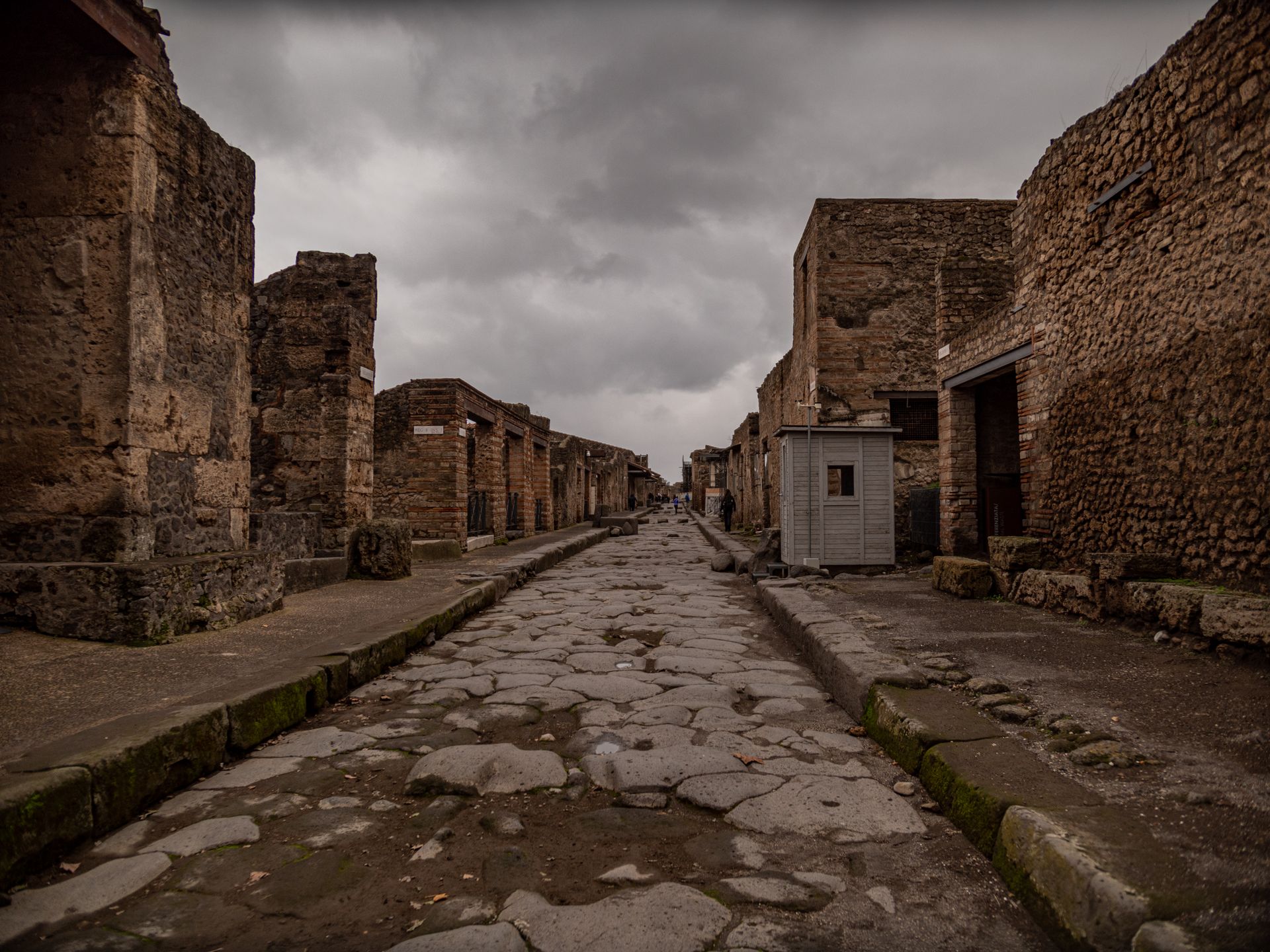
An analysis on HistoryExtra reviews what the archaeological record tells us about life in Pompeii in the months and years leading up to Mount Vesuvius's eruption in AD 79. The city was operating as a normal mid-sized Roman town with a busy commercial life right up to the disaster.
The analysis, written in the historian's voice, notes that the first signs of Vesuvius reawakening had appeared well before the eruption itself: an earthquake measured today at about magnitude 5.0 in AD 62 is now widely read by volcanologists as a sign that the volcano had become active.
The AD 62 earthquake damaged many public buildings in Pompeii, including the columns of the Forum and the major aqueduct that ran toward Vesalio. Reconstruction work continued for decades, and even by AD 79 the city had not fully recovered.
One of the most striking finds for the city's final months is the discovery, in many upper-class villas, of pottery moulds. These indicate that home-renovation work was still under way at the time of the eruption. According to HistoryExtra, 67 wall posters have also been found along the main street, with 32 of them tied to local election campaigns.
The surrounding villae rusticae, or country estates, were also active. More than 2,000 amphorae — large jars for wine — have been recorded across the Pompeian territory. That signals that wine exports along trade routes to Rome and further afield were still in motion.
Daily food and drink habits are also measurable. Eighty-nine thermopolia, the Roman equivalent of fast-food bars, have been excavated within the city. Residue analysis in the counter jars showed that the final week's menus carried garum (fish sauce), beans, lentils and wine.
The death toll for the eruption itself remains debated. The academic consensus is that Pompeii's population in AD 79 was between 11,000 and 15,000, while estimates for the number of dead range from around 2,000 to 16,000. According to expert commentary cited by HistoryExtra, the lower figure is the one more widely accepted today.
Excavations in the gardens of major villas such as the Villa dei Misteri and the Casa del Fauno have shown garden plans dating to the final year. The garden bed lines indicate that lavender and basil were being grown, a visual sign of the continuation of normal daily life right up to the end.
The date of the AD 79 eruption is itself still under discussion. The traditional date of August has been challenged by finds in the past 20 years pointing to October or November, including the residue of pomegranate seeds and heated floor systems — both of which suggest a cooler season.
Today the Pompeii archaeological site receives more than 4 million visitors a year. HistoryExtra notes that the city remains one of the best-preserved examples of a Roman settlement, and excavation work, which began in 1748, continues.