Why haven't humans set foot on the Moon in more than 50 years?

In December 1972, Apollo 17 crew members Eugene Cernan and Harrison Schmitt became the last humans to walk on the surface of the Moon. In the more than fifty years since, humanity has not returned — even though, by the late 1960s, many expected permanent lunar bases to exist by the end of the century. The reasons behind that gap are far more layered than is often assumed.
The Apollo program's starting point was not scientific curiosity but Cold War geopolitical rivalry. The United States poured enormous resources into sending humans to the Moon in order to counter the Soviet Union's early successes in the space race. Once that political goal was achieved — once the American flag was planted on the Moon — the program largely lost its original driving motivation.
Space historians note that the Apollo program's cost reached hundreds of billions of dollars in today's money. Sustaining that level of spending became an increasingly difficult political and budgetary question once the geopolitical rivalry cooled. Congress cut the budget in the early 1970s by cancelling several of the program's remaining missions.
Technically, returning to the Moon is also a far more demanding engineering challenge than it might appear. Apollo-era rocket technology was considered quite risky by today's safety standards; modern crewed spaceflight programs require far stricter safety protocols, which significantly lengthens development timelines.
The economic logic of returning to the Moon has also shifted considerably since the Cold War era. Space agencies today prioritize projects based not only on prestige but also on scientific return and long-term commercial potential, which has left crewed lunar missions lagging behind robotic exploration missions in cost-benefit terms.
Experts say that recent progress in robotic spacecraft has also reduced the urgency of crewed Moon missions. Robotic systems capable of collecting samples, transmitting data and operating for long periods on the lunar surface without sending humans can achieve many scientific goals at a much lower cost and without risk to human life.
Despite this, concrete steps toward returning to the Moon have been taken in recent years. NASA's Artemis program has put crewed lunar missions back on the agenda, and the success of Artemis II has helped renew a race among several nations to establish a presence on the Moon and beyond.
Experts stress that this new era differs fundamentally from the Apollo age: this time, the goal isn't simply planting a flag but building a sustainable presence. That goal requires a far more complex engineering and logistical foundation than a temporary visit, which explains why progress is unfolding much more slowly than it did during Apollo.
Renewed international competition is also accelerating this process. China's acceleration of its own lunar program is pushing the United States and its allies to set a new timeline, another example of how space programs have historically been fueled by political rivalry.
Space historians say this fifty-year gap is not evidence that humanity lost interest in the Moon, but rather a reflection of how priorities and technological realities have shifted over time. Should the Artemis program continue to advance successfully in the coming years, humanity's return to the lunar surface is no longer just a possibility — it has become a matter of a concrete timeline.
Read next

DNA analysis solved the 250-year-old identity of a teenager who died in the Revolutionary War
John Pumphrey was still a boy when he enlisted in the Continental Army in 1777. After archaeologists discovered his remains, genetic genealogy analysis identified 20,000 living relatives and confirmed his identity. According to Smithsonian History, the finding closes one of the longest-standing identity mysteries of the American Revolutionary War.

On this day, 11 July 1804: the Hamilton-Burr duel that shook American politics
On the morning of 11 July 1804, founding father Alexander Hamilton and sitting Vice President Aaron Burr faced each other in a duel on the Weehawken cliffs of New Jersey. Hamilton died of his wounds the following day, and the encounter left a lasting mark on the political history of the young American republic.

Was Shakespeare a secret political radical? What new research on his plays suggests
New research argues that William Shakespeare embedded a coded political message supporting the controversial Earl of Essex into one of his best-known plays. The findings add to a long-running scholarly debate over how much of Shakespeare's work reflects the turbulent politics of the Elizabethan court he wrote for.
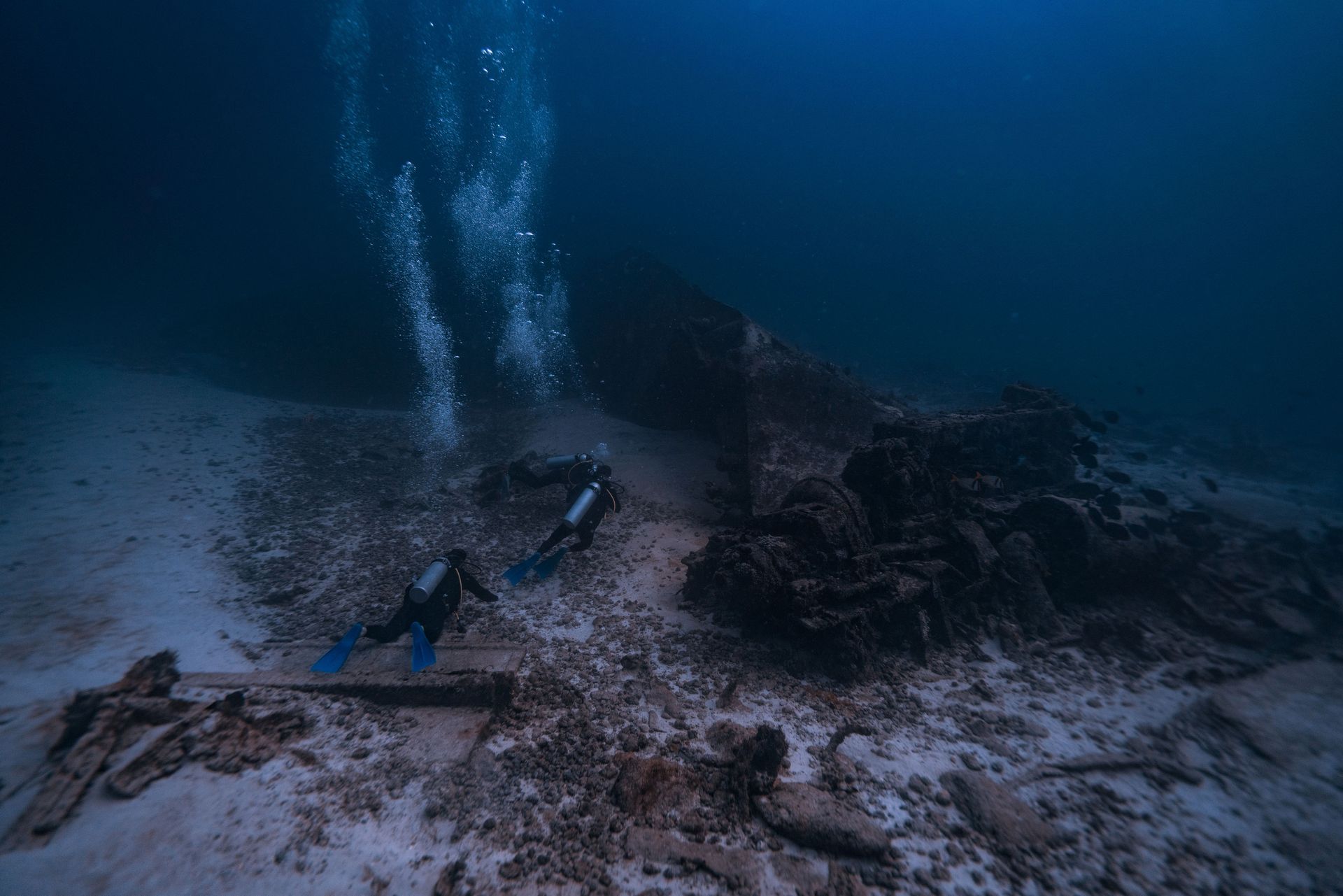
Three medieval shipwrecks found off Menorca's 'Cove of Mysteries'
Archaeologists have uncovered three previously unknown 13th-century shipwrecks off the coast of Menorca, likely sunk by sudden meteorological tsunamis. Their cargo, blending Christian and Moorish goods, offers a rare window into the trading world that connected medieval Iberia to the wider Mediterranean.

On this day, 10 July 1962: Telstar, the first active communications satellite, launches
On 10 July 1962, Telstar 1 launched from Cape Canaveral, becoming the first active satellite to relay television signals, telephone calls and data across the Atlantic. The satellite's brief but historic mission kicked off the era of live intercontinental broadcasting and helped establish the technical foundations of modern satellite communications.