Renaissance Italy's firearm revolution: how gunpowder rewrote the rules of war
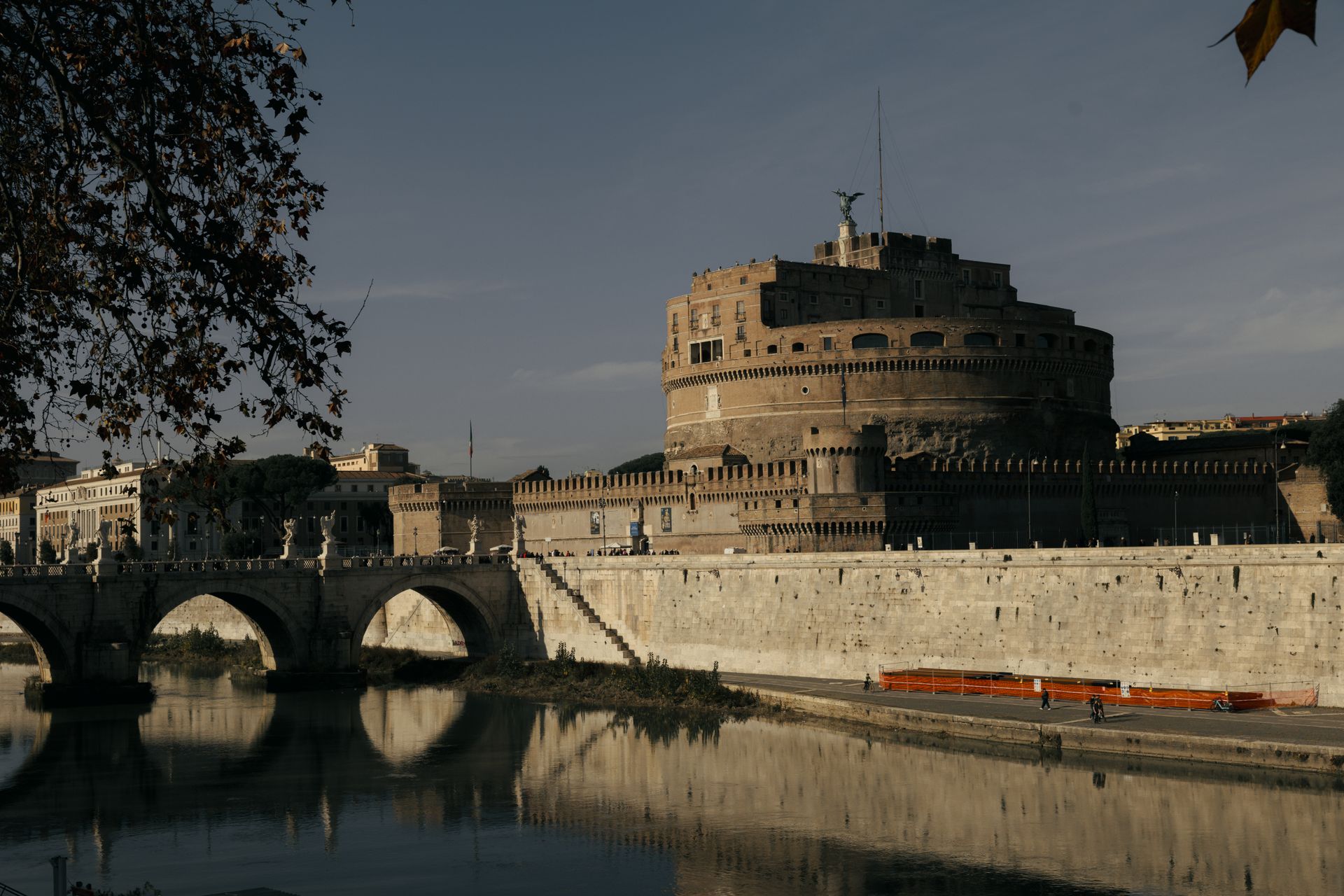
For much of the late medieval period, a well-built stone castle could withstand a siege for months or even years, its high vertical walls designed to repel scaling ladders and outlast an attacker's patience and supplies. By the end of the 15th century, that calculation had changed dramatically, and nowhere did the change play out faster or more visibly than on the fragmented political map of Renaissance Italy.
Italy in this period was not a unified state but a patchwork of rival city-states, republics and papal territories, including Venice, Florence, Milan, Naples and the Papal States, most of which relied on hired mercenary captains known as condottieri to fight their frequent wars against one another. That near-constant low-level conflict, combined with intense competition between wealthy trading cities eager for any military advantage, created ideal conditions for rapid experimentation with new weapons technology.
Handheld firearms, particularly the arquebus, a matchlock gun fired from the shoulder or a support, spread through Italian armies in the closing decades of the 15th century. Early arquebuses were slow to reload, inaccurate at range and vulnerable in wet weather, but deployed in massed volleys they could punch through the plate armour that had protected mounted knights for generations, gradually eroding the battlefield dominance that heavily armoured cavalry had held throughout the medieval period.
Gunpowder artillery had an even more dramatic effect on siege warfare specifically. Cannon capable of firing heavy stone or iron shot could reduce the high, thin walls of a traditional medieval castle to rubble within days rather than the months or years a siege by starvation and escalade had once required, rendering centuries of fortification design suddenly obsolete almost overnight.
Italian military engineers responded with a fundamentally new approach to fortification known to historians as the trace italienne, or star fort. Instead of tall, thin walls vulnerable to cannon fire, these fortifications used low, thick, angled earthen and masonry ramparts arranged in projecting star-shaped bastions, a design that deflected cannonballs more effectively and let defenders lay down overlapping fields of fire against attackers approaching from any direction.
The changing character of warfare also drew the attention of Renaissance political and military theorists, most notably Niccolò Machiavelli, whose treatise The Art of War grappled directly with how firearms and professional artillery were altering the balance between citizen militias, mercenary armies and the states that funded them. Machiavelli and his contemporaries debated whether traditional civic virtues of the citizen-soldier could survive in an age when winning battles increasingly depended on expensive, specialised equipment and trained gun crews rather than individual courage or skill at arms.
The new style of warfare carried a steep economic cost. Star fortifications required enormous outlays of stone, earth and skilled engineering labour, while effective artillery trains needed foundries, gunpowder production, and specialised crews to transport and operate the guns. These costs increasingly favoured larger, wealthier states that could sustain standing military infrastructure over smaller city-states that had previously competed on more even terms, contributing over time to the erosion of Italy's political fragmentation.
Tactically, infantry commanders experimented with combined formations pairing pikemen, who could protect against cavalry charges with dense hedges of long spears, alongside growing numbers of arquebusiers, whose firepower could be concentrated at critical moments in a battle. This pike-and-shot combination, refined through decades of Italian battlefield experience, became the standard infantry tactic across European armies for the following century and a half.
Much of this innovation was tested, refined and exported during the prolonged conflict historians call the Italian Wars, fought between 1494 and 1559 as France, Spain and the Holy Roman Empire repeatedly invaded the Italian peninsula seeking to claim its wealthy city-states. Foreign armies that fought in Italy observed Italian fortification and firearms tactics firsthand and carried the innovations home, spreading star fort design and pike-and-shot infantry formations across the rest of Europe within a generation.
Historians view Renaissance Italy's experience with gunpowder less as the story of a single decisive invention than as a compressed period of rapid, competitive iteration across engineering, tactics and political theory, a case study in how a fractured, competitive political landscape, rather than a single centralised power, can sometimes drive technological and military change faster than a unified state ever could.
Read next

On this day: Anne Frank and seven others are arrested in Amsterdam's Secret Annex
On 4 August 1944, German security police raided a hidden annex above an Amsterdam canal-house warehouse, arresting Anne Frank, her family and four others after more than two years in hiding. Her diary, recovered afterward, became one of the world's most widely read accounts of the Holocaust.

How Did the Search for Alien Life Become a Serious Scientific Field?
The scientific study of whether life exists beyond Earth, once dismissed as speculation, took shape as a formal research field called exobiology around 1960, driven by Cold War-era space exploration and advances in origin-of-life chemistry. The field later broadened into today's astrobiology, incorporating discoveries of extremophiles and exoplanets.

Jane Stanford, Stanford University's Founding Matriarch, and Her Disputed Death by Poison
Jane Lathrop Stanford co-founded Stanford University with her husband, railroad magnate Leland Stanford, after the death of their teenage son, and later kept the university financially afloat through her own fortune. Her sudden death in 1905, after an earlier poisoning scare, has long divided historians over whether it was murder or natural causes.

Jesse Owens Wins 100m Olympic Gold in Berlin, Rebutting Nazi Propaganda
On August 3, 1936, American sprinter Jesse Owens won 100-meter gold at the Berlin Olympics, the first of four medals he took home from the Games. Historians widely cite his victory, achieved before Adolf Hitler's regime, as a rebuttal to Nazi Aryan-supremacy propaganda. Owens returned to a segregated United States.

Fanny Bullock Workman: the Victorian explorer who scaled peaks no woman had climbed
At a time when mountaineering was still in its infancy, Fanny Bullock Workman took to the peaks of the Himalayas, setting women's altitude records, mapping remote glaciers, and campaigning for suffrage between expeditions. Her adventurous life also made her one of the era's pioneering geographers.