On this day: Anne Frank and seven others are arrested in Amsterdam's Secret Annex
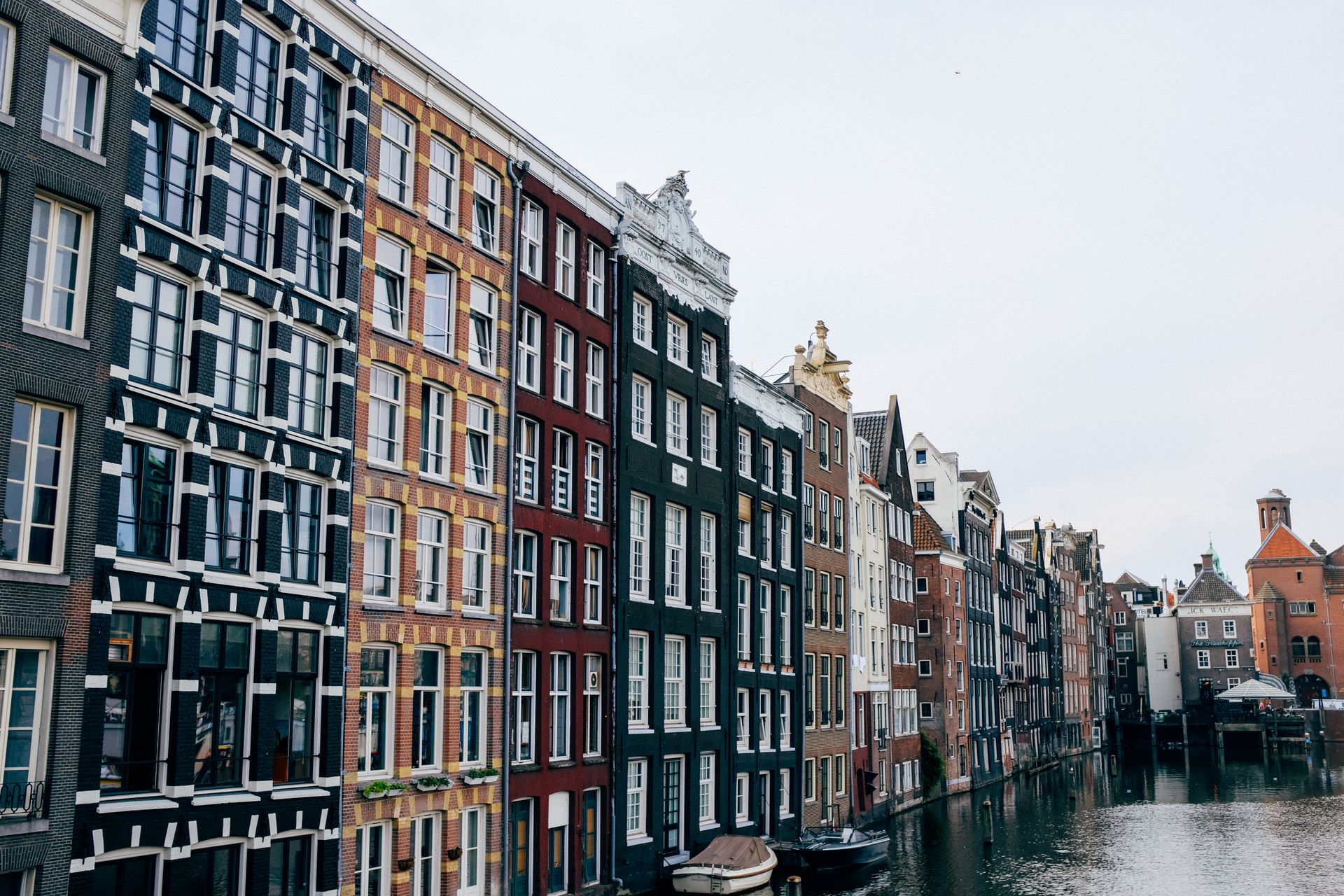
On the morning of 4 August 1944, officers of the German security police entered a canal-house at Prinsengracht 263 in Amsterdam and climbed to a hidden set of rooms behind a movable bookcase, known afterward as the Secret Annex. Inside, they found eight people who had been living in concealment for just over two years: Anne Frank, her parents Otto and Edith, her sister Margot, the van Pels family, and a dentist named Fritz Pfeffer. All eight were arrested.
The Frank family had gone into hiding in July 1942, shortly after the Nazi occupation of the Netherlands intensified its persecution of Jewish residents and Margot Frank received a summons for deportation to a labour camp. Otto Frank, who ran a business from the building's ground floor and offices, had spent months quietly preparing the annex as a refuge, stocking it with furniture and supplies before the family disappeared from public life.
During their time in hiding, the group depended entirely on a small circle of Otto Frank's employees and friends, including Miep Gies, Bep Voskuijl, Johannes Kleiman and Victor Kugler, who brought food, news and books, and took considerable personal risk in doing so under an occupation that punished the sheltering of Jewish people with arrest or worse. Anne, then a teenager, spent much of the two years writing a diary chronicling daily life in the cramped annex, along with her thoughts, fears and ambitions.
The raid was carried out by a unit of the Sicherheitsdienst, the German security service, reportedly acting on a tip that led them directly to the hidden rooms rather than a general search of the building. The identity and motive of whoever alerted the authorities has never been conclusively established; despite decades of investigation, including a widely reported inquiry in the early 2020s that proposed one possible name, historians regard the question as unresolved and the specific claim disputed.
Alongside the eight people in hiding, two of their helpers, Kleiman and Kugler, were also arrested for having assisted them, while Miep Gies and Bep Voskuijl were not detained and later recovered pages of Anne's diary scattered across the floor of the annex after the arrest. Those in hiding were first taken to a Dutch detention centre and then to Westerbork transit camp before being deported on one of the last transports from the Netherlands to Auschwitz-Birkenau in early September 1944.
The family was separated shortly after arrival, along the lines used to divide those selected for forced labour from those sent immediately to their deaths. Anne and Margot were later transferred to the Bergen-Belsen concentration camp in Germany, where conditions deteriorated sharply in the final months of the war. Both sisters died there of typhus, an infectious disease that spread through the severely overcrowded camp, in the weeks before British forces liberated it in April 1945.
Of the eight people arrested in the annex, only Otto Frank survived the war. He returned to Amsterdam in June 1945 and was eventually given the pages of Anne's diary that Miep Gies had kept safe, unread, in the hope of returning them to Anne herself.
Otto Frank had the diary edited and published in 1947 under the Dutch title Het Achterhuis, meaning The Annex; it later appeared in English as The Diary of a Young Girl. The book has since been translated into dozens of languages and is widely used in schools as a first-person account of the Holocaust's impact on an individual family.
The building at Prinsengracht 263 opened to the public as the Anne Frank House museum in 1960, preserving the annex largely as it was found, and today receives more than a million visitors annually from around the world.
Historians and educators say the diary's enduring significance lies in how it renders a vast historical catastrophe through the specific, personal voice of one teenager, offering readers a way to grasp the scale of the Holocaust's human cost through a single, documented life rather than through statistics alone.
Read next
Renaissance Italy's firearm revolution: how gunpowder rewrote the rules of war
In the late 15th and 16th centuries, the fractured city-states of Italy became an unlikely laboratory for gunpowder warfare, testing early firearms and cannon that could breach walls built to withstand centuries of siege. The innovations that followed reshaped fortification design, military theory and the economics of war across Europe.
How Did the Search for Alien Life Become a Serious Scientific Field?
The scientific study of whether life exists beyond Earth, once dismissed as speculation, took shape as a formal research field called exobiology around 1960, driven by Cold War-era space exploration and advances in origin-of-life chemistry. The field later broadened into today's astrobiology, incorporating discoveries of extremophiles and exoplanets.
Jane Stanford, Stanford University's Founding Matriarch, and Her Disputed Death by Poison
Jane Lathrop Stanford co-founded Stanford University with her husband, railroad magnate Leland Stanford, after the death of their teenage son, and later kept the university financially afloat through her own fortune. Her sudden death in 1905, after an earlier poisoning scare, has long divided historians over whether it was murder or natural causes.

Jesse Owens Wins 100m Olympic Gold in Berlin, Rebutting Nazi Propaganda
On August 3, 1936, American sprinter Jesse Owens won 100-meter gold at the Berlin Olympics, the first of four medals he took home from the Games. Historians widely cite his victory, achieved before Adolf Hitler's regime, as a rebuttal to Nazi Aryan-supremacy propaganda. Owens returned to a segregated United States.

Fanny Bullock Workman: the Victorian explorer who scaled peaks no woman had climbed
At a time when mountaineering was still in its infancy, Fanny Bullock Workman took to the peaks of the Himalayas, setting women's altitude records, mapping remote glaciers, and campaigning for suffrage between expeditions. Her adventurous life also made her one of the era's pioneering geographers.