Fanny Bullock Workman: the Victorian explorer who scaled peaks no woman had climbed

At a time when mountaineering was still a young and overwhelmingly male pursuit, the American explorer Fanny Bullock Workman spent much of her adult life scaling Himalayan peaks that few climbers of either sex had previously attempted, setting a series of women's altitude records that stood for decades and establishing herself as one of the era's most accomplished, if underappreciated, geographers.
Born in Massachusetts in 1859 to a wealthy family, Workman had few obvious early indications of the extraordinary physical exploits ahead of her. She married William Hunter Workman, a physician, in 1881, and the couple initially pursued a comparatively conventional life before a shared enthusiasm for long-distance cycling drew them into increasingly ambitious travel, culminating in extended cycling expeditions across Europe, North Africa, and eventually Asia.
It was during travels through India in the 1890s that the Workmans turned their attention to the Himalayas, beginning a series of mountaineering expeditions that would occupy much of the following two decades. Fanny Bullock Workman proved a formidably driven climber, undertaking gruelling high-altitude expeditions in an era when mountaineering equipment, medical understanding of altitude sickness, and mapping of the region's glaciers all remained rudimentary by later standards.
Her accounts of these expeditions describe conditions that would challenge even well-equipped modern climbers: extreme cold, primitive supply logistics, and, on at least one occasion, a direct confrontation with bandits that she is reported to have faced down with a revolver, a story that has since become one of the most retold anecdotes of her career, illustrative of a broader fearlessness that ran through her expeditions.
Workman set several women's altitude records over the course of her climbing career, most notably during a 1906 expedition in the Nun Kun massif in present-day India, a record that stood for decades and that she herself was known to defend vigorously, at one point commissioning a scientific survey to challenge a rival climber's disputed claim to a higher altitude, reflecting both her competitive streak and her insistence on rigorous, verifiable evidence.
Beyond the altitude records, Workman's expeditions produced substantial scientific and cartographic contributions. She and her husband conducted detailed surveys and mapping of Himalayan glaciers that had previously been poorly documented, work that was formally recognised by the Royal Geographical Society and other scientific institutions of the period, an unusual honour for a woman working in exploration during an era when the field remained dominated almost entirely by men.
Workman was also an active and outspoken campaigner for women's suffrage, using the public platform her mountaineering fame provided to advocate for political rights for women, and famously being photographed atop a Himalayan glacier holding a newspaper with the headline "Votes for Women", a striking image that deliberately merged her physical achievements with her political convictions.
Her relationship with the broader mountaineering and geographical establishment of her time was not without friction. As a woman operating in fields dominated by men, Workman faced scepticism about her claims and achievements that male explorers of comparable accomplishment rarely encountered to the same degree, a pattern that historians studying her career have increasingly highlighted as illustrative of the broader barriers facing women in exploration and science during the period.
Workman continued lecturing and writing about her expeditions until poor health curtailed her travels in the years before her death in 1925. She left a substantial portion of her estate to fund scholarships for women at several American women's colleges, a final act that extended her lifelong advocacy for women's advancement beyond her own remarkable individual achievements.
Modern historians revisiting Workman's career have increasingly framed her not simply as an eccentric adventurer but as a serious scientific figure whose glacial surveys and altitude records represented genuine contributions to geography and mountaineering, achievements that, like those of many women of her era working in male-dominated fields, took decades longer than they should have to receive full recognition.
Read next

On This Day: President Warren G. Harding dies suddenly in office in 1923
On 2 August 1923, US President Warren G. Harding died suddenly in a San Francisco hotel room while on a cross-country tour, becoming the sixth American president to die in office. His death, most likely from a heart attack, came as investigators were only beginning to uncover corruption scandals within his administration.

Was there ever an original version of the Odyssey? What scholars actually know
The earliest surviving fragments of the Odyssey date back more than 2,000 years, but the oral storytelling tradition behind Odysseus is likely far older still. Classicists explain why the question of an 'original' Odyssey may be the wrong question to ask entirely.

What was on an ancient Roman's shopping list? Consumerism, 2,000 years ago
Long before modern retail existed, ordinary Romans spent their disposable income chasing fashion, status and fitting in, buying goods shipped in from across a connected empire. Historians say the archaeological and documentary evidence points to a recognisably consumerist culture.

On this day in 1981: MTV launches and changes how the world watches music
At 12:01 a.m. on August 1, 1981, MTV signed on with the words 'Ladies and gentlemen, rock and roll' and a video for the Buggles' 'Video Killed the Radio Star.' The channel reshaped the music industry around the visual medium of the music video within a few short years.
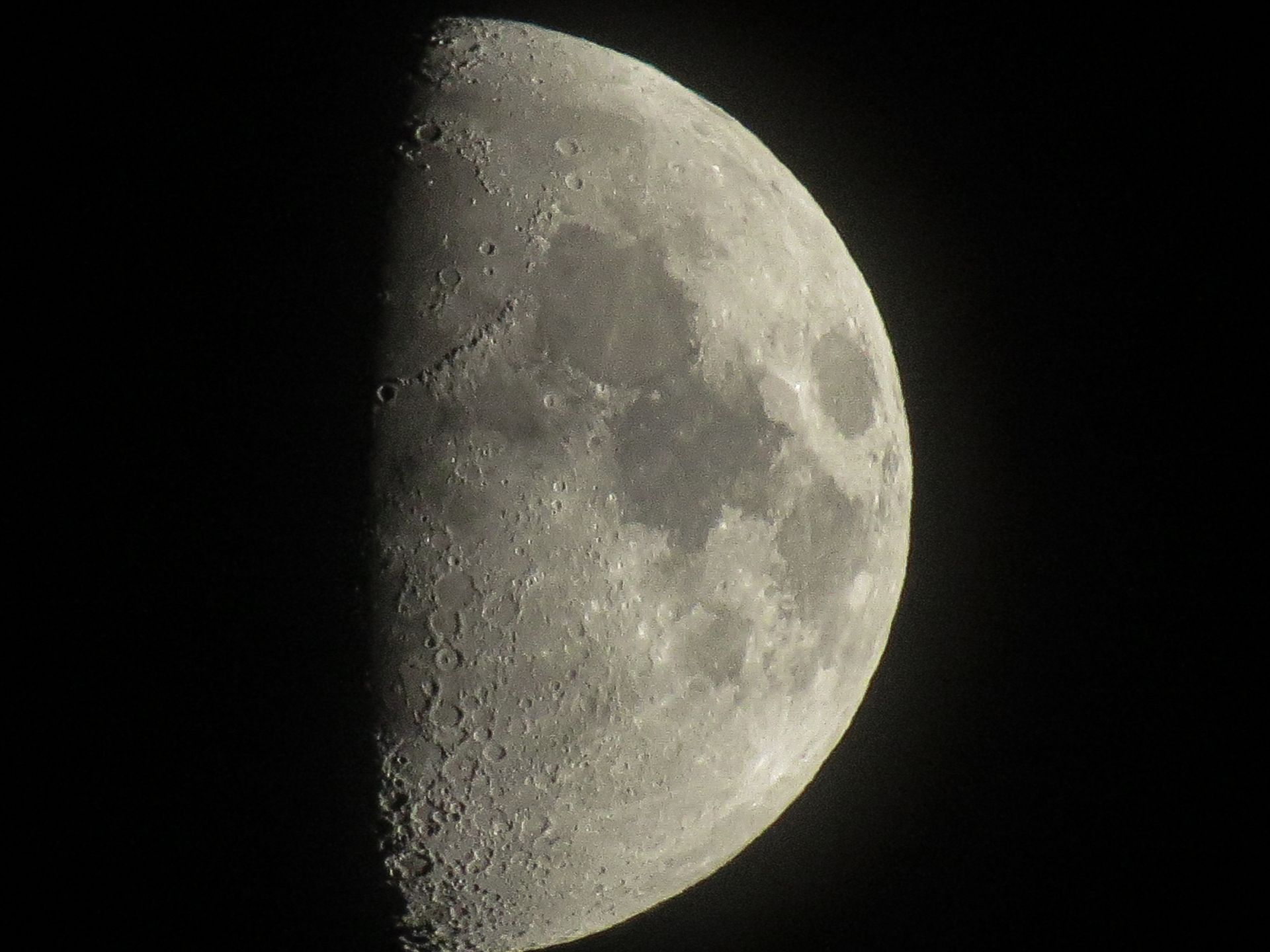
On this day: humans drove a vehicle on the Moon for the first time (31 July 1971)
On 31 July 1971, Apollo 15 astronauts David Scott and James Irwin drove the Lunar Roving Vehicle for the first time, marking the first occasion a human operated a vehicle on another celestial body. Built by Boeing and capable of a top speed of 13 km/h, the rover let the crew cover more than 25 kilometres over three days on the lunar surface.