On This Day: President Warren G. Harding dies suddenly in office in 1923

On 2 August 1923, President Warren G. Harding died suddenly in a suite at San Francisco's Palace Hotel, cutting short a cross-country speaking tour he had undertaken to reconnect with the American public partway through his term. He was 57 years old and had shown signs of illness in the days beforehand, but his death still came as a shock to a nation that had seen little public indication he was gravely unwell.
Harding had departed Washington in June 1923 on what was billed as the Voyage of Understanding, an ambitious rail and sea journey intended to take him across the western United States and up to Alaska, making him the first sitting president to visit the territory. The tour was meant to shore up public support and allow Harding to explain his administration's policies directly to voters, a strategy his advisers hoped would strengthen his standing ahead of a re-election campaign.
By the time the presidential party reached San Francisco in late July, Harding was visibly unwell, reportedly suffering from what doctors at the time described as a severe case of food poisoning or exhaustion. His condition worsened over several days, and on the evening of 2 August, while his wife Florence read to him in their hotel suite, Harding died suddenly, with contemporary physicians attributing the cause to a heart attack, described in medical terminology of the era as apoplexy.
The suddenness of his death, combined with the medical uncertainty surrounding it and the decision not to conduct an autopsy at Mrs Harding's request, fuelled decades of speculation and conspiracy theories, including unsubstantiated claims that he had been poisoned. Modern medical historians who have reviewed the available evidence generally consider a cardiac event, consistent with Harding's known history of heart trouble and high blood pressure, the most plausible explanation.
Harding became the sixth American president to die in office and the second in the twentieth century, following William McKinley's assassination in 1901. His vice president, Calvin Coolidge, was sworn in within hours of his death, in a now-famous ceremony conducted by Coolidge's own father, a notary public, by kerosene lamp at the family homestead in Vermont, where Coolidge had been visiting when news of Harding's death reached him.
Harding's presidency, which had been defined publicly by a return to normalcy after the upheavals of the First World War, was posthumously overshadowed by a series of corruption scandals that came to light in the months and years following his death, most notably the Teapot Dome scandal, in which officials in his administration were found to have accepted bribes in exchange for leasing federal oil reserves to private companies.
Historians have long debated how much Harding personally knew about the corruption within his administration, with most concluding that while he was not directly implicated in the bribery itself, his poor judgment in appointing and trusting the officials responsible contributed significantly to the scandals. His reputation, extremely high at the time of his death, when he was widely mourned, declined substantially in the decades that followed as the scale of the corruption became clear.
Harding's funeral drew enormous public crowds along the route his funeral train took from San Francisco back to Washington and eventually to his hometown of Marion, Ohio, reflecting the genuine public affection he had commanded during his lifetime, even as his posthumous historical reputation would later suffer considerably.
Contemporary historians generally rank Harding's presidency toward the bottom of assessments of American presidents, citing the corruption scandals and a relatively modest domestic and foreign policy record, though some have noted more recent scholarly reassessment of specific elements of his term, including his role in ending wartime-era restrictions and pardoning political prisoners jailed for opposing US involvement in the First World War.
Read next

Fanny Bullock Workman: the Victorian explorer who scaled peaks no woman had climbed
At a time when mountaineering was still in its infancy, Fanny Bullock Workman took to the peaks of the Himalayas, setting women's altitude records, mapping remote glaciers, and campaigning for suffrage between expeditions. Her adventurous life also made her one of the era's pioneering geographers.

Was there ever an original version of the Odyssey? What scholars actually know
The earliest surviving fragments of the Odyssey date back more than 2,000 years, but the oral storytelling tradition behind Odysseus is likely far older still. Classicists explain why the question of an 'original' Odyssey may be the wrong question to ask entirely.

What was on an ancient Roman's shopping list? Consumerism, 2,000 years ago
Long before modern retail existed, ordinary Romans spent their disposable income chasing fashion, status and fitting in, buying goods shipped in from across a connected empire. Historians say the archaeological and documentary evidence points to a recognisably consumerist culture.

On this day in 1981: MTV launches and changes how the world watches music
At 12:01 a.m. on August 1, 1981, MTV signed on with the words 'Ladies and gentlemen, rock and roll' and a video for the Buggles' 'Video Killed the Radio Star.' The channel reshaped the music industry around the visual medium of the music video within a few short years.
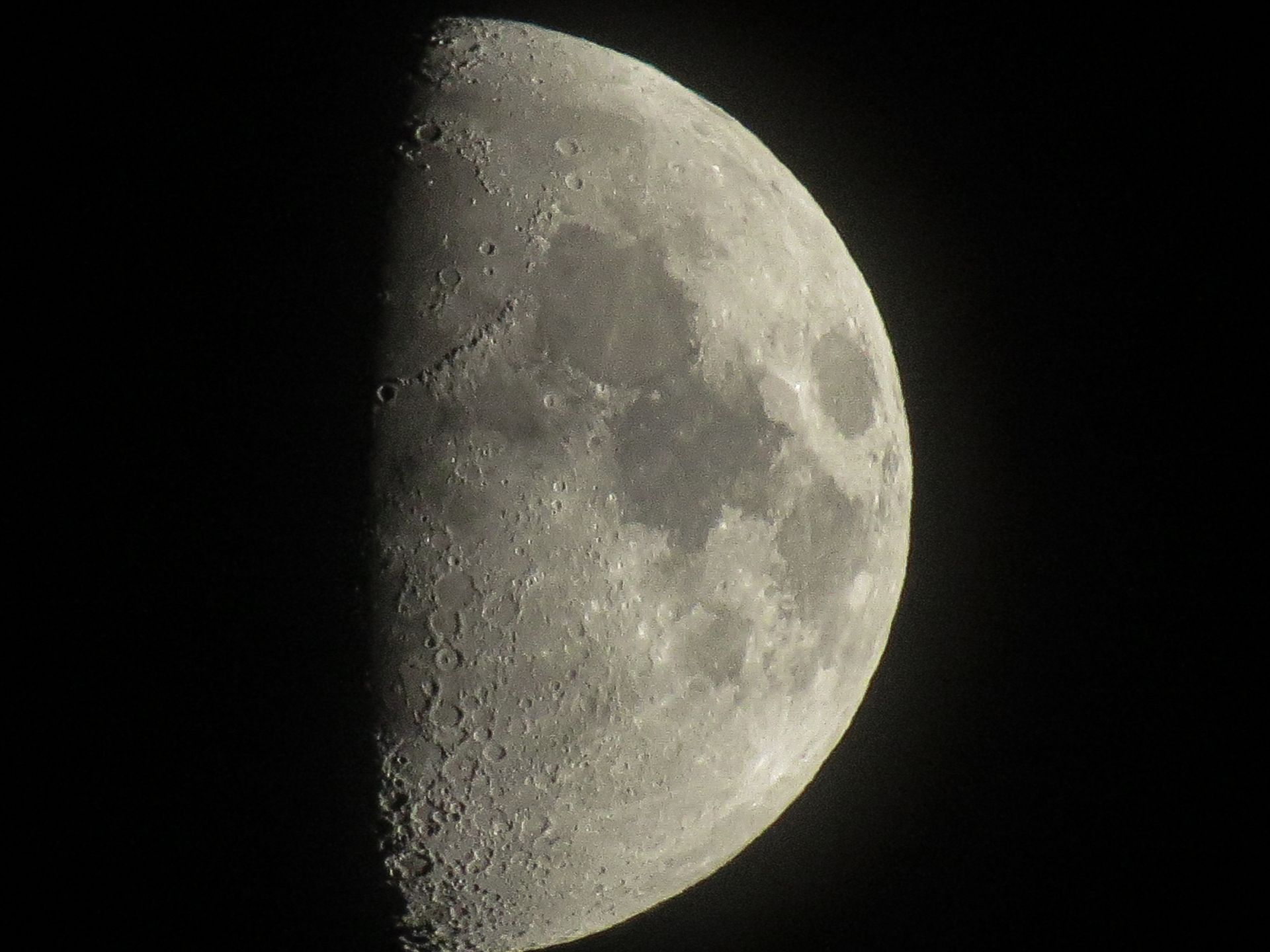
On this day: humans drove a vehicle on the Moon for the first time (31 July 1971)
On 31 July 1971, Apollo 15 astronauts David Scott and James Irwin drove the Lunar Roving Vehicle for the first time, marking the first occasion a human operated a vehicle on another celestial body. Built by Boeing and capable of a top speed of 13 km/h, the rover let the crew cover more than 25 kilometres over three days on the lunar surface.