Messi's World Cup farewell comes full circle against Spain
When Lionel Messi walks out for Sunday's World Cup final, at an age when most professional footballers have long since retired, he will do so against an opponent whose relationship with his career began long before he ever wore Argentina's blue and white. Spain, by virtue of the years Messi spent developing at Barcelona's youth academy as a teenage arrival from Rosario, once had a genuine claim on his international future — a claim it never got to exercise.
Messi moved to Barcelona's La Masia academy at 13, a transfer driven in part by the club's willingness to fund treatment for the growth hormone deficiency that had threatened to end his career before it began. Under FIFA eligibility rules of the era, years of residency in Spain during his formative youth career could plausibly have opened a path to representing the country that had, in a very real sense, built the player he became.
That path was never taken. Messi made his senior international debut for Argentina in 2005, and the question of a Spain career, occasionally revisited in Spanish football media over the years that followed, never became more than a hypothetical footnote to a career that would instead be built entirely around the Argentina shirt — including the World Cup he finally won in Qatar in 2022, completing the one achievement that had eluded him through three previous tournaments as a runner-up, semifinalist and last-16 exit.
That 2022 title, secured in a dramatic final against France, was widely described at the time as the missing piece that settled any lingering debate about Messi's standing among the sport's greatest players. His decision to continue playing internationally afterward, through qualification and into this tournament at an age few outfield players reach at the top level, has been read by many in the sport as an extension rather than a chase — one more World Cup for its own sake, not to prove a point already proven.
Argentina's route to this final has run through a semifinal victory over England, a result that continued a run of knockout-stage performances built as much around the team's collective structure as around any single player, a departure from the more individually reliant Argentina sides of Messi's earlier tournaments.
Spain, meanwhile, reached the final by beating France, a result widely credited to the team's cohesive passing structure overcoming a France side built around individually brilliant attacking talent — a contrast frequently invoked by pundits this tournament as representative of two different philosophies of building a winning international side.
For Spain's current squad, few of whom were established international players when Messi first broke through at Barcelona two decades ago, Sunday's final represents less a reckoning with the federation's missed opportunity and more the standard task of trying to stop one of the sport's most decorated players from adding one final trophy to an already complete collection.
Younger members of Argentina's squad have spoken in the buildup to the tournament about the specific motivation of playing what may be Messi's last World Cup alongside him, a dynamic that has shaped much of the team's public messaging through the knockout rounds regardless of the tactical specifics of any given match.
Whatever the outcome on Sunday, football historians are likely to treat this final as a natural closing chapter to Messi's World Cup story specifically — a tournament career that began as a teenager in Germany in 2006 and would, should this prove to be his last appearance, end roughly two decades later against the country that, in a different set of circumstances decades ago, might have called him one of its own.
For Spain, the match carries no such retrospective weight tied to Messi individually — their focus, as described by figures around the squad throughout the tournament, has been on the present opportunity to win a first World Cup since 2010 rather than on the historical footnote of a player who chose a different shirt long before this Spain squad's own careers began.
Read next

Giannis Antetokounmpo says he'll do 'whatever it takes' to win with the Heat
Giannis Antetokounmpo says the pressure of joining a franchise with Miami's championship pedigree is fueling him, not weighing on him, as he begins his first season with the Heat. The two-time MVP says he is prepared to do whatever the team's demanding culture requires to win a title.

Noskova holds off extraordinary Muchova fightback to win Wimbledon
Czech youngster Linda Noskova recovered from squandering five championship points to beat fellow Czech Karolina Muchova in an extraordinary Wimbledon final, a match that swung dramatically before Noskova finally closed it out. The all-Czech final capped a tournament marked by the country's dominant run in women's tennis.

Argentina's late show breaks England hearts to end World Cup dream
England's first World Cup final since 1966 slipped away in stoppage time as holders Argentina scored twice late on to win 2-1 in a dramatic semi-final. Lautaro Martinez's winner sent Argentina through, while questions immediately turned to Thomas Tuchel's tactical changes.
Pogačar tightens his grip on the Tour de France after a 10th-stage win
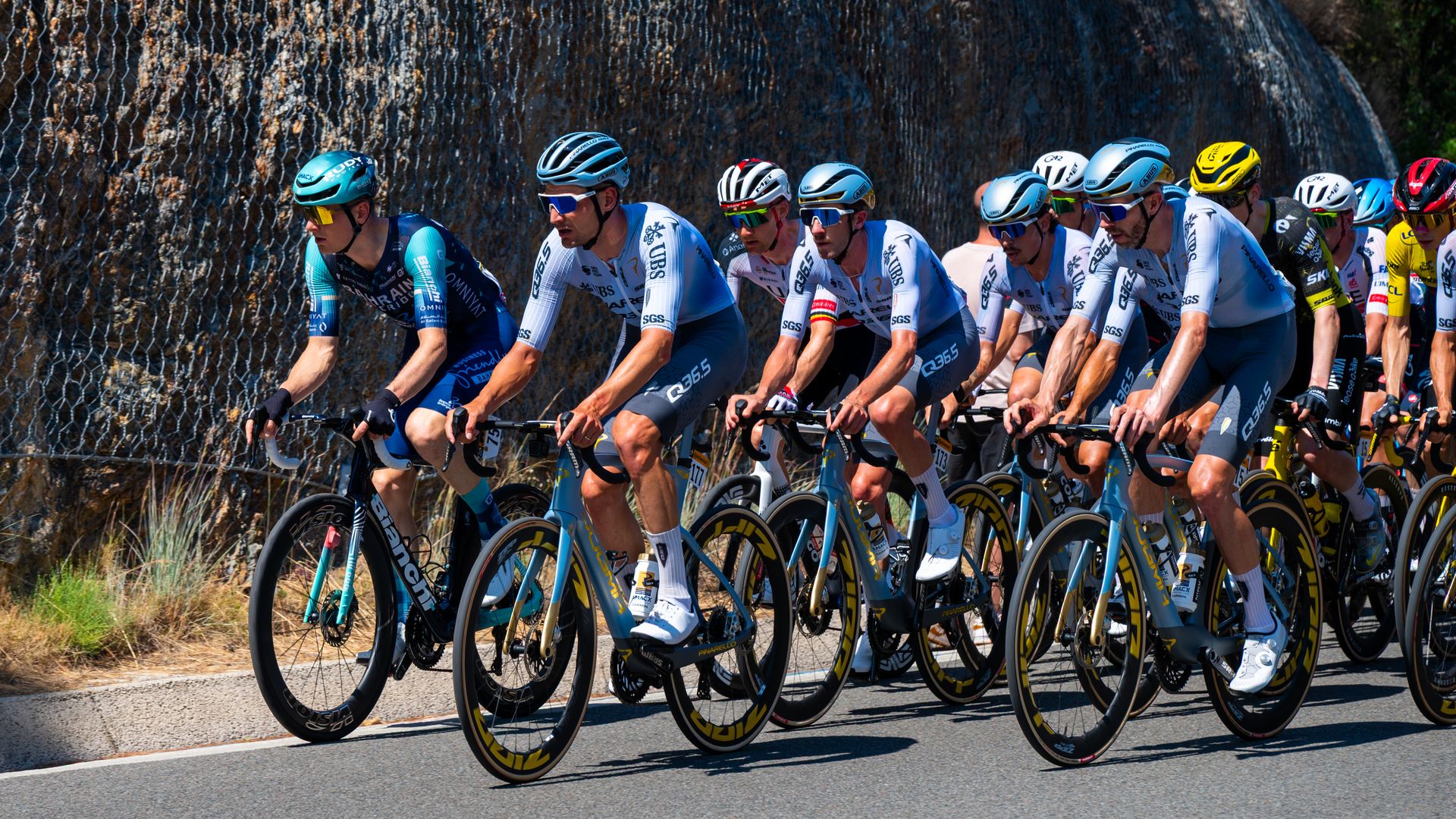
Four-time champion Tadej Pogačar won the 10th stage of the Tour de France, extending his overall lead in the race. The victory is the latest evidence of the Slovenian rider's commanding grip on this year's edition, having held the yellow jersey for much of the race.
A team beats brilliant individuals: how Spain flattened France
Spain, who had flown somewhat under the radar through the 2026 World Cup, eliminated France with a comfortable win to reach the final. In contrast to a France side built around individual stars, Spain's collective approach produced one of the tournament's most complete performances.