AI coding agents taught robots to install GPUs and tie cable bindings
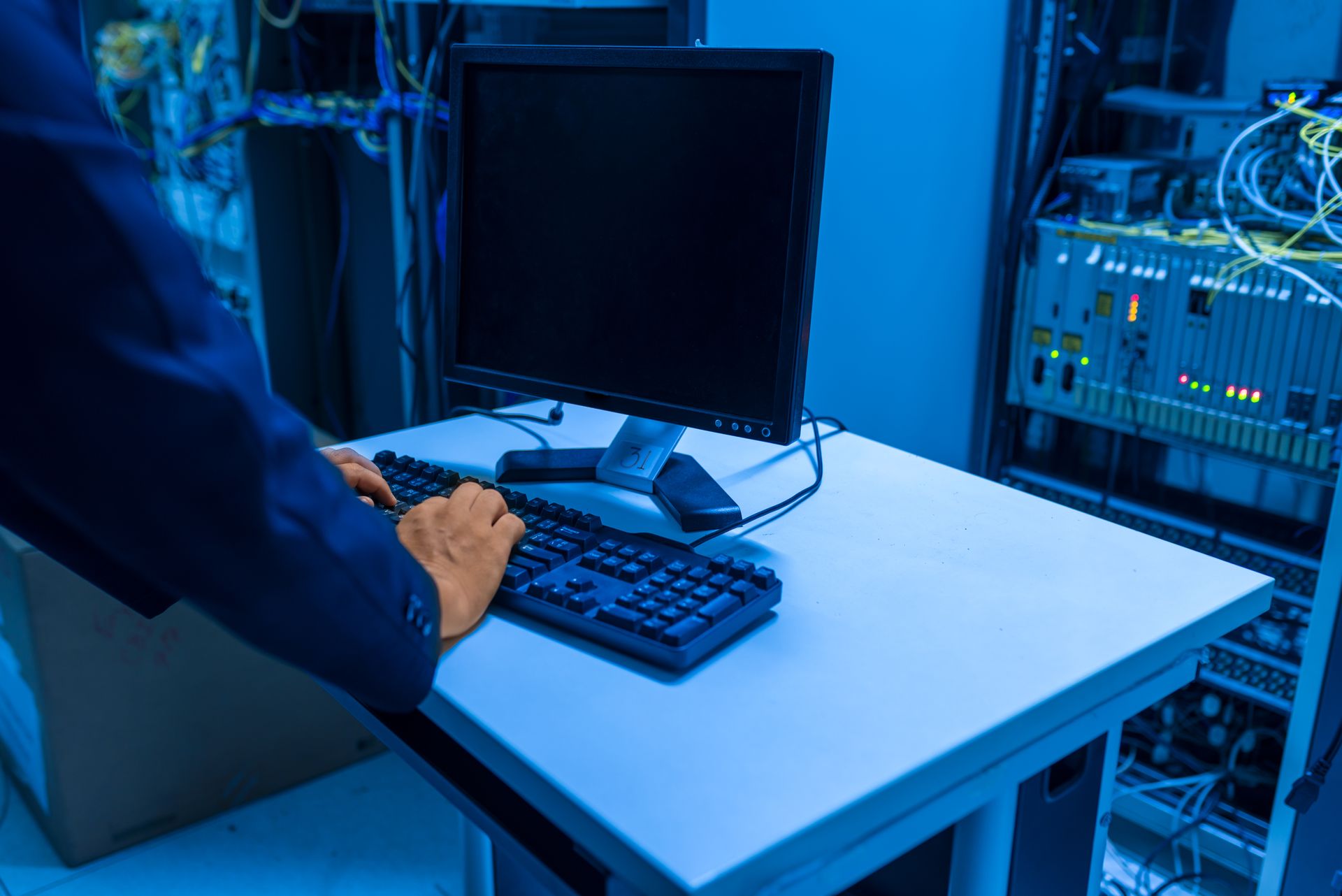
New research reported by Ars Technica shows that current-generation AI coding agents can directly supervise physical robots and train them to install GPUs, tie cable bindings, mount racks and perform other data-centre maintenance tasks. The study marks a new stage at the intersection of robotic learning and large language model agents.
The team involved researchers from Boston Dynamics, Stanford and Anthropic. In the setup, Boston Dynamics' Atlas robot was directed by an AI coding agent through natural-language commands. The agent generated code that translated robotic arm movements into a low-level control layer.
The task set was drawn from real-world data-centre maintenance: inserting a new GPU card into a server slot, tying cable bundles with zip-ties, swapping drives and adjusting rack rails. These tasks require fine motor skills that human technicians take years to learn. Earlier robotics research has mostly focused on simpler "pick-and-place" tasks.
In the experiments, the robot trained by the AI agent achieved 87% on GPU installation, 81% on cable binding and 79% on drive swap. By comparison, a conventional robot trained under human supervision reached 91-93% on similar tasks but required 12 times more training time.
The real novelty is that the robot was operating without a pre-defined task plan during the supervision. The AI agent worked out how to solve the task step-by-step through a loop of natural-language planning, code generation and observation-then-adjust. After a failed attempt, the agent could read the error message and rewrite the code.
In the agent infrastructure, the team tested Claude and GPT-4 class language models. Anthropic's Claude model achieved a 6% higher success rate on tasks requiring multi-step planning; GPT-4 class models were faster in code generation. The results suggest both models are capable enough for robot control flow.
The data-centre industry is taking an interest in this kind of automation because of its labour shortage. The Uptime Institute's 2025 report says the sector is short more than 450,000 technicians globally. As AI and hyperscale data-centres are built, the gap is forecast to reach a million by 2030.
The researchers say automation will not replace human technicians in the near term but can take on routine maintenance work. Professor Chelsea Finn of Stanford told Ars Technica: "Our goal is to allow human technicians to focus on complex problems that require their expertise; a routine GPU swap can be picked up by an AI agent."
There are safety concerns. If an AI agent acts outside its authority and issues a wrong command in a data-centre environment, the risk of damaging billions of dollars' worth of equipment is real. The research team said the experiments included a physical "safety kill" controller and that the agent's range of motion was defined in advance.
The next phase is to run the experiment in an actual hyperscale data centre. Microsoft Azure and Google Cloud are reported to be part of the test programme. Scaling up will involve more complex environmental conditions, broader hardware variety and longer-term reliability tests. Results are expected to publish in early 2027.
Read next

What is MCP, and why does it matter that 21,000 servers were exposed
The Model Context Protocol, an open standard that lets AI assistants connect to outside tools and data, has hit a security inflection point after researchers found more than 21,000 unprotected servers exposed on the open internet. Here's what MCP is, why developers adopted it so fast, and why that exposure matters.

Judge gives Google one week to fix 'anticompetitive' download flow in Google Play
A federal judge has ruled that Google made it unnecessarily difficult for Android users to download alternative app stores, giving the company one week to fix the flow. The order will make third-party app stores more visible and accessible from within Google Play itself.

The world's largest all-electric aircraft flew its first test using just $5 of electricity
A venture backed by commercial airlines has completed the first test flight of what it calls the largest all-electric aircraft to fly, using roughly $5 worth of electricity for the flight. The company's longer-term goal is to develop a hybrid-electric, and eventually fully electric, commercial passenger aircraft.

How to tell if your AI platform account has been hacked
AI accounts on platforms like ChatGPT, Claude and Gemini are becoming an increasingly attractive target for hackers, given the personal conversation histories and linked payment details many of them hold. Here's how to check whether your account has been compromised and what to do about it.

Every fusion energy startup that has raised over $100 million
Fusion energy startups have collectively raised $7.1 billion to date, with the majority of that money concentrated in a handful of companies. Here's a look at the best-funded fusion startups and how their technical approaches differ.