What is the Riemann hypothesis, and how close is AI to solving it?
For more than 150 years, a single conjecture about the distribution of prime numbers has stood as one of mathematics' most famous open problems, resisting the efforts of generations of mathematicians. Now, an unreleased artificial intelligence model built by Anthropic has reportedly made meaningful progress on the Riemann hypothesis — falling short of a full proof, but advancing further than many in the field expected an AI system to get.
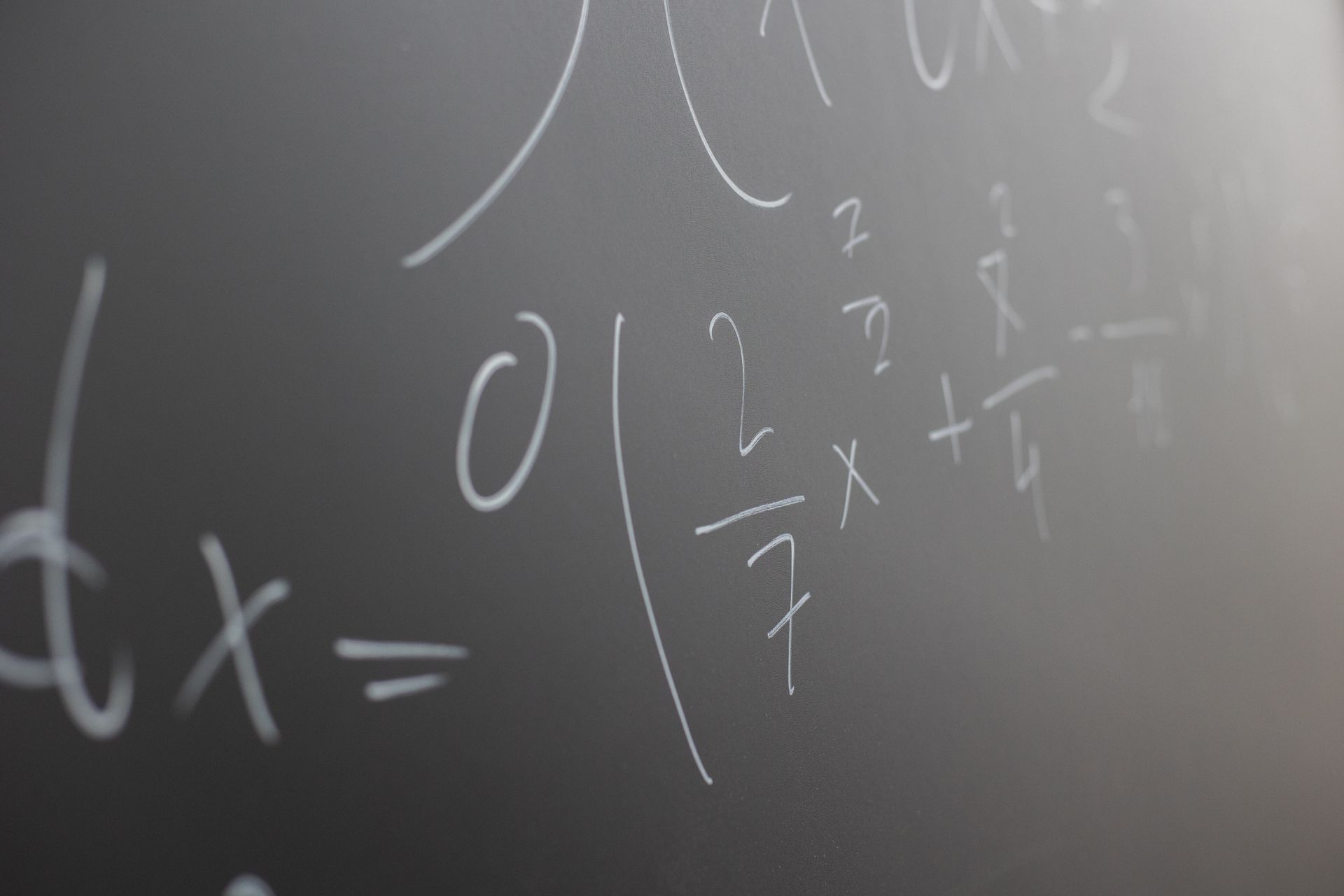
First proposed by the German mathematician Bernhard Riemann in 1859, the hypothesis makes a precise claim about a mathematical object called the Riemann zeta function, which encodes deep information about how prime numbers are distributed among all whole numbers. Riemann conjectured that every 'non-trivial' zero of this function — a specific set of points where the function's value equals zero — lies along a single line in the complex plane, one where the real part of the number always equals one half. It sounds abstract, but that single, precise claim has enormous downstream consequences for how mathematicians understand the seemingly random scattering of prime numbers along the number line.
The hypothesis is famous well beyond mathematics departments partly because of the bounty attached to it: the Clay Mathematics Institute named it one of seven Millennium Prize Problems in 2000, offering $1 million to anyone who can produce a rigorous proof. Only one of the seven problems has been solved since, underscoring how difficult this class of question is — and how significant it would be if the Riemann hypothesis fell.
It's important to be precise about what 'progress' means here, because it is not the same as a solution. Mathematicians distinguish sharply between computational evidence — showing that a conjecture holds true for an enormous number of test cases, which has already been done for trillions of zeros of the zeta function — and a rigorous proof that establishes the claim is true for every case, without exception, forever. What the unreleased Anthropic model reportedly produced falls into a middle category: meaningful theoretical advances on techniques relevant to the problem, not a finished proof that the broader mathematical community has verified.
The approach reflects a broader shift in how AI systems are being applied to advanced mathematics. Rather than simply memorizing known results, modern AI models can search enormous spaces of possible proof strategies, recognize patterns across vast bodies of existing mathematical literature, and, increasingly, work alongside formal proof-verification software that can mechanically check whether each logical step in an argument is actually valid — reducing, though not eliminating, the risk of subtle errors slipping through.
That verification question matters enormously here, because the history of the Riemann hypothesis is littered with claimed proofs that didn't survive scrutiny. Mathematicians tend to treat any announcement of progress on a problem this famous with considerable caution until the underlying work has been independently checked, line by line, by other experts in the field — a process that, for a result of this significance, would likely take months or years rather than days.
Anthropic's work sits within a wider and rapidly growing trend of AI-assisted mathematical research. Other AI labs have in recent years reported systems that generated novel proofs for geometry olympiad problems, discovered new mathematical constructions, and assisted human mathematicians in exploring conjectures that would otherwise take a career to investigate by hand. The Riemann hypothesis, given its fame and difficulty, has become something of an informal benchmark for how far this kind of AI-driven mathematical reasoning has come.
The model behind the reported progress has not been released publicly, and Anthropic has been measured in how it has characterized the result — describing it as meaningful progress rather than a breakthrough or a solution. That framing matters in a field where overstated claims have previously led to embarrassing retractions, and where the mathematical community's trust depends heavily on precise, unhyped language about what has and hasn't actually been demonstrated.
A full proof of the Riemann hypothesis, if one is eventually found, would ripple far beyond a single equation. It would sharpen mathematicians' understanding of exactly how irregular or regular the distribution of prime numbers really is, with knock-on effects across number theory and related fields. It would not, however, represent an immediate threat to modern encryption systems, which rely on the practical difficulty of factoring large numbers rather than directly on the truth of the Riemann hypothesis itself — a distinction that sometimes gets blurred in popular coverage of the topic.
For now, the Riemann hypothesis remains unsolved, and mathematicians say it's likely to stay that way for some time yet. But the fact that an AI system — one not even released to the public — could produce genuine, if partial, progress on a problem that has resisted the world's best mathematicians for a century and a half is itself a marker of how quickly AI-assisted mathematics is advancing, and a sign of how these tools may increasingly become collaborators, rather than mere calculators, in the pursuit of some of the field's oldest open questions.
Read next
Made by Google 2026: what to expect from today's Pixel 11 launch event
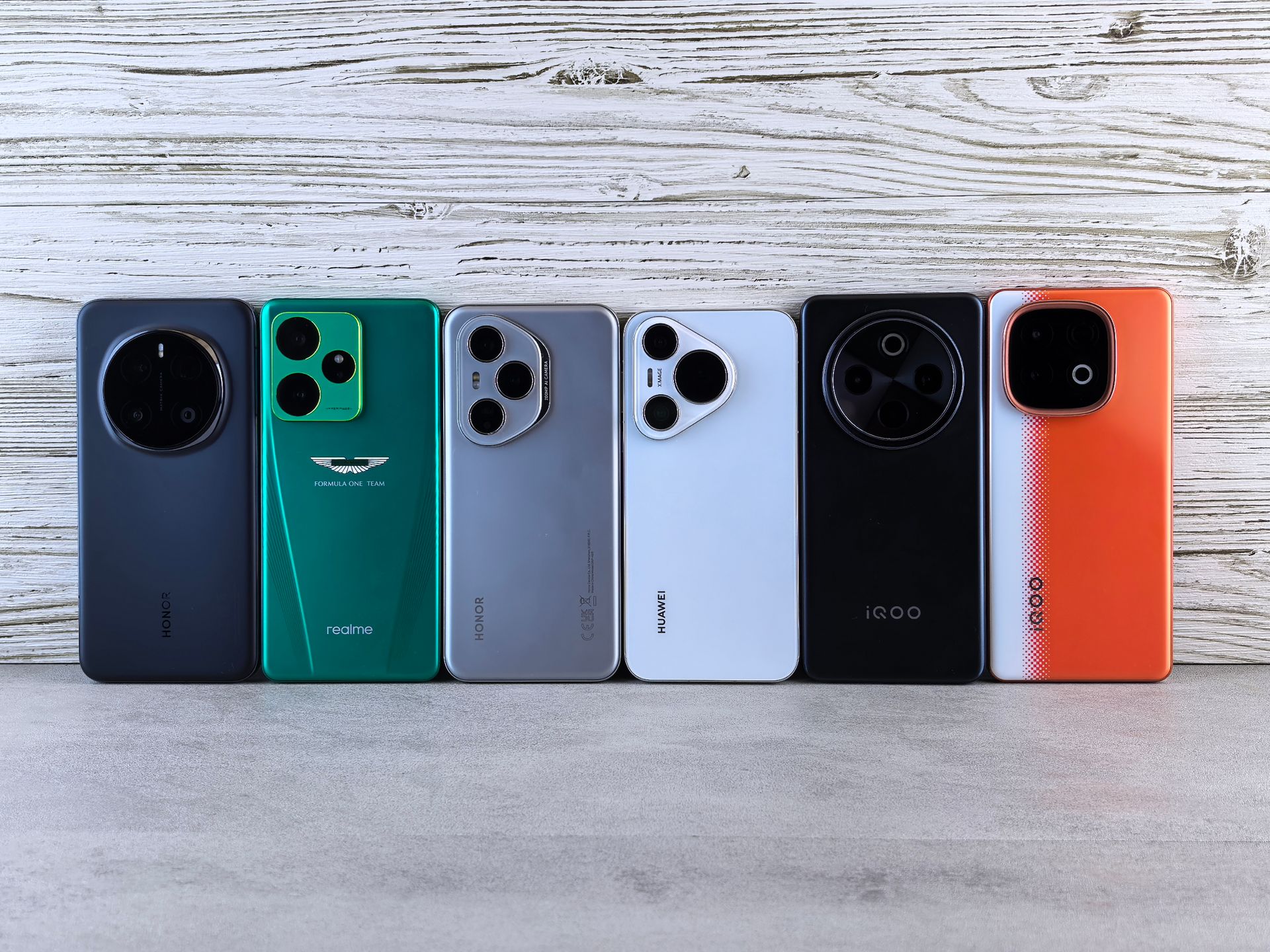
Google is set to unveil a wave of new Pixel devices at its annual Made by Google event on August 12th. Pre-event leaks have offered an unusually detailed preview of what's expected — from a broader Pixel 11 phone lineup to new wearables and possibly a whole new accessory category for the company.

How new surveillance tech links your phone to your license plate
Researchers report that roadside cameras photographing license plates are increasingly paired with equipment that also captures wireless signals from nearby phones. That combination can turn a simple 'this car passed here' record into a much richer profile of who was actually inside.

What are device-bound session credentials, and how do they stop the newest form of account takeover?
Google's Chrome browser has begun rolling out device-bound session credentials, described as among the strongest protections yet against a rapidly growing category of account takeover. The feature targets a technique that steals the session tokens keeping a user logged in, rather than stealing their password.
Gemini hits 1 billion users: how people are actually using Google's AI chatbot
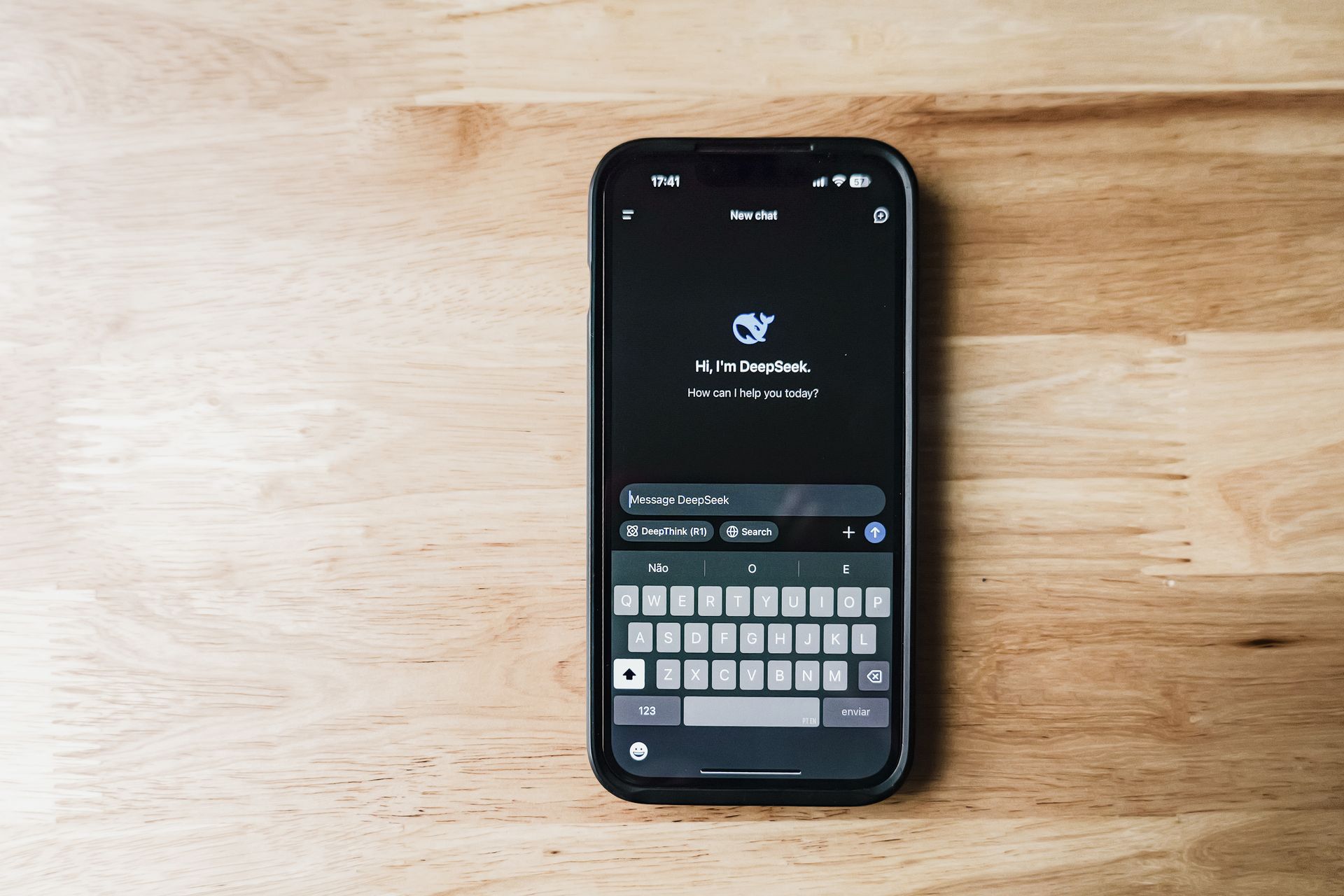
Google announced that its flagship consumer AI app, Gemini, has surpassed 1 billion users. The company also revealed that 63% of Gemini users talk directly to the assistant using its voice feature, and that Gemini now generates more than 150 million images every day.

What are small language models, and why are they starting to rival giant AI systems?
Liquid AI's new LFM2.5 model, with just 2.6 billion parameters, is competitive with models four times its size. It's the latest example of a fast-growing small language model movement challenging the assumption that bigger is always better in AI.