How new surveillance tech links your phone to your license plate
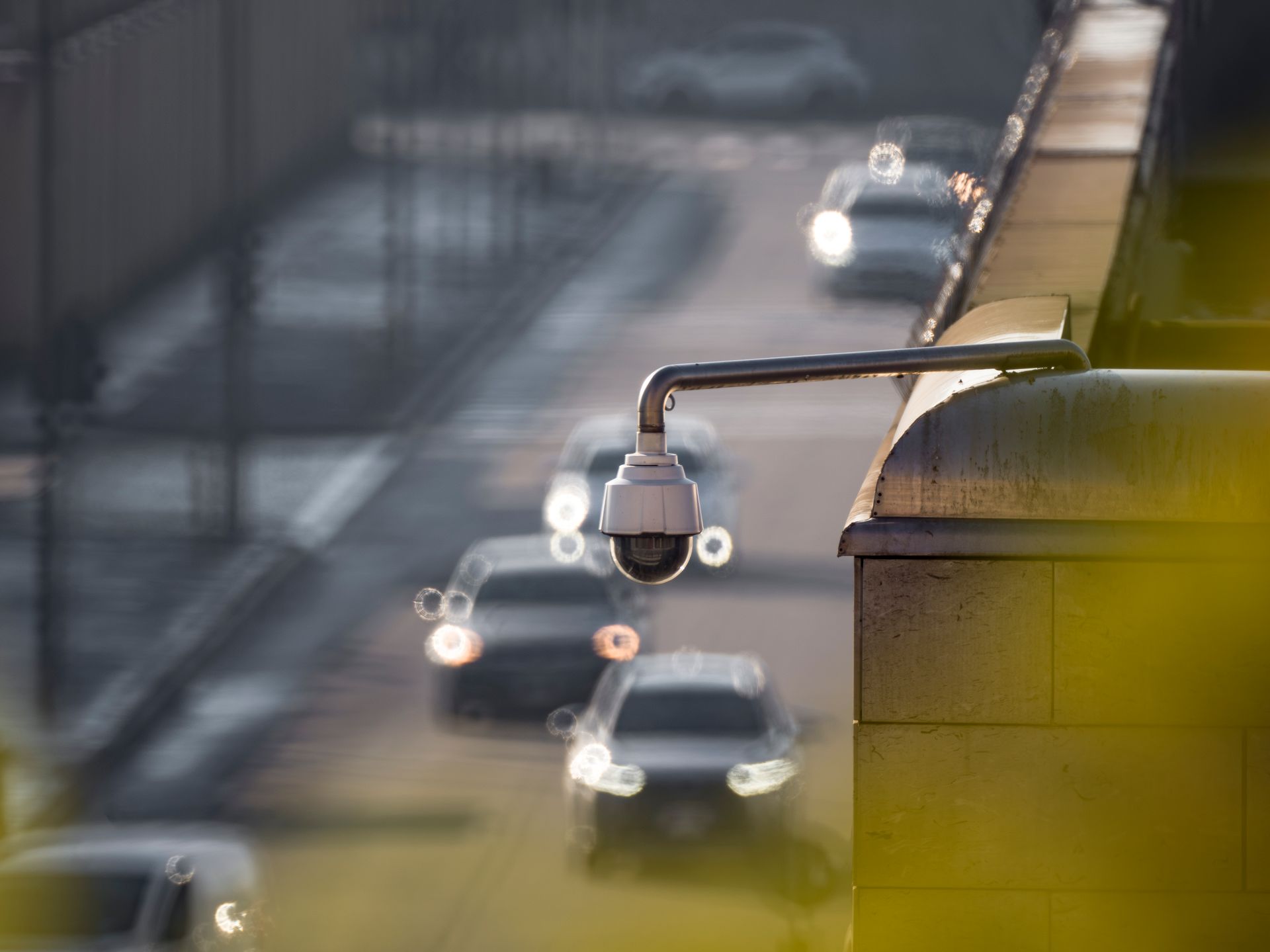
Roadside cameras that photograph passing license plates have quietly become a fixture of modern policing and private security in many countries. Now, researchers report a new capability being added to that surveillance infrastructure: pairing those plate-reading cameras with equipment that also captures the wireless signals emitted by nearby phones, potentially turning a simple record of 'this car passed here' into a much richer profile of who was actually inside it.
Automatic license plate readers, often called ALPRs, work by photographing every vehicle that passes within range and logging the plate number along with the time and location. That data has been collected at scale for years by both law enforcement agencies and private companies, building databases that can reconstruct where a specific vehicle has traveled over months or years. But a license plate identifies a registered vehicle, not necessarily the person driving it or the passengers riding along — a limitation the new technology is reportedly designed to address.
Modern smartphones and other wireless devices constantly emit low-power radio signals as part of normal operation, even when not actively connected to anything — Bluetooth beacons searching for paired accessories, Wi-Fi probe requests scanning for known networks, and other background wireless chatter. These signals are typically short-range and weren't originally designed to reveal a device's identity to distant observers, but specialized receivers placed alongside license plate cameras can reportedly capture them within range and log them, timestamped and geolocated, right alongside the plate photograph.
That combination changes what the resulting record can reveal. A plate photograph alone proves a particular vehicle passed a particular point at a particular time, but it says nothing about who was inside — a car can have multiple regular drivers, be borrowed, or be rented. A wireless device signal captured in the same instant, tied to a specific phone that tends to travel with one particular person, can help close that gap, turning a vehicle-level record into something closer to a person-level one.
The result, privacy researchers say, is a meaningfully more powerful tracking capability than either technology offers on its own. License plate data alone already lets an operator reconstruct a vehicle's movements over time; adding device-level signals layers in a persistent thread that can, in principle, follow a specific individual across different vehicles, different trips and different locations, rather than being tied to any one car's registration.
This kind of technology emerges from a broader trend sometimes described as sensor fusion — combining multiple, individually limited data streams into a single system that's more revealing than any one input alone. Vendors serving law enforcement and private security customers have increasingly marketed systems that layer license plate recognition together with other passive sensing capabilities, reflecting rising demand for richer identification tools even as each individual signal being captured remains, on its own, fairly mundane.
Civil liberties advocates and privacy researchers argue the technology is expanding surveillance capability faster than the legal and regulatory frameworks meant to govern it. Capturing a passing Bluetooth or Wi-Fi signal from a public road doesn't typically require a warrant the way tapping a phone call would, since the signals are being broadcast into public space — but researchers note that treating a device's persistent wireless identity as fair game for passive collection is a meaningfully different proposition than the narrower, plate-only surveillance the public has had years to debate.
The concern compounds an existing debate around license plate readers themselves, which have already drawn scrutiny in many jurisdictions for enabling long-term location tracking with limited oversight, minimal public transparency about how long data is retained, and few restrictions on which agencies or companies can access the resulting databases. Layering device-level identification on top of that existing infrastructure, critics argue, deepens a privacy problem that hadn't been fully resolved even before phones entered the picture.
Individual defenses against this kind of passive collection are limited but not nonexistent. Modern smartphones increasingly randomize the address their Wi-Fi and Bluetooth radios broadcast by default, a privacy feature specifically designed to make this sort of long-term device tracking harder, though its effectiveness varies depending on how consistently it's implemented across different apps and connection types. Turning off Bluetooth and Wi-Fi discovery when not actively in use reduces, though doesn't eliminate, the signals available for a roadside receiver to capture.
For now, the technology represents another incremental step in a surveillance infrastructure that has expanded largely outside of direct public debate, built one added capability at a time. Researchers tracking the trend say the central question isn't whether this kind of sensor fusion is technically possible — it clearly is — but whether meaningful transparency, oversight and limits will be put in place before it becomes as normalized and widespread as license plate cameras themselves already are.
Read next
Made by Google 2026: what to expect from today's Pixel 11 launch event
Google is set to unveil a wave of new Pixel devices at its annual Made by Google event on August 12th. Pre-event leaks have offered an unusually detailed preview of what's expected — from a broader Pixel 11 phone lineup to new wearables and possibly a whole new accessory category for the company.

What are device-bound session credentials, and how do they stop the newest form of account takeover?
Google's Chrome browser has begun rolling out device-bound session credentials, described as among the strongest protections yet against a rapidly growing category of account takeover. The feature targets a technique that steals the session tokens keeping a user logged in, rather than stealing their password.
Gemini hits 1 billion users: how people are actually using Google's AI chatbot
Google announced that its flagship consumer AI app, Gemini, has surpassed 1 billion users. The company also revealed that 63% of Gemini users talk directly to the assistant using its voice feature, and that Gemini now generates more than 150 million images every day.

What is the Riemann hypothesis, and how close is AI to solving it?
On the Riemann hypothesis, one of mathematics' most famous unsolved problems for more than 150 years, an unreleased Anthropic AI model reportedly made significant progress. The model didn't prove the hypothesis, but went further than many experts expected an AI system to get.

What are small language models, and why are they starting to rival giant AI systems?
Liquid AI's new LFM2.5 model, with just 2.6 billion parameters, is competitive with models four times its size. It's the latest example of a fast-growing small language model movement challenging the assumption that bigger is always better in AI.