Why is AI's power bill so high, and can it be cut 1,000x?
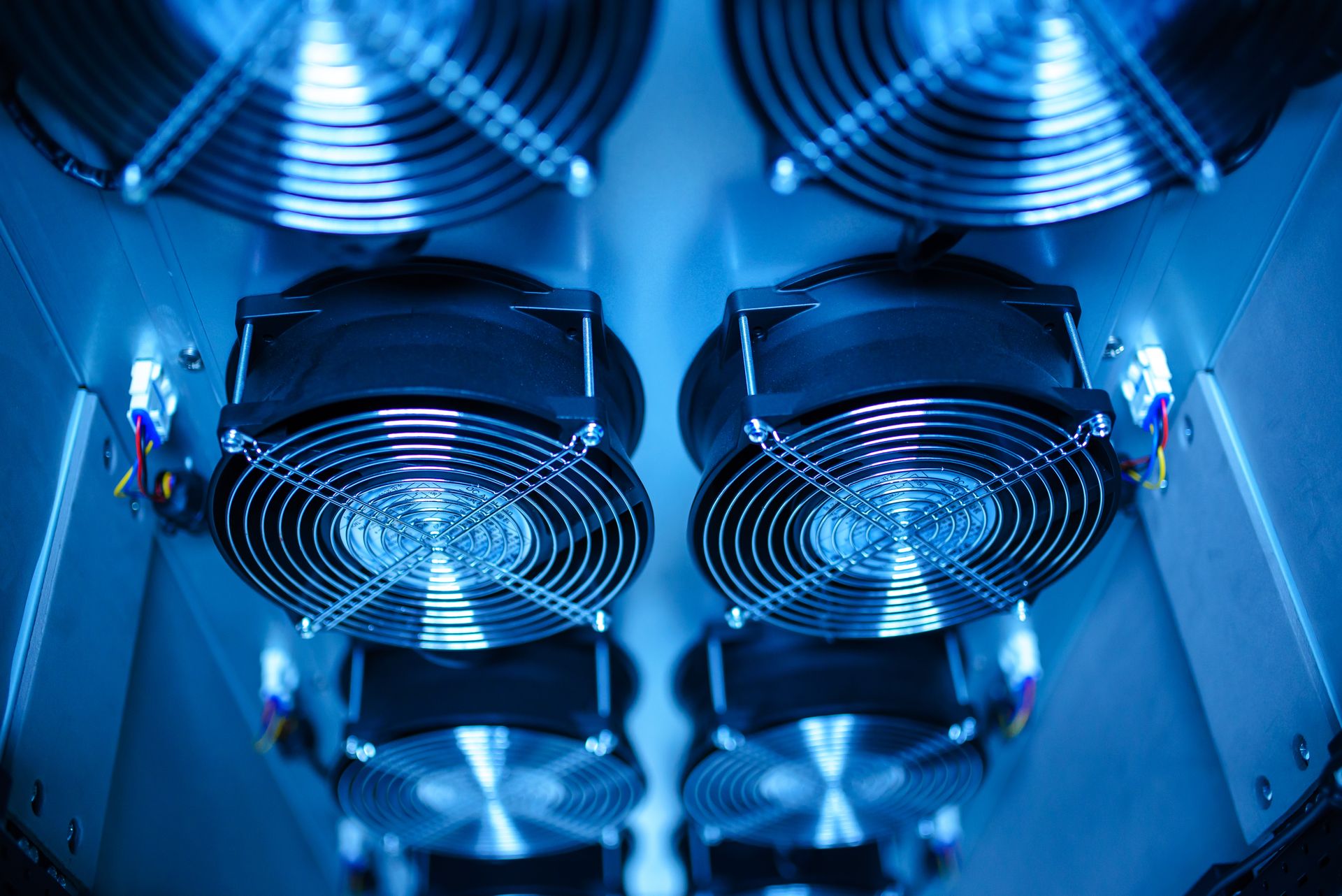
AI's energy consumption has become one of the most-discussed side effects of the technology in recent years. According to TechCrunch, Databricks' former AI chief is working on a new approach that he says could cut the energy bill of AI systems by up to 1,000 times.
First, it helps to understand why AI uses so much energy. Modern AI models are vast mathematical structures containing billions of parameters. Training and running these models requires large numbers of specialised processors working at high intensity for long periods. Every calculation consumes electrical energy and produces heat.
These operations are carried out in large facilities called data centres. A data centre not only runs the processors; it also spends a significant amount of energy cooling them. In other words, energy consumption comes both from the computation itself and from the infrastructure that makes it possible.
As models grow, so does their energy demand. More capable models usually mean more parameters and more computation. As AI becomes more widespread, this causes total energy consumption to rise rapidly. That is a source of concern in terms of both cost and environmental impact.
According to TechCrunch, the startup founded by Databricks' former AI chief aims to approach this problem from a different angle. The system, called Un-0, aims to show that the company's technology can reproduce conventional AI methods at a much lower energy cost.
The startup first demonstrated this approach on an image-generation system. Because image generation is one of the most computationally intensive AI tasks, it is a demanding area in which to test energy efficiency. The company presents its results in this area as evidence that its approach can be carried over to a wider range of applications.
The claim of a 1,000-fold reduction is as striking as it is to be treated with caution. Such large efficiency gains usually apply to specific conditions and specific types of task. Whether the gains an approach shows in a laboratory setting hold up to the same degree across the varied workloads of the real world is something that needs to be independently verified.
Even so, work of this kind is a sign of a growing priority in the sector. Reducing AI's energy footprint is not only an environmental but also an economic goal. A lower energy cost can make running AI systems cheaper and make it easier for the technology to reach a wider base of users.
Experts say there is no single solution to AI's energy problem; progress is likely to come on more than one front. More efficient hardware, smarter algorithms, smaller but capable models and data centres powered by renewable energy could all be different parts of that solution.
In the end, the work of Databricks' former AI chief is an example of how central energy efficiency has become to the future of AI. While the true value of the claims will become clear over time and through independent testing, the question it raises is clear: is it possible to achieve the power of AI with far less energy?
Read next

How can video games train AI agents? General Intuition's $2.3B bet
An AI startup has raised $320 million to train AI agents using millions of hours of gameplay data, reaching a $2.3 billion valuation. The idea is that action data from games can give AI a sense of intuition useful in the real world.

OpenAI delays GPT-5.6 release after a US administration request
According to the Verge, OpenAI is staggering the release of its new model, GPT-5.6, after a request from the US administration over security concerns. The company is reportedly expected to share the model first with a select group of partners.

A planet orbiting so close its magnetic field connects to its star: how does it work?
Astronomers have found a planet orbiting so close to its star that the two magnetic fields connect. At the right point of the orbit and stellar cycle, the star's atmosphere brightens. Here is the science of this unusual system.

What is IBM's sub-1 nanometer chip technology, and why does it matter?
IBM says it has developed the world's first sub-1 nanometer chip technology. The structure, called nanostack transistors, could boost chip performance or energy efficiency. Here is what the claim means and why it matters.

How liquid cooling cuts data-center water use to near zero: a simple explainer
A new data-center cooling design that runs warm, at around 45 degrees Celsius, can cut water use to almost nothing while keeping AI chips cool. This explainer breaks down why data centers consume so much water, how warm liquid cooling changes the equation, and what it means as AI demand grows.