A planet orbiting so close its magnetic field connects to its star: how does it work?
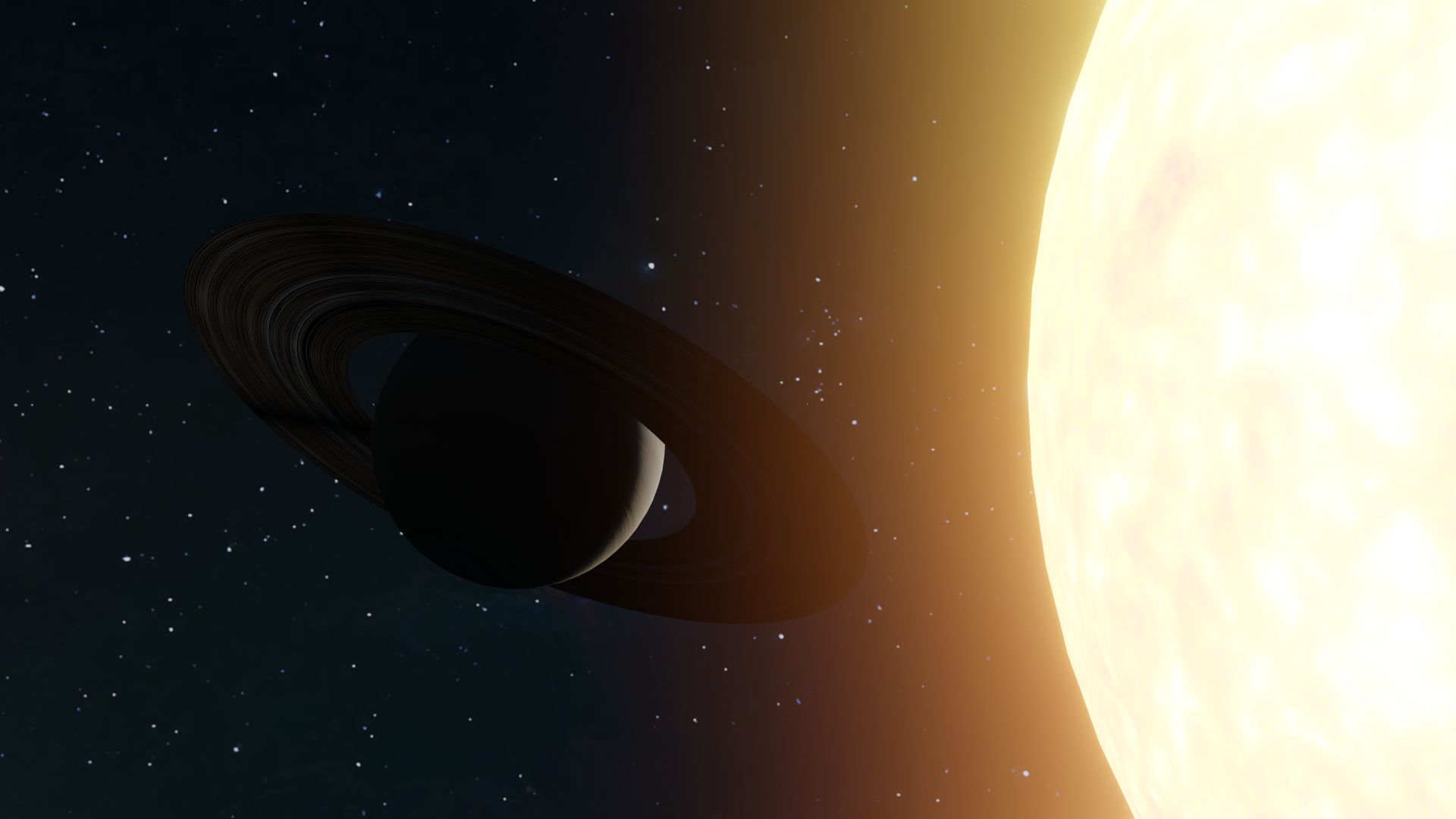
Astronomers have discovered a planet orbiting extraordinarily close to its star. According to Ars Technica, this planet is so close to its star that the two magnetic fields can connect — and that interaction causes an observable brightening in the star's atmosphere at certain points of the orbit and the stellar cycle.
Planets outside the Solar System are called "exoplanets." The vast majority are detected indirectly, from the small dips they cause in starlight as they pass in front of their star, or from the tiny gravitational wobbles they impose on the star. In this new system, the clue comes instead from the planet's effect on its star's magnetic behaviour.
Magnetic fields are a fundamental feature of both stars and some planets. Stars generate powerful magnetic fields through the motion of the hot, ionised gas within them. These fields are the driving force behind events such as stellar flares and surface activity.
Normally a planet is too far from its star for such interactions. But this planet orbits extremely close to its star. That closeness creates a distance at which the planet's magnetic field can come into direct contact with the star's.
Researchers think that when two magnetic fields connect, it can trigger a kind of energy transfer. When the planet reaches a particular position in its orbit, this connection causes a brightening in the chromosphere — one of the lower layers of the star's atmosphere. In effect, the planet produces an effect on its star.
The fact that this brightening appears in step with the orbit is important evidence. If the brightening were random, it could be put down to the star's own internal activity. But the brightening recurring in connection with the planet's position points to the planet playing a direct role in the event.
The stellar cycle also enters the picture. Stars, like the Sun, go through cycles in which their magnetic activity rises and falls. Researchers note that the effect of the planet-star interaction also depends on the phase of this cycle, meaning the brightening may look different during periods when the star is more active.
Systems like this offer a natural laboratory for studying planet-star interactions. Understanding these interactions can illuminate not just a single planet but the general behaviour of hot, giant planets orbiting very close to their stars.
The discovery also points to new ways of detecting and studying exoplanets. Observing a planet's effect on its star's magnetic behaviour could be a way to reveal systems that are hard to see with classic methods.
Experts say this system is a reminder of how diverse planetary systems in the universe can be. A planet orbiting close enough to form a magnetic link with its star harbours conditions with no equivalent in the Solar System — and such extreme examples help us understand the limits of planetary science.
Read next

How can video games train AI agents? General Intuition's $2.3B bet
An AI startup has raised $320 million to train AI agents using millions of hours of gameplay data, reaching a $2.3 billion valuation. The idea is that action data from games can give AI a sense of intuition useful in the real world.

OpenAI delays GPT-5.6 release after a US administration request
According to the Verge, OpenAI is staggering the release of its new model, GPT-5.6, after a request from the US administration over security concerns. The company is reportedly expected to share the model first with a select group of partners.
Why is AI's power bill so high, and can it be cut 1,000x?
Databricks' former AI chief is working on a new approach that he says could cut AI's energy consumption by up to 1,000 times. The claim revives the question of why AI uses so much energy and how that could be reduced.

What is IBM's sub-1 nanometer chip technology, and why does it matter?
IBM says it has developed the world's first sub-1 nanometer chip technology. The structure, called nanostack transistors, could boost chip performance or energy efficiency. Here is what the claim means and why it matters.

How liquid cooling cuts data-center water use to near zero: a simple explainer
A new data-center cooling design that runs warm, at around 45 degrees Celsius, can cut water use to almost nothing while keeping AI chips cool. This explainer breaks down why data centers consume so much water, how warm liquid cooling changes the equation, and what it means as AI demand grows.