What happens when your cloud storage provider disappears with your data?
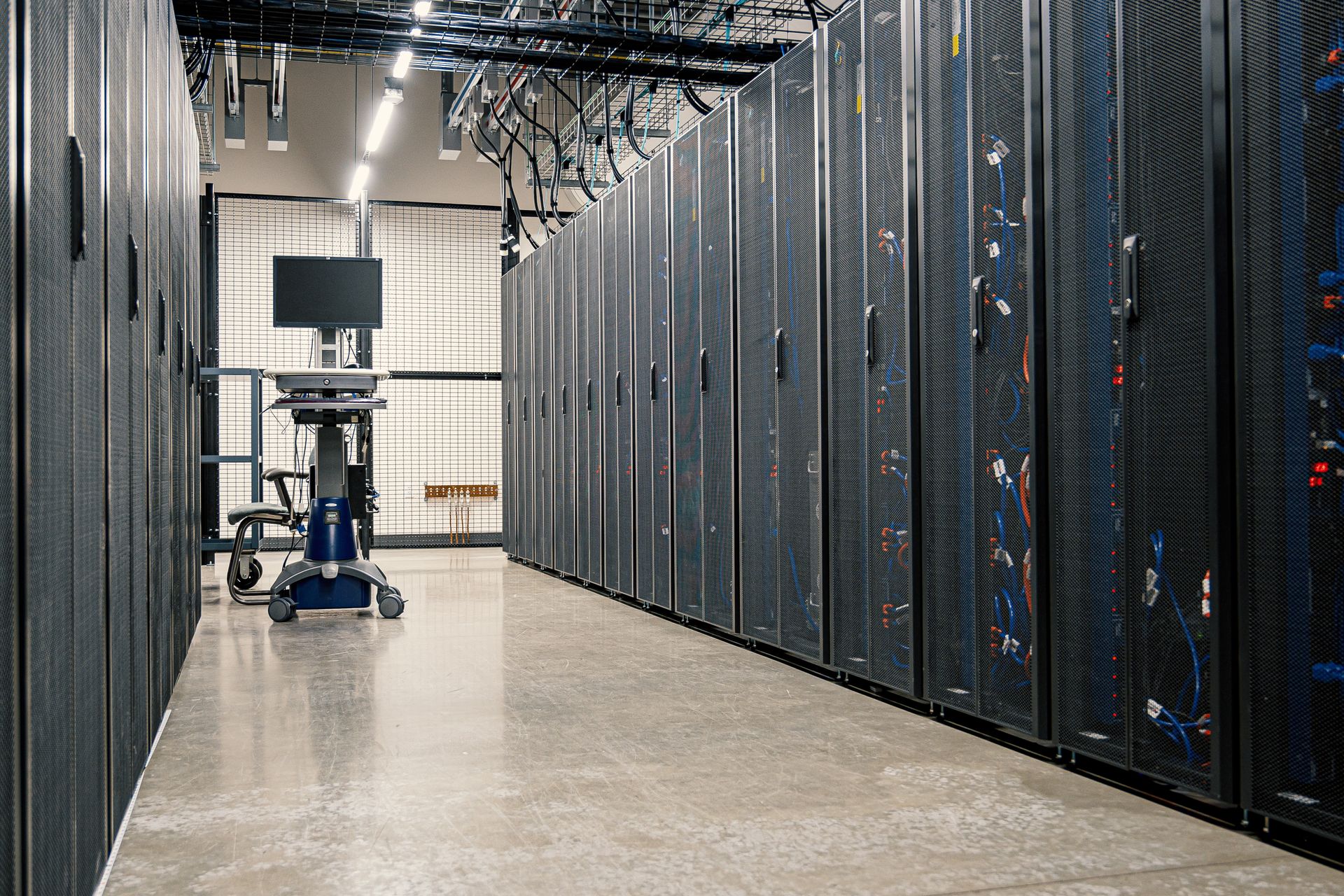
Picture a public broadcasting station's decades-long video archive: documentaries, news footage, culturally significant programming. Now imagine 50 terabytes of that archive becoming inaccessible overnight — not because of a malicious attack, but because communication with the company hosting the data simply went silent.
That scenario is playing out for real at a US public broadcasting station right now. The station had stored a significant portion of its archive on infrastructure run by storage and cloud services giant Iron Mountain. Recently, though, communication with the company broke down entirely, leaving the station unable to access its own data.
'We don't have access to the data on the hardware/servers,' station officials said, not hiding their frustration in describing the situation. The problem isn't just a technical hiccup; it's a structural vulnerability showing just how dependent the institution had become on a third party it now has no leverage over.
The case raises a bigger question a growing number of institutions are facing: what happens if a cloud storage provider stops operating, goes dark on communication, or goes out of business? The data may technically still exist somewhere, but the keys to access it can slip out of reach.
According to experts, the root cause behind these scenarios is often simple: institutions let their data depend on a single provider, or a single copy. The industry-standard '3-2-1 backup rule' — three copies of data, on two different types of media, with one copy stored in a physically separate location — exists precisely to prevent this kind of situation.
But applying that rule can be costly, particularly for budget-constrained organizations like public institutions and nonprofit broadcasting stations. Backing up large archives across multiple providers means extra storage costs and technical complexity — which leads many organizations to accept the risk of relying on a single provider instead.
Experts also note that cloud contracts often don't adequately address this risk. Terms covering how much time customers get to retrieve their data if a provider halts service, or under what conditions access is guaranteed, are frequently vague or insufficient in these agreements.
As incidents like this become more common, digital archiving specialists offer a few concrete recommendations for institutions: keep at least one copy of data on infrastructure under the institution's direct control, demand explicit data-recovery clauses in provider contracts, and run regular access tests to confirm data can actually be retrieved.
The case also points to a broader issue of digital fragility: culturally and historically significant content is increasingly stored digitally, but the institutional and technical safeguards needed to protect it long-term don't always keep pace.
Ultimately, the episode is a reminder that the convenience of cloud storage comes with a cost: moving data from a physical shelf to a server doesn't eliminate the risk of losing it — it just makes that risk invisible.
Read next

What is ChatGPT's Computer History feature, and how does it work?
OpenAI has added a new feature to ChatGPT's macOS desktop app called Computer History, which turns a user's on-computer actions into a timeline the AI can reference. Here's exactly what the feature tracks, how it's meant to be used, and what controls users have over it.

Why almost every new US power plant this year runs on solar
A close look at every new power plant that came online in the US this year reveals a clear pattern: utility-scale solar leads by a wide margin, followed by battery storage. Fossil fuels trail far behind. Here's what that shift signals about the direction of America's energy future.

Anthropic's CEO says the AI backlash is 'fundamentally a crisis of trust'
Anthropic CEO Dario Amodei argues that the growing public backlash against AI stems less from the technology itself and more from a lack of trust in the companies building it. Amodei is also pushing back on criticism that he has been painting an overly pessimistic picture of AI's risks.
What is an AI gateway, and why is Stripe reportedly paying $7B+ for one?
Payments giant Stripe is reportedly set to acquire OpenRouter, a startup that lets developers access dozens of AI models through a single API, for more than $7 billion. Here's what an 'AI gateway' actually does, and why Stripe is making such a large bet on this corner of the AI stack.

What is MCP, and why does it matter that 21,000 servers were exposed
The Model Context Protocol, an open standard that lets AI assistants connect to outside tools and data, has hit a security inflection point after researchers found more than 21,000 unprotected servers exposed on the open internet. Here's what MCP is, why developers adopted it so fast, and why that exposure matters.