A glacier's retreat led to a 500-metre tsunami in a heavily touristed fjord
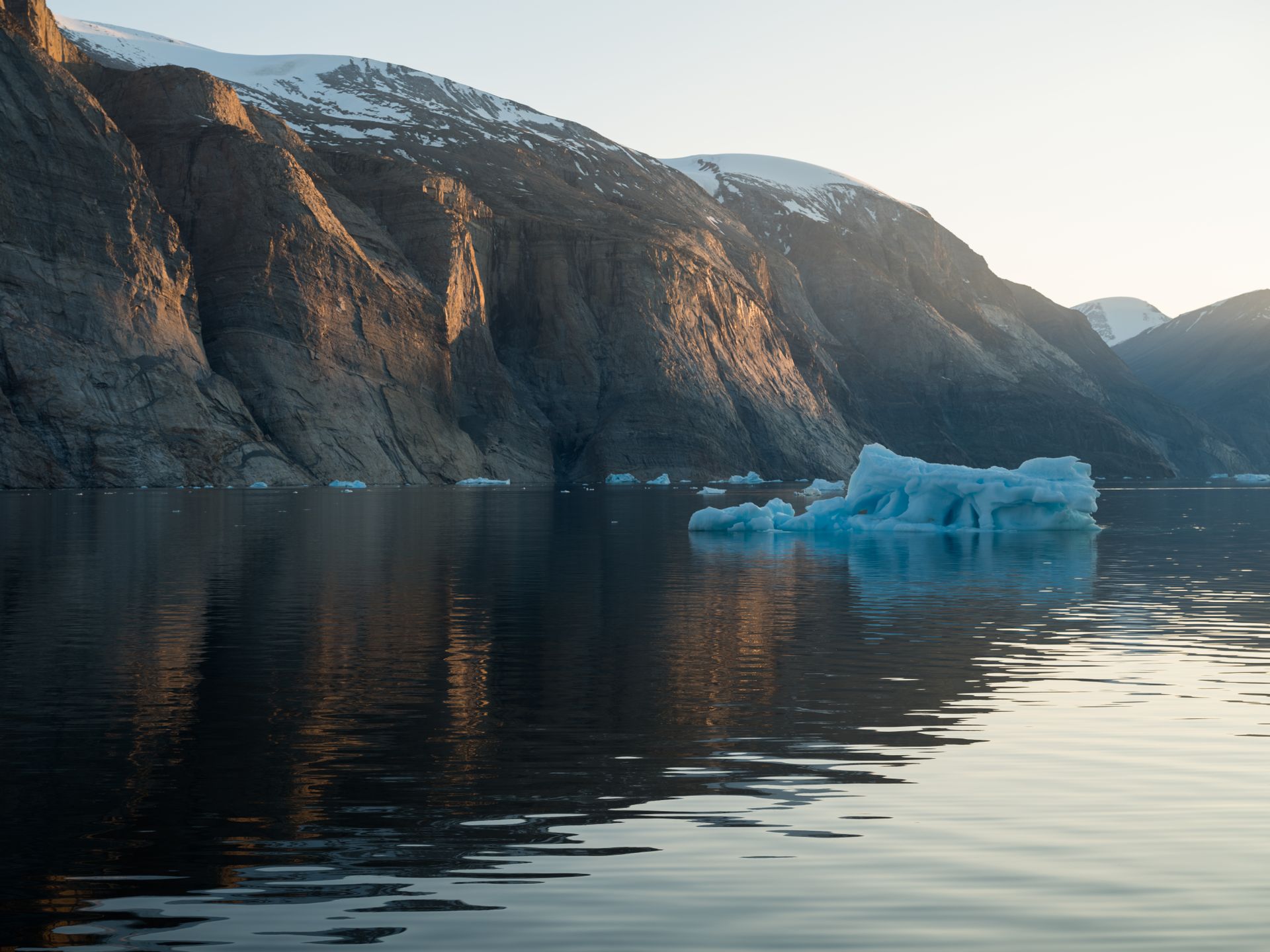
A landslide that occurred in Dickson Fjord on the east coast of Greenland in September 2023 produced one of the highest tsunami waves ever documented in the world. The details were clarified in a study published in Nature in early May 2026. The wave reached a height of 500 metres, the figure measured after impact on the steep, terrace-like fjord walls. For comparison: the 2004 Indian Ocean tsunami reached around 35 metres at its tallest point.
The international research team, led by the University of Copenhagen, identifies the Dickson Fjord event as a dramatic chain reaction tied to the rapid retreat of a glacier. Lead researcher Professor Kristian Svennevig told Ars Technica: "This event has revealed for us a new category of glacier-coast system interaction. A glacier's retreat affects not only sea level but also the stability of the coastline directly." In the event, about 25 million cubic metres of ground broke from the mountainside and fell into the fjord's waters.
Dickson Fjord is a natural formation 70 km long and on average 800 metres wide. The mountains along the shore exceed a thousand metres in height. Despite the harshness of the natural conditions, the fjord is a cruise-ship route hub frequented by about 800 tourists a day during the summer. As Atlas Obscura has documented, the fjord has been one of the most important locations on Greenland's "glacial tourism transformation" agenda since the 2020s. At the time of the event, three cruise ships were in the fjord, but rapid evacuation manoeuvres meant none was directly affected. The wave produced water-level oscillations on site that lasted 75 hours and were recorded by seismic stations across Greenland.
The research team summarises the causal chain as follows: the Dickson Glacier on the shore of the fjord has lost 73 percent of its mass over the past 30 years. The glacier's retreat destabilised the permafrost layer along the shore. The unusually warm summer of 2023 softened the upper layer of the permafrost. A 25-million-cubic-metre portion of the slope broke off under gravity and fell into the fjord's waters; the fall speed exceeded 200 km/h. The energy transfer to the water column produced an initial wave 500 metres high.
The wave's characteristics are unusual. Typical tsunamis travel horizontally; the Dickson Fjord wave could not travel horizontally because of the narrow shape of the fjord and instead struck the steep coastal walls. The collision transferred much of the wave's energy to the coastal rocks; erosion marks have been documented on the mountain rock faces up to 200 metres in height. Researchers, studying sediment from the fjord floor, established that the wave's flow speed exceeded 50 km/h for 12 hours.
Dr Bryony Hughes, a climate scientist at Cambridge University, summarised the global significance of the study: "This event shows that climate change has created a new category of disaster: glacier-triggered mega-landslides. We need a new risk model for regions such as Greenland, Alaska, the Norwegian fjords and Patagonia." According to Hughes, an analogue of the Dickson Fjord event may occur in at least 12 different regions over the next 50 years.
Publication of the study also has important implications for global seismic observation. During the event, seismic stations around the world recorded a 10.88-millihertz oscillation for more than seven days. At first, scientists struggled to attribute that oscillation to a natural source, because a 10.88 mHz oscillation does not correspond to any known earth-scale source. The study proved the oscillation to be a resonance frequency produced by the Dickson Fjord wave continuing to slosh in the fjord as a "seiche" (lake wave).
Greenland's authorities have re-evaluated the country's cruise-ship routing arrangements after the event. Environment Minister Mariane Paviasen announced that a "glacier-slope stability risk assessment" had been launched for 28 fjords. According to the results of the assessment, changes will be made to cruise routes, and summer travel plans in particular will be tied to a radar system tracking glacier melt rates. The system is scheduled to come online in 2027, with a total investment estimated at 47 million Danish krone.
Other touristed fjord locations, such as Silamiut Fjord in Norway, Tracy Arm in Alaska and Punta Arenas in Chile, have launched similar assessments after the Dickson Fjord event. A preliminary review by the United Nations Environment Programme (UNEP) classified 89 fjord locations worldwide as "high risk." The UNEP report projects that the capacity of fjords to produce landslides via glacier melt will rise threefold to fivefold over the next 30 years.
The scientific community's response to the Dickson Fjord event continues. The event is to be the subject of a separate section in the IPCC's (Intergovernmental Panel on Climate Change) 2027 assessment report under the heading "glacial-coastal cascading hazards." The identification of this new category marks an important shift in risk modelling for climate-change impacts. In Professor Svennevig's words: "A 500-metre wave points not only to how much glacier retreat will alter coastlines, but also to underground processes we cannot see with the naked eye."