Security Camera's Leaked GitHub Token Exposes IoT's Hardcoded-Secret Problem
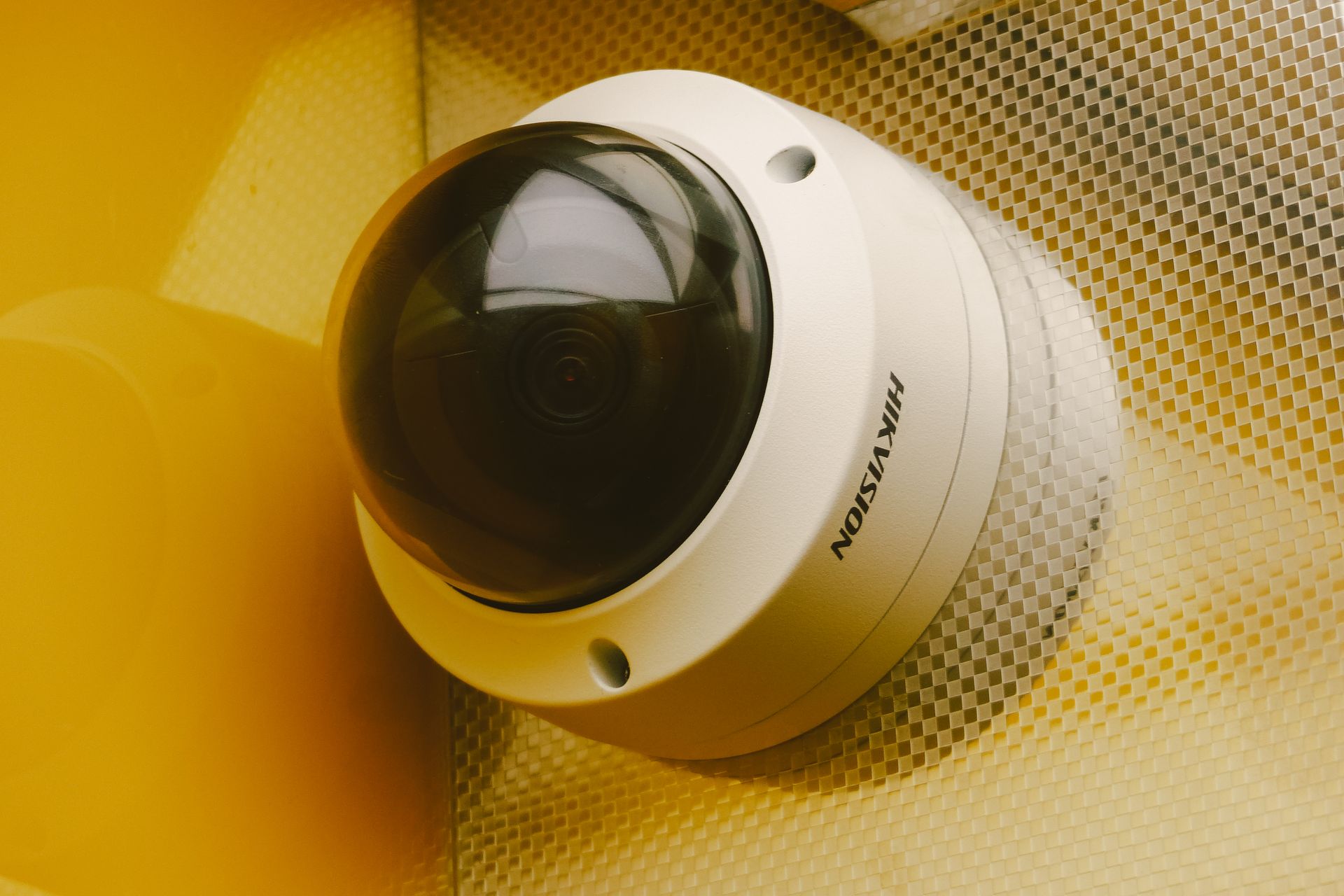
A user poking around a Hanwha-brand security camera's web-based login page recently found something that should never have been there: a working GitHub admin token, sitting in plain sight inside the page's client-side code. The finding, shared on Hacker News under the title "My security camera shipped a GitHub admin token in its login page," is a small case study in one of the most common and most avoidable security failures in the connected-device industry — a secret that was supposed to live only on a server ending up somewhere anyone with a browser's "view source" option could find it.
The mechanics of how this happens are almost always mundane rather than exotic. During development, engineers frequently wire up scripts, build tools, or debugging utilities with real credentials so they can quickly test against live services — a GitHub token to pull private repository contents, an API key to hit a cloud dashboard, a database password to seed test data. The trouble starts when that same code, credentials still attached, gets bundled into what ships to production: a firmware image, a mobile app, or, as in this case, the JavaScript that a camera serves to your web browser when you log in.
A GitHub admin token is not a trivial thing to leave lying around. Depending on its scope, it can grant read and write access to private source-code repositories, the ability to push new commits, manage webhooks, alter CI/CD configuration, or even add and remove collaborators. For a hardware vendor, that repository access is not just "someone might read our code" — it is a door into the systems that build and sign the software running on every device the company has shipped.
That is what elevates a leaked GitHub token from an embarrassment into a supply-chain risk. If an attacker can commit code to a firmware repository or tamper with a build pipeline, they are no longer attacking one camera — they are potentially attacking every unit that later downloads an update. Supply-chain compromises of exactly this shape, where legitimate update infrastructure is used to distribute malicious code, have been among the most damaging security incidents of the past decade across many industries, not just consumer electronics.
Hardcoded secrets keep turning up in shipped products because the incentives that produce them are structural, not accidental. Development teams work under deadline pressure, IoT firmware and companion web interfaces are treated as products but built with the informal habits of internal tools, and it is easy to assume that "nobody looks at this code" when the audience is a login page bundled with a device rather than a public website. In reality, client-side JavaScript, mobile app binaries, and firmware images are all fully extractable by anyone with modest technical curiosity — there is no such thing as a "hidden" secret once code has left the server.
Findings like this one typically surface in one of a few familiar ways: a researcher or hobbyist opens a browser's developer tools out of curiosity, someone runs the "strings" command against an extracted firmware image, or an automated secret-scanning tool — including ones GitHub itself runs against public and private repositories — flags a token pattern before or after it becomes public. Community platforms like Hacker News have become a common venue for these disclosures, since a single interested user with a browser's inspector panel can turn up what a formal audit might have missed.
Once a hardcoded token is discovered, the fix for the immediate incident is straightforward, if urgent: revoke or rotate the exposed credential immediately, audit exactly what it had access to, and review whether it was ever used for anything unexpected. The harder question is how long the token sat there unnoticed and whether it was scoped narrowly enough that the damage, had it been misused, would have been limited — which is precisely the design choice most organizations get wrong.
Responsible practice starts from a simple premise: nothing that reaches an end device or a user's browser should ever contain a credential capable of reaching back into internal systems. That means using dedicated secrets-management tools or vaults to store credentials server-side, injecting them into services at runtime rather than at build time, and issuing tokens scoped to the narrowest possible permission set for the narrowest possible task, rather than reusing a broad admin-level token because it was convenient during development.
For security-camera makers specifically, the stakes carry extra weight. These are devices explicitly sold on the promise of protecting the people who buy them, often with direct views into homes and businesses. A hardcoded-credential failure does not expose camera footage in this particular case, but it demonstrates the same underlying carelessness that, in other incidents across the industry, has exposed live video streams, default passwords, and unencrypted local networks — a pattern that has made "smart" security hardware a recurring subject of security research rather than an exception to it.
None of this requires exotic engineering to prevent. Secret-scanning tools that block a commit before it merges, code review checklists that specifically ask "does this touch a credential," and a blanket rule that nothing shipped to a customer — firmware, app, or web page — should be trusted with more access than the customer themselves has, would catch the overwhelming majority of cases like this one. The camera in question is a single incident, but the pattern it represents is one every connected-device maker will keep encountering until secrets management becomes as routine as any other line item in a build process.
Read next

AlphaFold AI Helps Researchers Redesign Gene-Editing Proteins for Safety
Researchers are using Google DeepMind's AlphaFold, an AI system that predicts protein 3D structures, to identify which parts of gene-editing proteins cause off-target errors. The work aims to redesign CRISPR-associated proteins so they cut DNA more precisely, reducing mistakes that could affect unintended genes. The research is still at the protein-engineering stage, not a clinical treatment.

Qualcomm to Raise Chip Prices by Double Digits Starting September 1st
Qualcomm has told customers it will raise prices by a double-digit percentage on products shipped after September 1st, Bloomberg reports, citing component shortages and rising supplier costs it says it can no longer absorb. The increase affects chips that power most Android smartphones and could ripple into higher retail prices for consumers.

Waymo Reportedly Mulls Ending Its Uber Partnership Before 2028 Contract Ends
Waymo is reportedly considering ending its ride-hailing partnership with Uber, TechCrunch reports, even though the companies' current contract runs through May 2028. The arrangement lets riders hail Waymo robotaxis via the Uber app, and any split would reshape how autonomous rides are distributed to consumers.

Which Countries Restrict Social Media for Kids? Vietnam Joins the List
Vietnam is proposing new restrictions on social media access for children, becoming the latest country to join a global trend that began with Australia's landmark ban on under-16 accounts in late 2025. Lawmakers cite cyberbullying, addiction, and predator exposure as justification, though age-verification enforcement remains a persistent challenge for regulators and platforms alike.

Why writing by hand is still better for your brain than typing
Keyboards and touchscreens dominate everyday writing, but a growing body of research shows that putting pen to paper engages the brain differently — and more deeply — than typing does. Here's why that difference emerges, and when it actually matters.