What is an atomic clock, and how does it keep the world's time so precise
Your phone knowing your location to within a few meters, stock exchanges timestamping trades down to the millisecond, the internet staying synchronized across servers on different continents — all of it rests on a technology most people never think about: atomic clocks.
A traditional mechanical clock measures time through a pendulum swinging at a constant rate, or a vibrating crystal. But those methods all tend to drift over time due to temperature changes, wear, or tiny mechanical imperfections. Atomic clocks work on an entirely different principle: they rely on the incredibly stable vibration frequencies inherent to atoms themselves.
When an atom's electrons transition between specific energy levels, they emit or absorb energy at a very precise, predictable frequency. That frequency is the same everywhere in the universe, at all times — a cesium atom 'vibrates' at exactly the same rate no matter where on Earth it is. Atomic clocks use exactly that unchanging property to define a second.
The cesium atomic clock, adopted as the international standard, defines one second as exactly 9,192,631,770 oscillations between two specific energy levels of a cesium-133 atom. That definition is so precise that these clocks drift by no more than a second over millions of years.
That level of precision isn't necessary for an ordinary consumer product, of course — but a huge share of modern infrastructure depends on exactly that. GPS satellites calculate your location by measuring how long it takes a signal to travel from the satellite to your phone; that measurement has to be so precise that even a microscopic timing error can throw off the location estimate significantly.
Financial markets rely on atomic clocks in a similar way. High-frequency trading systems use timestamps accurate to well below a millisecond to determine which trade happened first — without that synchronization, ensuring a consistent, fair order of transactions across global markets would be nearly impossible.
Internet infrastructure needs that same precision. Synchronization between data centers, the correct functioning of telecommunications networks, and even keeping electrical grids balanced across regions all depend on the shared time reference atomic clocks provide.
Scientists keep pushing atomic clock precision even further. A new generation of 'optical' atomic clocks uses elements like strontium or aluminum instead of cesium, accessing much higher vibration frequencies — theoretically drifting by only a second over a span longer than the age of the universe.
That incredible precision has scientific applications too. Researchers can use atomic clocks to measure how gravity affects time — according to Einstein's general theory of relativity, a clock just a few centimeters higher off the ground runs very slightly faster than one closer to Earth. That effect is imperceptible in daily life but measurable with the most precise atomic clocks.
Ultimately, a large part of daily life quietly rests on these small but extraordinarily precise devices most of us never see or think about. Next time you glance at a map on your phone, or notice an app syncing instantly, it's worth remembering there's a clock somewhere counting the unchanging vibrations of atoms behind it.
Read next
AI music watermarks: how Suno plans to label songs made by algorithms
According to Ars Technica, AI music platform Suno plans to add watermarks to the songs it generates and impose download limits. The company says the move is intended to curb 'large-scale abuse' of its platform.

ChatGPT drops chat limits for free users: what actually changes
According to TechCrunch, OpenAI announced that free ChatGPT users will no longer hit a daily message limit for text-based chats. The company is also adding a new 'think' button for handling complex questions.
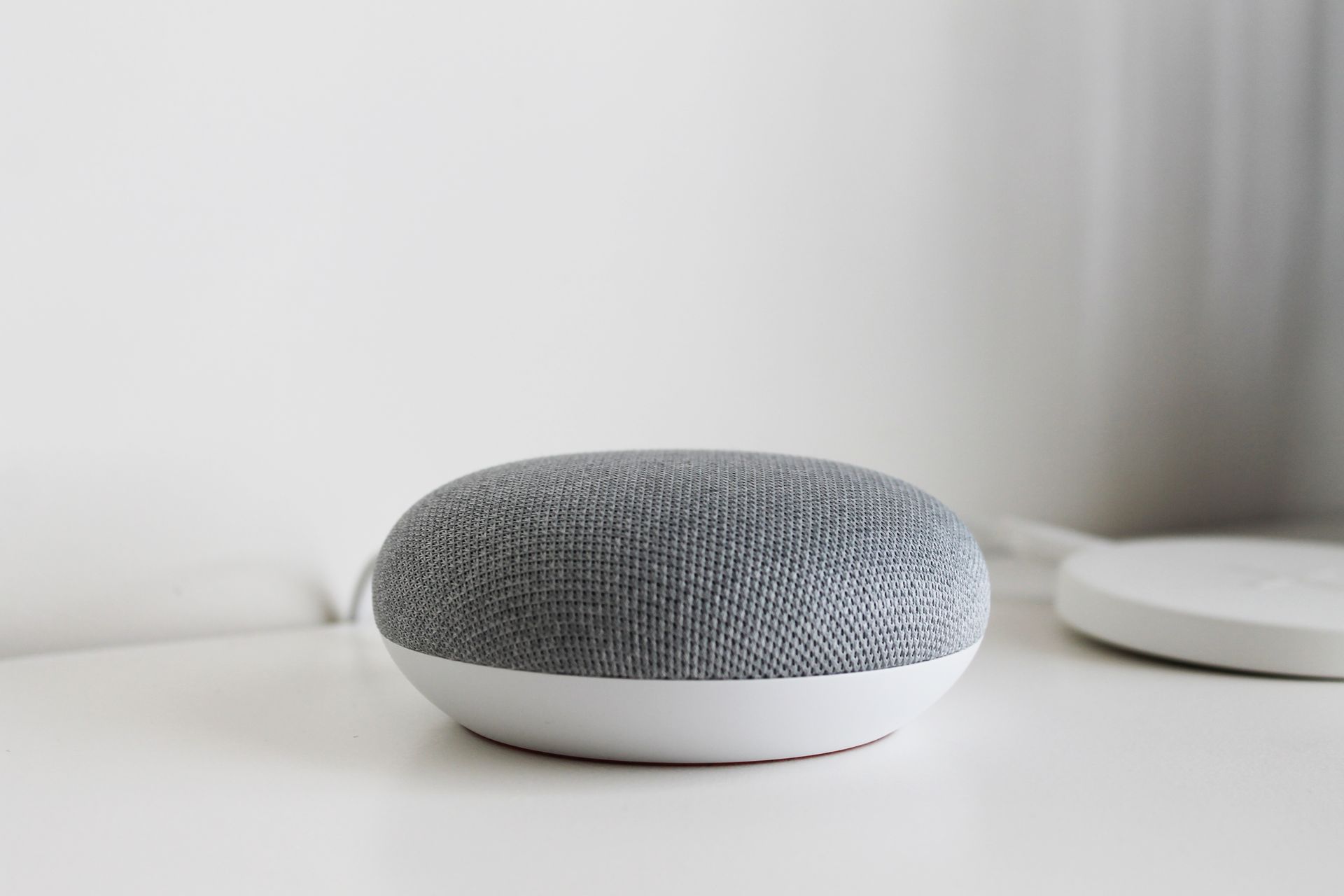
What is OpenAI's first hardware device, and how much will it cost
According to the Verge, the first device OpenAI is developing with former Apple designer Jony Ive is described as a display-free, battery-powered smart speaker roughly the size of a hockey puck. The device is expected to launch in 2027 at a price above $300.

Why AI companies are racing to design their own chips
According to Ars Technica, an AI company is building an in-house team to design custom hardware for running its own models. The move is part of a broader race among major AI firms to reduce their reliance on Nvidia.
Why large language models won't break symmetric encryption
As AI models solve increasingly complex tasks, some worry they could eventually break modern encryption. Cryptographers explain why symmetric encryption's security rests on a mathematical foundation that pattern-recognition systems like large language models cannot meaningfully shortcut.