Eclipse eye damage: how to tell if the sun hurt your vision
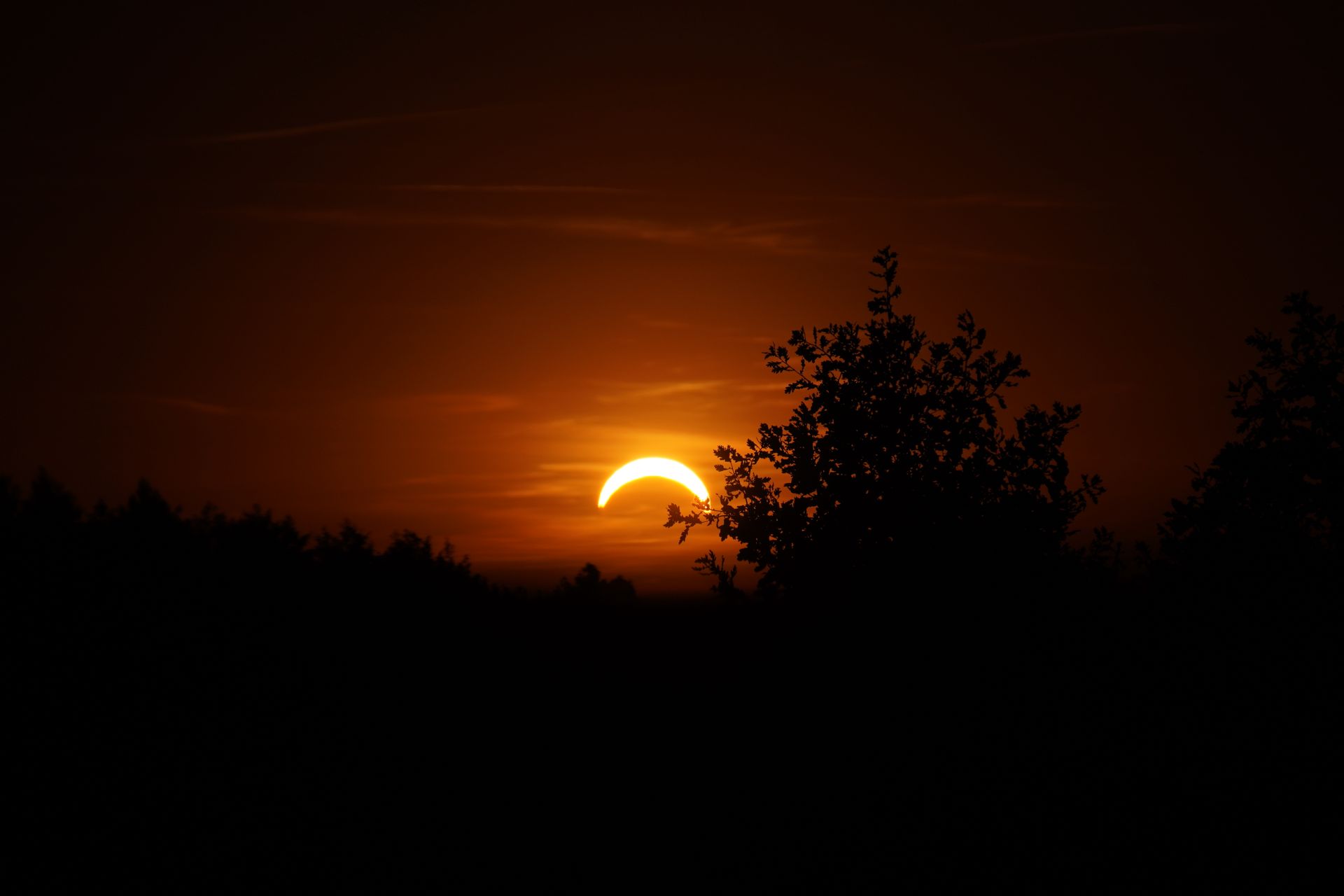
As the Moon slides across the face of the Sun, millions of people tip their heads back to watch. But the spectacle carries an invisible risk: viewed without proper protection, it can cause lasting damage to eyesight. One UK eye surgeon says the number of patients seeking treatment after the most recent eclipse has been notably lower than after the country's last total solar eclipse in 1999.
That decline is partly credited to decades of public health messaging and far wider awareness of eclipse-viewing standards. In the run-up to an eclipse, pharmacies and schools now routinely hand out certified eclipse glasses, and social media platforms circulate safety warnings widely. Even so, doctors say a handful of people ignore the guidance at every eclipse and put their eyesight at risk.
The medical term for the injury is solar retinopathy. Intense sunlight is focused by the eye's lens onto the retina, the light-sensitive tissue at the back of the eye, effectively scorching the delicate cells there. Surgeons often compare it to using a magnifying glass to burn paper in sunlight — except the retina has very limited ability to repair itself.
What makes the damage especially insidious is that it doesn't hurt. The retina has no pain receptors, so someone can stare at the sun long enough to injure their vision without feeling anything in the moment. Symptoms typically surface hours later, and sometimes not for a day or two.
Doctors say the most common symptoms include blurred or distorted vision, a blind spot in the centre of the field of view, altered colour perception and unusual sensitivity to light. These can affect one eye or both, and their severity tends to track with how long someone looked at the sun.
In mild cases, vision can improve on its own over several weeks as retinal cells recover to some degree. In more severe exposures, though, the damage can be permanent — leaving a lasting blind spot at the macula, the retina's central region, which affects fine tasks like reading and recognising faces.
Specialists stress that looking directly at the sun is never safe without eclipse glasses, and that ordinary sunglasses offer nowhere near enough protection. Only glasses certified to the ISO 12312-2 standard, or dedicated welder's glass, filter sunlight enough for safe viewing.
Children are considered particularly vulnerable, because their eye lenses are clearer and let more sunlight reach the retina unfiltered, and because they may be less likely than adults to notice discomfort and look away in time. That's why schools are encouraged to run supervised eclipse-watching activities rather than leaving pupils to view it unsupervised.
Anyone who notices a change in their vision after an eclipse is advised to see an eye doctor, even if the symptoms seem mild. Early assessment allows the damage to be monitored and, where possible, steps taken to prevent further vision loss.
Ahead of the next eclipse, the message from specialists is straightforward: the thrill of watching a natural spectacle is not worth a few minutes of impatience. Proper eclipse glasses cost only a few pounds; lost eyesight cannot be bought back.
Read next

Why vitamin D deficiency turns far more dangerous when belly fat is involved
A large study of more than 5,500 adults over 50 found that abdominal obesity combined with vitamin D deficiency was linked to a 123% higher risk of death within six years. Researchers say the two conditions appear to feed into each other, creating a dangerous cycle rather than simply adding independent risks.

Can drinking orange juice every day really change your genes
New research suggests regularly drinking orange juice may influence the activity of thousands of genes tied to inflammation, blood pressure, metabolism and blood sugar control. Scientists suspect natural citrus compounds such as hesperidin, along with benefits to the gut microbiome, may be behind the effect.
Do weight-loss drugs really save money? Mostly only for high earners
New analysis finds that someone needs roughly £100,000 a year in discretionary income to actually come out ahead financially on grocery savings after paying for GLP-1 weight-loss medication. Researchers describe the pattern as a 'tax on being thin' that leaves most patients worse off financially, even as their health improves.

US recalls 1.6m dozen eggs as salmonella outbreak sickens dozens
Nearly 1.6 million dozen eggs have been recalled across the US south and south-west after being linked to a salmonella outbreak that has sickened nearly 100 people, one of the largest recorded foodborne illness incidents in recent US history. The FDA has classified the recall at its highest risk level.

Methadone clinics: what two years of looser US rules actually changed
It has been two years since US regulators relaxed the rigid rules governing methadone clinics that treat opioid addiction. Some clinics have used the new flexibility to ease access for patients, but many have changed little from their older, stricter routines.