The John Ericsson Memorial in Washington, D.C.: a hidden monument to the inventor of the screw propellor
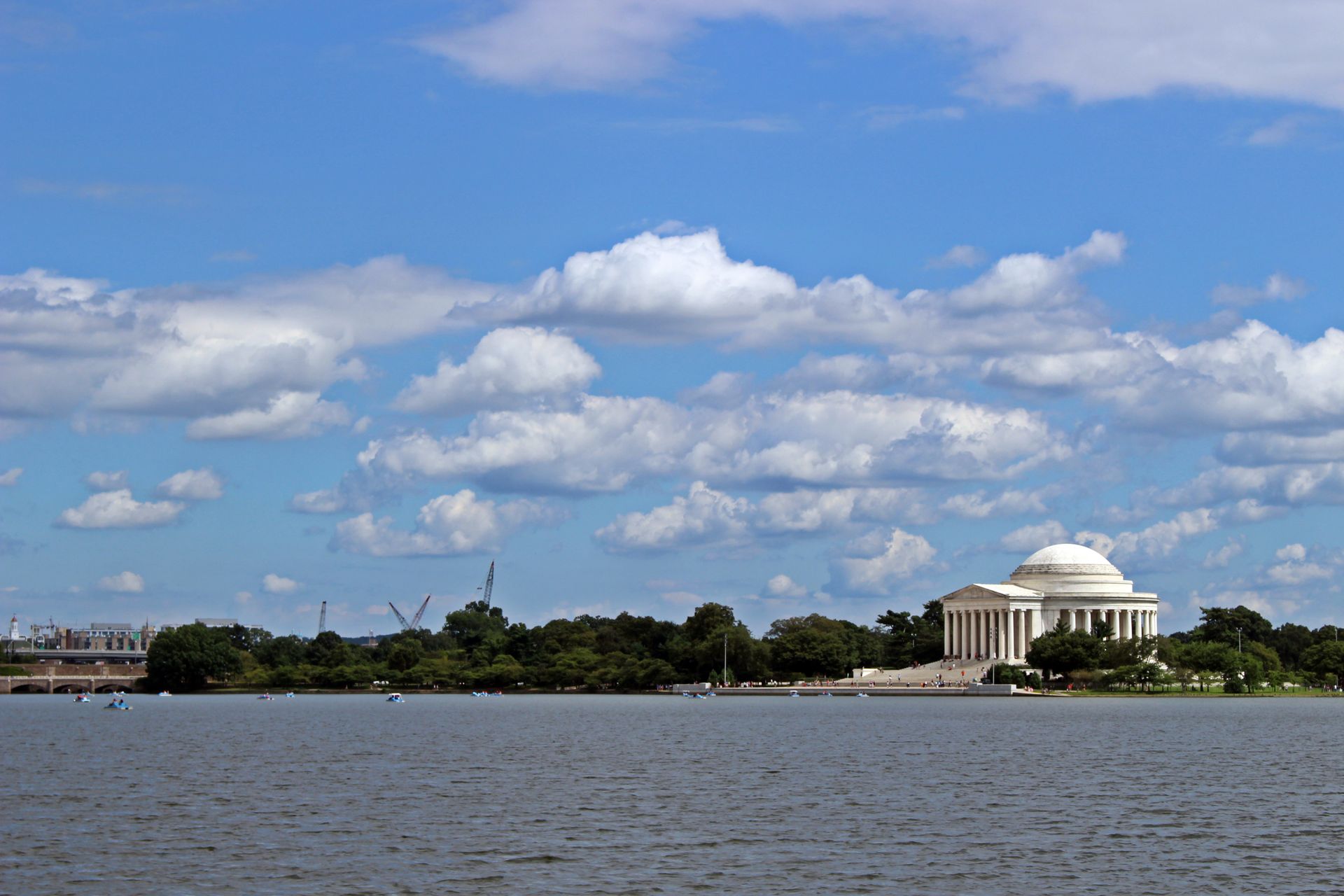
While many of Washington D.C.'s National Mall monuments are visited by millions of tourists daily, the John Ericsson Memorial — tucked just south of the Lincoln Memorial near the Potomac River — is one of the least-visited historic sites in the national capital. Atlas Obscura's listing for the site highlights the historical significance behind the monument's seemingly modest profile: the figure to whom it is dedicated, the Swedish-born scientist John Ericsson, was among the most influential engineers of the 19th century.
Ericsson was born in 1803 in the small Swedish town of Långbanshyttan. His aptitude for mechanical and engineering matters was noted early. He began working as an engineer for the Swedish army at the age of 13 and by the age of 23 he was a first lieutenant in the artillery. According to Atlas Obscura's notes, the abilities Ericsson developed in this early period laid the foundation for the experiences that would shape his subsequent career.
Ericsson's most important early invention was a system known as the screw propellor. This invention would replace the older paddle-wheel system and allow ships to become faster, more efficient and more robust. The importance of the screw propellor in naval history is large: nearly all of today's commercial vessels and warships still use this basic principle. Atlas's listing notes that Ericsson patented the invention in 1836 in England.
Not seeing the support he believed he deserved in England, Ericsson emigrated to the United States in 1839. He settled in New York and there sought opportunities to work with the US Navy. According to Atlas Obscura's notes, the United States offered an intellectual environment more open to his technical innovations. The first major project he designed for the Navy was the U.S.S. Princeton, which used screw propellor technology. Launched in 1843, the Princeton was the most advanced warship of its time and redefined naval strategy.
But Ericsson's most important contribution to American history would emerge during the Civil War. According to Atlas Obscura's account, when the Confederate navy in 1861 commissioned the U.S.S. Merrimack (renamed the CSS Virginia) — rebuilt as an ironclad warship from the dry dock at Norfolk — the Union navy sought a counter-solution. The U.S.S. Monitor that Ericsson proposed was a concept entirely different from the conventional wooden warship: an armoured hull, a single rotating turret, and a low-profile design.
The U.S.S. Monitor and the CSS Virginia met in the historic Battle of Hampton Roads on 8-9 March 1862. This clash is regarded as a turning point in modern naval history: the first major engagement between two ironclad warships ended the era of wooden ships. Atlas Obscura's listing emphasises the detail that Ericsson built the Monitor in just 100 days before the engagement and made the final calibration adjustments to the vessel with a written manuscript in the closing phase of construction.
The Monitor's success was not only this particular engagement. The ship led to the rotating turret concept becoming standard in naval design and to the beginning of the battleship era. Portions of the foundations of naval technology throughout the 20th century trace back to Ericsson's design principles. According to Atlas's notes, during Theodore Roosevelt's presidency Ericsson was described as 'the father of the modern American navy'.
Ericsson never became an American citizen during his life; he lived with a Swedish passport and died in New York in 1889. By his will, his grave was relocated to the Swedish town of Filipstad. The monument in Washington was officially dedicated in 1926 by President Calvin Coolidge after Congressional approval in 1924. The monument's sculptural designer was James Earle Fraser, an American sculptor recognised across the Atlantic.
The monument features a seated central figure of Ericsson accompanied by allegorical figures from Norse mythology — Vision, Adventure and Labour. These three representations reflect three core qualities observable in Ericsson's engineering career. The monument carries the inscription 'Memorial to John Ericsson, who has Made the Stone Float and the Iron Swim' — an elegant nod to Ericsson's technological achievement. According to Atlas's listing, the monument's base is grey granite, with the upper figures cast in bronze.
As Atlas Obscura notes, the John Ericsson Memorial is among the National Mall's least-visited but perhaps most educational historic sites. Lincoln's political leadership and Ericsson's technological inventions both played important roles in the Union victory in the Civil War. Atlas emphasises that the monument today remains a quiet meeting point waiting to be discovered both by history enthusiasts and Washington visitors. The monument sits on the western shore of the Tidal Basin, about a 10-minute walk from the Lincoln Memorial.