Irvine Welsh chooses James Connolly, the Irish socialist, as his history hero
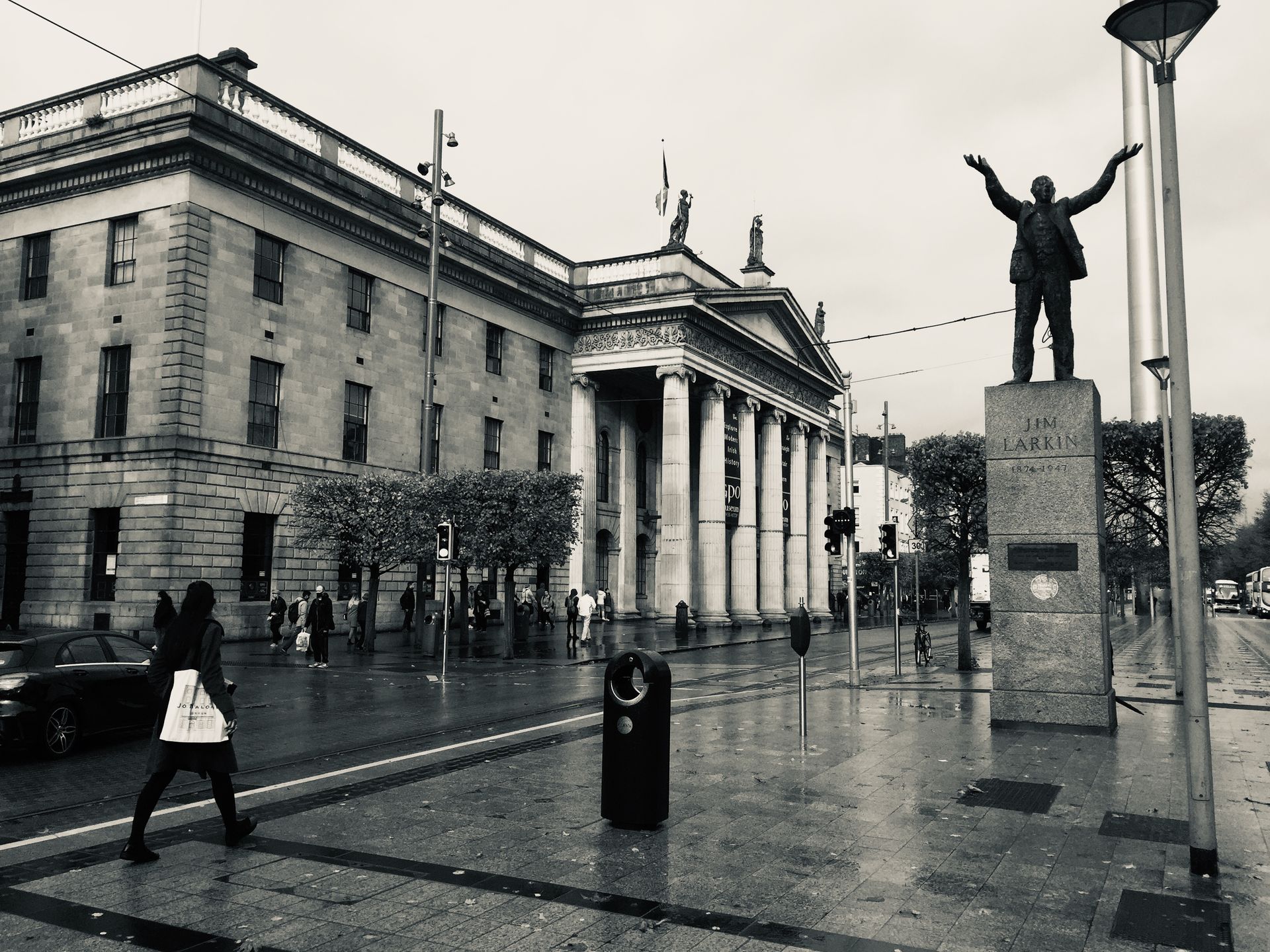
Scottish novelist Irvine Welsh has picked James Connolly (1868-1916) as his choice for HistoryExtra magazine's 'history hero' column. Connolly is known as an Irish socialist thinker and trade-union organiser; he was one of the leaders of the 1916 Easter Rising and was executed in Dublin that same year. HistoryExtra's piece frames Welsh's selection as an example of the intersection between literature and political history.
James Connolly was born in 1868 in Edinburgh, Scotland, to an Irish immigrant family. After a childhood spent in poverty, he served in the British Army from a young age. He later settled in Ireland and became one of the leading figures of trade-union organisation in Dublin. Historians treat Connolly's biography through a document-based approach and place him among the defining figures of the early-20th-century labour movement.
Connolly's union-organising activity in Belfast and Dublin is part of an extensive literature on the working conditions of the Irish working class of the period. His role in the founding of the armed organisation known as the Irish Citizen Army holds a defining place both in academic research and in public memory. HistoryExtra's report notes that Welsh shows particular interest in this organising side of Connolly's story.
The 1916 Easter Rising is a contested but defining turning point in Irish history. Historians evaluate the rising within the symbolic and political effects on Ireland's path to independence; different interpretations offer varying perspectives on its tactical decisions and casualties. HistoryExtra's report notes that Welsh emphasises the element of courage among the rising's leadership, using the English idiom that translates as 'he clearly had a lot of bottle.'
Connolly was severely wounded during the Easter Rising. The injuries left him unable to stand at the time of execution, and he was carried to the firing squad bound to a chair. Historians treat that detail as an important piece of data regarding the rising's broader public impact. HistoryExtra's report has Welsh referring to those final moments and their place in the conscious history of Ireland.
Welsh's literary career reached a global readership with the 1990s novel Trainspotting. As a writer who has worked on the working class, urban poverty and the lives of marginalised communities in contemporary Scottish literature, Welsh's choice of Connolly stands as a consistent extension of those literary interests. HistoryExtra reports that the choice illuminates the writer's historical reading in addition to a personal admiration.
Connolly's thought involves the application of post-Marx socialist theory to the Irish context. He was a founder of the Irish Socialist Republican Party and edited periodicals in Edinburgh, Dublin and Belfast. Historians read Connolly's writings as one of the foundational sources within the Irish wing of the period's socialist literature.
The structure of HistoryExtra's column is built on famous guests selecting historical figures they personally admire and sharing their stories. This format functions as a bridge between academic history and a general readership. Welsh's choice gives readers both a window into the writer's historical reading and a reminder of Connolly's biography within the column's logic.
Connolly's legacy is today part of both academic research and public memory. There are monuments to him in Belfast and Dublin; research chairs and symposia at universities regularly work on his biography and political thought. HistoryExtra notes that Welsh's choice adds a literary contribution to this continuing interest.
Welsh's choice has a distinct place in the wide list of guests who have appeared in HistoryExtra's 'history hero' column over the past few years. By choosing Connolly, the novelist refers to the courage and organising ability he sees as carried forward from the past. While respecting the layered work historians have done on his biography, Welsh's pick offers readers both a clue about the writer's inner world and a reminder of one of the central figures of the Irish labour movement.
More from History

The self-made side of Marilyn Monroe: Lucy Bolton looks beyond the stereotype
Speaking on a HistoryExtra podcast, academic Lucy Bolton challenges the long-standing 'dumb blonde' stereotype around Marilyn Monroe and highlights the actress's ambition and professional discipline in building her own career. The conversation also opens up a broader academic question about how Hollywood biographies are written.

Wiarton Willie: the Ontario groundhog whose February ritual links a small town to a continent
In the small town of Wiarton, Ontario, residents gather every 2 February at dawn to consult a groundhog about the path of winter. According to Atlas Obscura, a reporter's 1956 trip north from Toronto helped seed what is now a generational ritual known across Canada.

Hotel de Paris in Georgetown, Colorado: a French elegance from the gold-rush era
Opened in 1875 by Louis Dupuy in the Colorado mining town of Georgetown, the Hotel de Paris stood out for its French cuisine and luxurious amenities during the gold-rush era. According to Atlas Obscura, the building now serves as a museum holding more than 5,000 original items from the late 19th century.