Oslo's Black Death Monument: traces of plague in Europe's memory
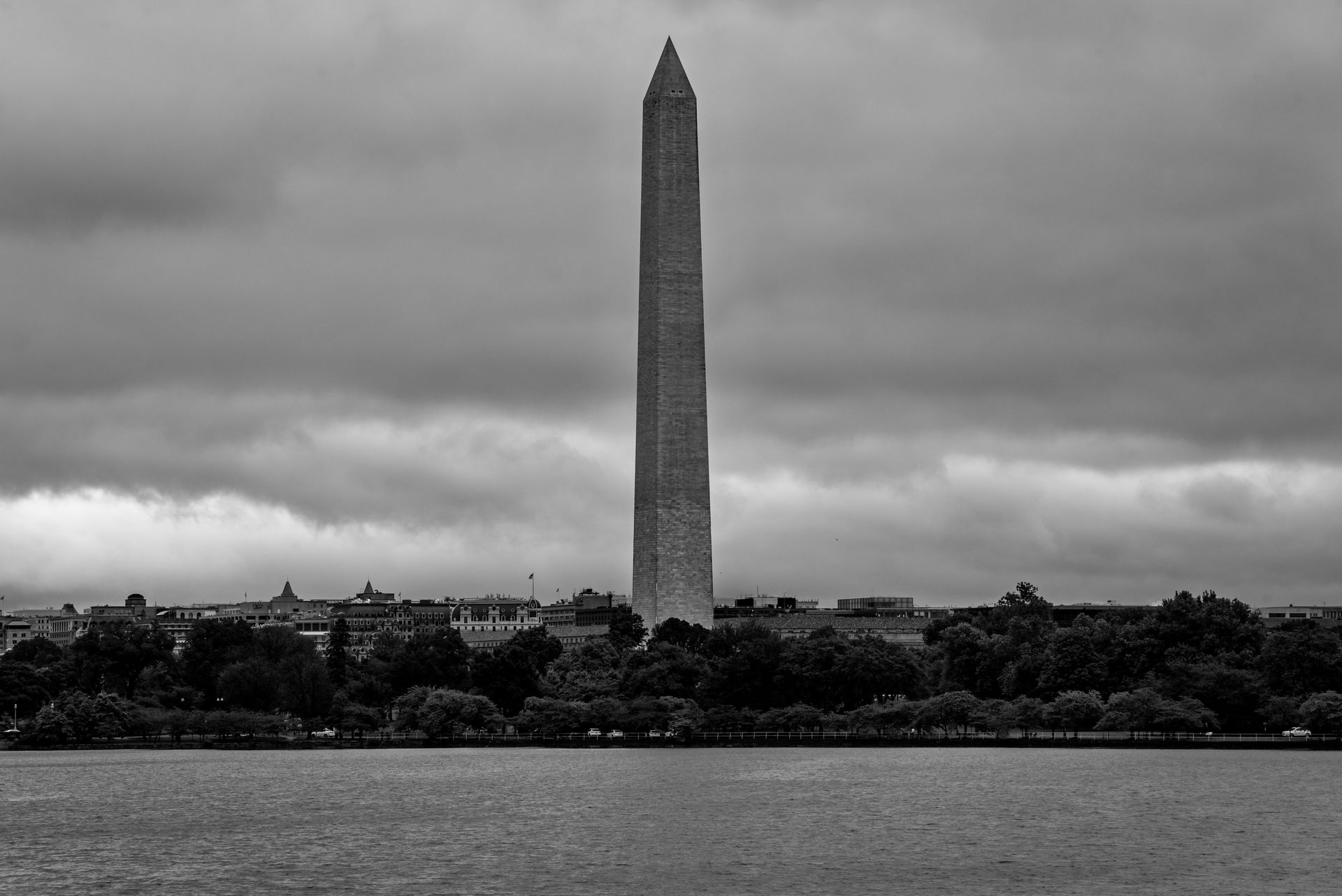
In Oslo's old-town district of Gamlebyen, a plain granite block stands as the Peststøtten monument — a memory marker that most visitors pass without noticing. According to Atlas Obscura, the monument was erected in 1986 to mark 1349, the year the Black Death reached Norway.
The Black Death is known as the bubonic plague epidemic that swept across Europe between 1347 and 1352. Caused by the Yersinia pestis bacterium, the outbreak is estimated to have killed about one-third of the continent's population. Norway is thought to have lost between 40% and 50% of its people — among the highest rates anywhere in Europe.
The monument was placed near the ruins of the former Olav's Abbey. Designed by Norwegian sculptor Ola Enstad, it is a plain, three-metre-high vertical granite obelisk carved with a single inscription: "Svartedauden 1349". Its simplicity, in contrast to grand war memorials, was intended as a silent witness to the scale of loss.
How the Black Death reached Norway is still debated. The most widely accepted account is that the plague arrived at the port of Bergen on an English ship. The work of historian Ole Jørgen Benedictow shows that the outbreak followed river valleys as it spread inland from Bergen, with particular concentration along trade routes.
The plague's social consequences shaped Norway's political structure in the long term. Surviving peasants gained bargaining power over land, feudal crop dues fell, and there was significant peasant migration from coast to inland. Norway's weakened demographic position also played a role in the Kalmar Union of 1397.
The Oslo monument is one of a relatively small set of public Black Death memory sites across Europe. In an article for HistoryToday, the historian Christopher Stoneman observed that Europe is significantly quieter on plague memory than on war and revolution memory, even though plague killed more than most armed conflicts. Notable exceptions include Vienna's Pestsäule (1693), Florence's Plague Column and the Aldgate Pump obelisk in London.
Since the Covid-19 pandemic, interest in memorials like Peststøtten has risen again. In 2024 Oslo's municipal council added a small interpretive panel and an audio-guide QR code at the monument, so that visitors are not just seeing the stone but also learning the context. Council figures show that the number of visitors to the monument in 2025 was 78% higher than the previous year.
Plague-era burial sites are also a current research topic in archaeology. DNA analysis of skeletons from mass graves excavated in Germany in 2022 has allowed researchers to trace the evolution of Yersinia pestis up to the present day. Such studies have shown changes in the bacterium's sensitivity to antibiotics relative to its medieval variants.
The University of Tromsø in northern Norway is running an ongoing research programme on the regional impact of the Black Death. The programme cross-references parish registers, land tax records and burial sites to reconstruct the age, gender and class breakdown of survivors. Early results show that the death rate among 14- to 25-year-olds was significantly lower than the average.
Peststøtten is a quiet reminder of an ancient catastrophe in a modern urban landscape. Atlas Obscura suggests that visitors also stop at the nearby Norsk Folkemuseum, where excavation finds from the medieval Olav's Abbey are on display. The small park around the monument is a discreet but meaningful picnic spot in late spring, away from Oslo's busier cafés.
Read next
Why has it been so hard to reform the House of Lords? A century of political history
Britain's House of Lords has been the subject of repeated major reform debates since 1911, but root-and-branch transformation has been deferred every time. A HistoryExtra essay looks at the political balancing acts behind those failures.

Bulford finds may unlock a major Stonehenge mystery
New finds from an excavation at Bulford, about three kilometres east of Stonehenge, are offering clues about how social life was organised between the monument's construction and its later ritual use.
Before the volcano: seven layers of everyday life in ancient Pompeii
HistoryExtra's new Pompeii series examines the social, economic and religious fabric of the city before the AD 79 eruption. The findings give a close look at a middle-class town of ancient Rome.

Alexander the Great's life: a world empire compressed into 33 years
HistoryExtra's 'Life of the Week' series traces Alexander the Great's 33-year life and the empire that stretched from the Adriatic to the Indus. Historians' commentary illuminates the political, military and cultural ground of his era.
Briefly the richest man alive: Andrew Carnegie and the rise of the 'tiny titan'
Andrew Carnegie was briefly the richest man alive at the peak of his fortune in 1901. A biographical sketch summarised by HistoryExtra traces how a poor Scottish immigrant built a steel empire and then turned to a vast philanthropic second act.