Cité Frugès in Pessac: Le Corbusier's 1926 worker-housing experiment a century on
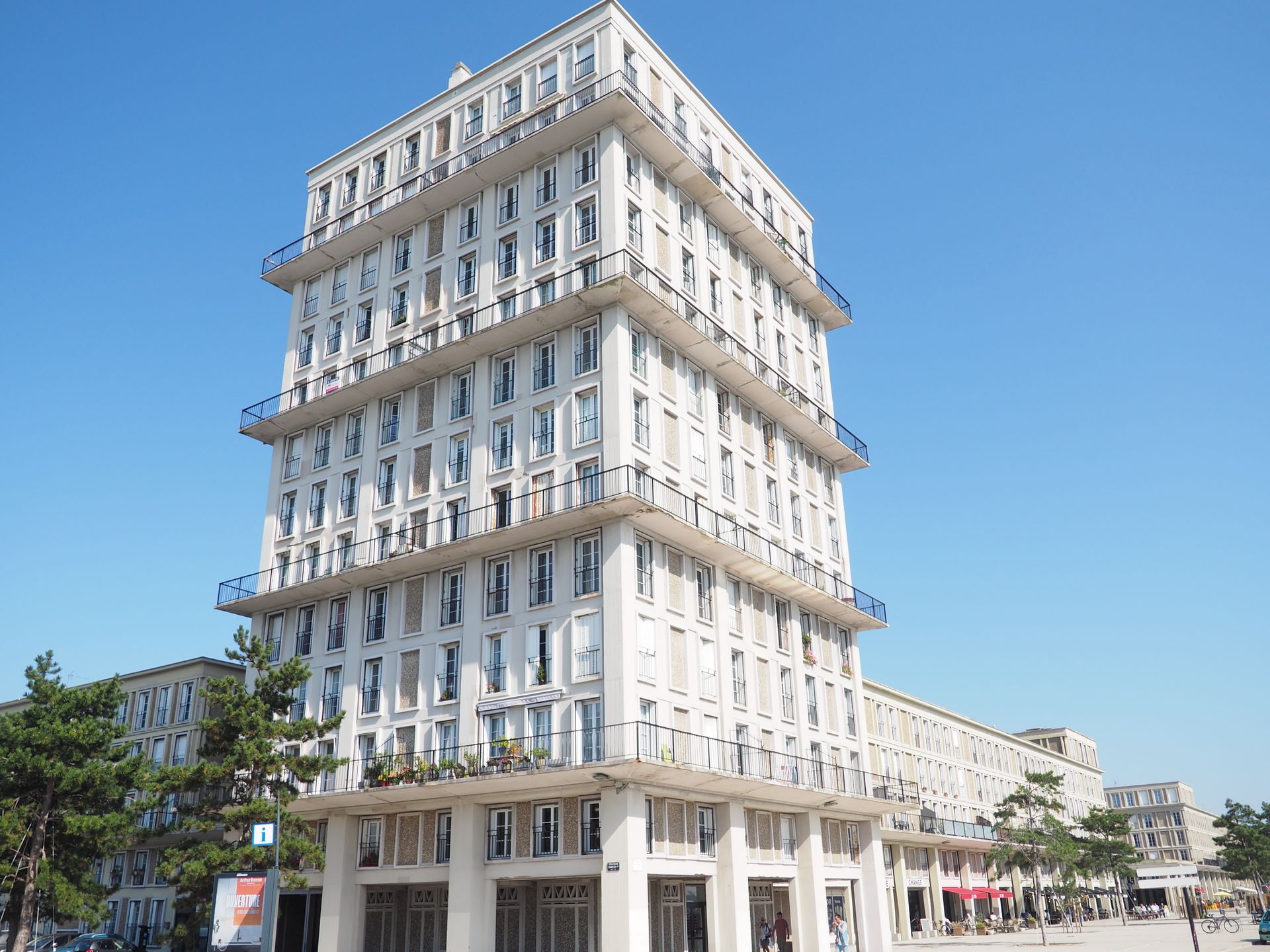
Cité Frugès in the French town of Pessac is a significant reference point in modernist architectural history. Built between 1924 and 1926 for the factory of sugar industrialist Henri Frugès, this 51-unit worker-housing community is featured by Atlas Obscura as one of the first projects in which the Swiss-French architect Le Corbusier applied his 'Five Points of Architecture' (pilotis, horizontal window, roof garden, open plan, free facade) at the scale of a single housing project.
Le Corbusier's design (his real name was Charles-Édouard Jeanneret-Gris) constituted a bold break from the era's local architectural traditions. White, cubic masses, flat roofs, broad strip windows and more — instead of a village-like layout, blocks lined along corridor-streets (rues-corridors) — felt foreign to local residents. Bordeaux architectural historian Prof. Catherine Boutonnet told Atlas Obscura, 'When Cité Frugès was built, it was mockingly referred to as the 'Moroccan style' or 'cube houses'.'
The project idea emerged from Henri Frugès's vision. The sugar industrialist wanted to provide his workers with healthy, modern housing distinct from traditional shelter solutions. Frugès visited Le Corbusier in 1923 and decided to directly fund the idea of 'modern architecture for a modern republic'. The Frugès-Le Corbusier correspondence held in the Bordeaux Architectural Archives documents the project's intellectual history.
The construction phase exceeded budget; in the end, only 51 units could be completed instead of the 130 in the original plan. After the first residents moved in around 1929, modifications added by the residents themselves — wide projecting windows, pitched roofs, colourful paint — disappointed Le Corbusier; yet they revealed a user-participation dynamic the architect had not factored in.
With the conservation movement that began in the 1980s, work to bring the houses closer to the original Corbusier design started. Pessac council encouraged owners to return to the original colour palette (red, blue, yellow, white) and geometric integrity. This work spanned about 30 years and was largely completed in the 2010s. ICOMOS France chair Anne-Sophie Maslin said, 'The restoration process of Cité Frugès is a living preservation example of modern architectural heritage.'
The UNESCO World Heritage Committee included Cité Frugès in Le Corbusier's serial inscription titled 'The Architectural Work of Le Corbusier, an Outstanding Contribution to the Modern Movement' in 2016. This series covers 17 works of Le Corbusier across 7 countries; Cité Frugès is one of four works in France (the others are Villa Savoye in Poissy, Unité d'Habitation in Marseille and Notre-Dame du Haut in Ronchamp). The inscription application was made jointly by France, Switzerland, Germany, Belgium, India, Japan and Argentina.
Today, about 35 of the 51 houses at Cité Frugès are still used as residences, while a portion serves as a museum and education centre. The Maison Frugès-Le Corbusier museum opened in 2007; it receives an average of 8,500 visitors annually. Pessac mayor Franck Raynal said in a statement, 'Cité Frugès is part of the cultural identity of our town, and at the same time an important point of architectural tourism.'
The sociological heritage of Cité Frugès is also the subject of study. ENS Paris-Saclay sociologist Mathieu Hilgers noted that the project constitutes an important case study on the relationship between social class and architecture. Le Corbusier's vision of 'modern housing for the modern proletariat' significantly influenced 20th-century European housing policies; the Unité d'Habitation project in Marseille (1947-1952) is a larger application of that vision.
In architectural-heritage terms, Cité Frugès is the first major example in which all of Le Corbusier's Five Points of Architecture were combined in a single housing project. Pilotis (leaving the ground floor open), flat roofs, horizontal strip windows, free facade and open-plan interiors became key reference points of 20th-century housing architecture.
In terms of present-day visit experience, the town is a 25-minute tram ride from central Bordeaux; visitors can take a guided tour at the Maison Frugès-Le Corbusier museum and view the surrounding houses from a distance. For visitors interested in social class, architectural modernism and the UNESCO conservation process, Cité Frugès retains its value as a place to observe how a vision established a century ago has translated into the present day.