Why were these 18 Iron Age skeletons all buried the same strange way
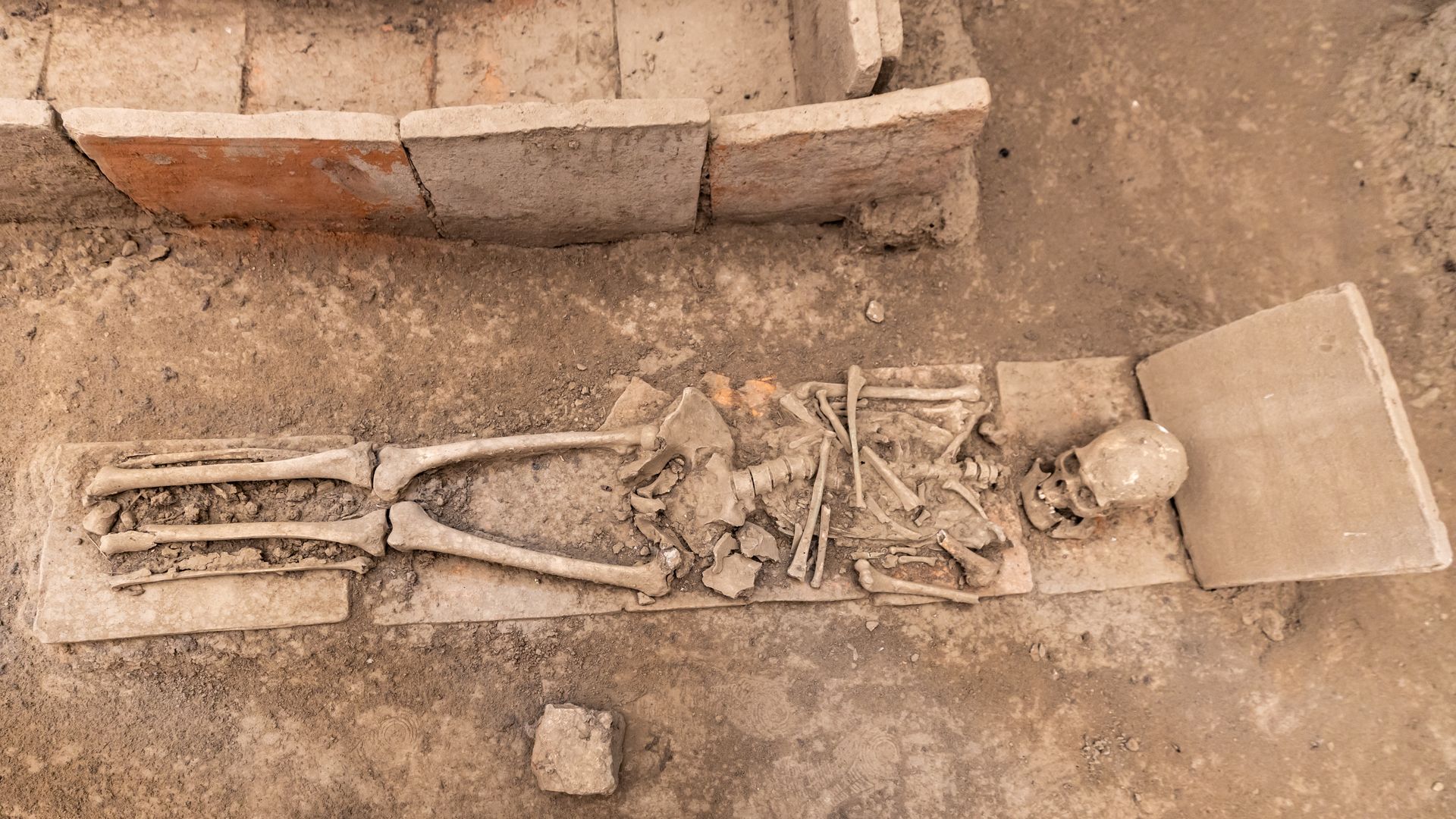
An excavation in France has produced a discovery that surprised archaeologists: eighteen skeletons found at a burial site dating back roughly 2,000 years, to the Iron Age, were all buried upright — standing, or close to it.
That kind of burial is a significant departure from typical practices of the period. In Iron Age Gaul (covering much of modern-day France), the dead were generally laid out flat, on their backs or sides. Finding eighteen individuals all buried in the same unusual position points to a deliberate practice rather than coincidence.
When archaeologists first noticed this consistent pattern, they considered several possible explanations. One early theory was that it represented a punitive or exclusionary form of burial — that individuals viewed as different or somehow punished by their community were buried this way.
But that theory doesn't fully match the excavation data. If the intent had been punishment or degradation, one might expect an absence of grave goods or careful burial treatment. Instead, some of the skeletons were found with burial items that would have been considered unremarkable by the standards of the time.
Another possibility is that the position carried a religious or ritual significance. Some researchers suggest an upright burial could relate to a specific belief about the afterlife — for instance, the idea that the soul passed into the next world "standing."
A third theory rests on a more practical explanation: soil conditions or the physical constraints of the burial site may have pushed the community toward this method. In hard or rocky ground, an upright burial could have required less excavation effort.
Archaeologists stress that more evidence is needed before drawing firm conclusions. Analysis of the eighteen individuals' age, sex and health is still ongoing, and that data could clarify whether the practice was limited to a specific group or applied across the wider community.
Similar examples of upright burial have been found before in scattered locations across Europe, but rarely at this scale — eighteen individuals buried the same way at a single site is highly unusual. That makes this location especially valuable for researchers studying Iron Age burial traditions.
Archaeologists hope future analysis — including isotope testing, DNA analysis and comparative archaeology — could reveal more about who these individuals were and whether they shared a kinship or community bond.
For now, this unusual burial site stands as a reminder of how little is still understood about Iron Age beliefs surrounding death and the afterlife — and how carefully archaeologists must still work to answer questions that remain buried underground.
Read next

On this day: Beijing turned an opening ceremony into legend on 08-08-08
On August 8, 2008, at exactly 8:08 pm, the opening ceremony of the Beijing Summer Olympics began — a historic spectacle built around the number eight's auspicious meaning in Chinese culture and directed by filmmaker Zhang Yimou. It became a defining symbol of China's arrival on the global stage.
What is the Devise for the Succession, and how did it trigger a Tudor crisis
According to HistoryExtra, the dying teenage King Edward VI attempted to rewrite England's line of succession in his own hand in 1553. The illegal document sought to disinherit his sisters Mary and Elizabeth and place his Protestant cousin, Lady Jane Grey, on the throne.
On this day: Philippe Petit walks a tightrope between the Twin Towers (1974)
On August 7, 1974, French high-wire artist Philippe Petit walked across a wire he had illegally rigged between the recently completed Twin Towers of New York's World Trade Center. Performed roughly 400 meters above the street, the feat captivated the world and later became the subject of an Oscar-winning documentary.

How Britain smuggled its entire gold reserve to Canada during WWII
In 1940, fearing a Nazi invasion, Britain secretly shipped almost its entire gold reserve across the Atlantic to Canada in one of history's largest and least publicized financial evacuations. The operation was so closely guarded that only a handful of British officials even knew it was happening.

On this day: the World Wide Web is made publicly available (1991)
On August 6, 1991, British computer scientist Tim Berners-Lee posted a short summary of his World Wide Web project, developed at CERN, to a public internet newsgroup — the moment historians generally cite as the Web becoming publicly available. It transformed the internet from a tool for specialists into the connective tissue of modern life.