Quantum advantage: how do we know a quantum computer's results are correct?
The promise of quantum computers has always sounded simple: for certain problems, they can compute at a speed no classical computer could ever practically match. But that promise carries a hard-to-prove paradox. When a quantum computer solves a problem no classical computer can, how can you prove the answer is correct — if there is no classical reference to check it against?
That question has shadowed 'quantum advantage' claims for years. Some past claims were later undercut when smarter classical algorithms turned out to solve the same problem in a reasonable amount of time after all. That produced a trust problem for the field: speed alone can be impressive, but it means little if accuracy cannot be proven.
On 30 July, research teams including IBM, the University of Chicago, Algorithmiq, Qedma, RIKEN and BlueQubit tackled that problem head-on, publishing three separate papers on the same day. Each paper does more than claim speed — all three offer built-in verification methods that can confirm the results are accurate.
The IBM and University of Chicago team used techniques called 'doped Clifford sampling' and 'spacetime codes' to certify quantum computations that are hard to solve using classical methods. The approach allows certain mathematical properties of a computation to be verified classically — offering strong assurance of accuracy without having to recompute the entire result.
A separate team from Qedma, RIKEN and BlueQubit reported observing quantum phenomena beyond the reach of leading classical simulation methods, using validated error-mitigation techniques. Error mitigation addresses a fundamental fragility of quantum computers — the tendency of qubits to be easily disturbed by environmental noise.
Algorithmiq's approach offers a different angle: rather than comparing the result to a classical answer, it validates the computation process itself. That is somewhat like grading a maths student not just on the final answer but on whether each step of their working is logically consistent.
The fact that three separate teams released results on the same day, using independent but complementary verification frameworks, is seen as a significant signal for the field. Researchers present it not as a one-off record claim but as an effort to build a shared standard for what 'trusted quantum advantage' should look like.
An important detail is that all three teams presented their results openly for ongoing community verification rather than as a closed declaration of victory. That reflects lessons learned from earlier quantum advantage claims, some of which were initially celebrated and later challenged by independent researchers.
The practical implications of this development remain limited for now — these experiments do not solve a problem that directly affects everyday life, focusing instead on demonstrably proving quantum computers' fundamental capabilities. Practical benefits in fields such as drug discovery, materials science or cryptography could still be years away.
Still, researchers stress that establishing verifiable trust at this early stage lays a critical foundation for the field's future progress. Speed alone is not enough; the ability to prove a result is trustworthy is seen as the decisive threshold for quantum computing's move from the laboratory to real-world application.
Read next
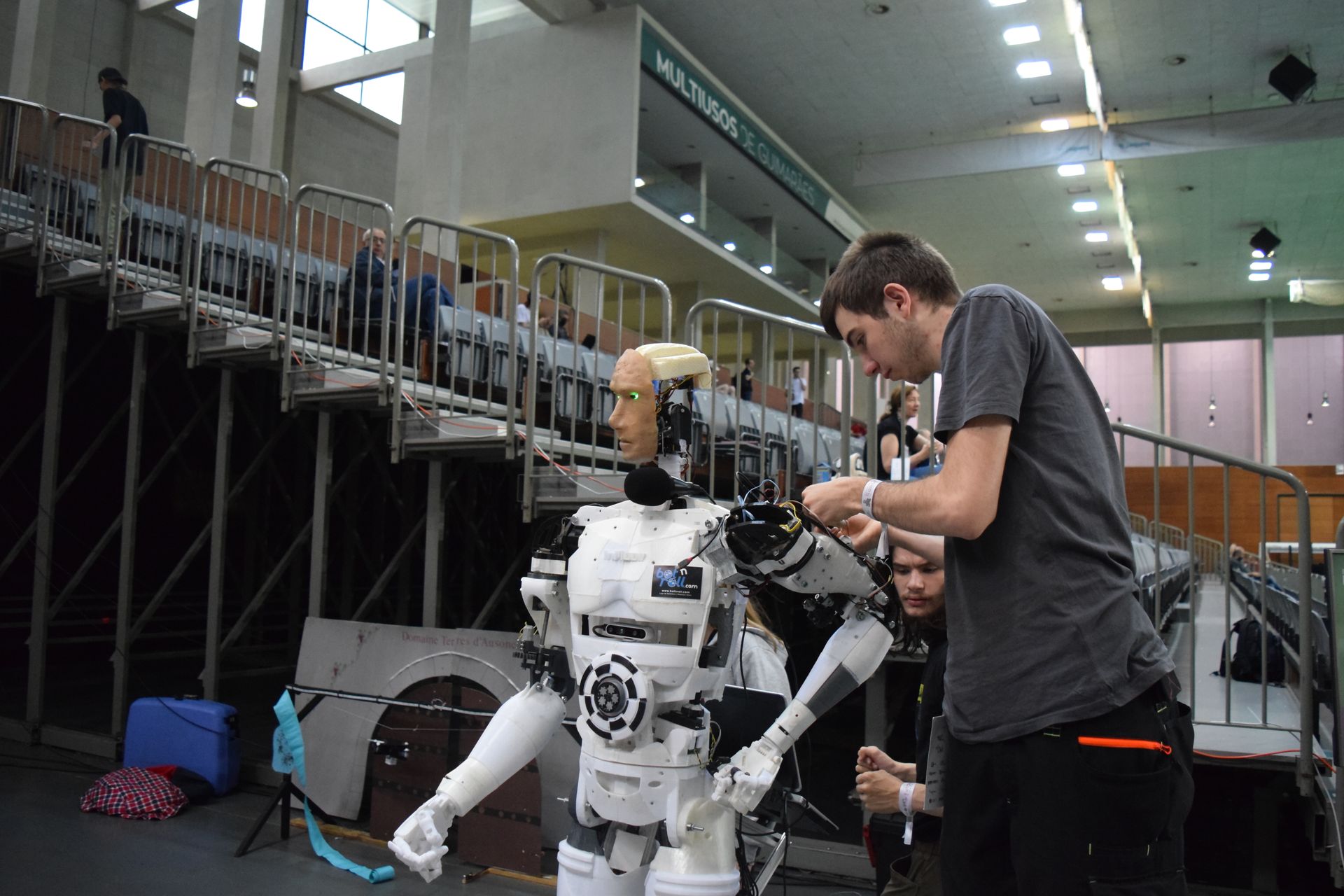
Google DeepMind unveils Gemini Robotics 2, giving robots 'whole body' intelligence
Google DeepMind announced Gemini Robotics 2 on 30 July, a family of AI models designed to give robots coordinated control of their entire body, from torso to legs. The system achieved a 92% success rate at a task requiring it to unscrew a lightbulb in tests, though success rates dropped to as low as 46% for tasks like picking objects up off the floor.
CareCloud data breach: what happened to 350,000 patients' medical records
US health technology company CareCloud has confirmed hackers accessed one of its electronic medical record databases for at least six days in March, in a breach that affected roughly 350,000 people. The company began mailing notification letters in July; no known hacker group has yet claimed responsibility for the attack.

How AI is helping Google find and fix Chrome bugs faster
Google says it fixed 1,072 security bugs across two Chrome releases in June — more than the 1,036 bugs patched over 23 releases in the previous two years. The company credits the jump to AI agents scanning its codebase, including a workflow that surfaced a sandbox-escape vulnerability that had gone unnoticed for 13 years.

Do school phone bans work? What the data shows
A new Pew Research Center survey finds 77% of US adults support banning cellphones in class, and 48% now back all-day bans — up from just 36% two years ago. Here's what's driving the shift in opinion, and what the research actually shows.

Why are AI's top startups publishing less research than ever?
The field of AI, once known for its culture of open research, is entering a more closed era in which the leading startups are sharing their findings less and less. Here's what's driving the shift, and what it means for the wider scientific community.