Google DeepMind unveils Gemini Robotics 2, giving robots 'whole body' intelligence
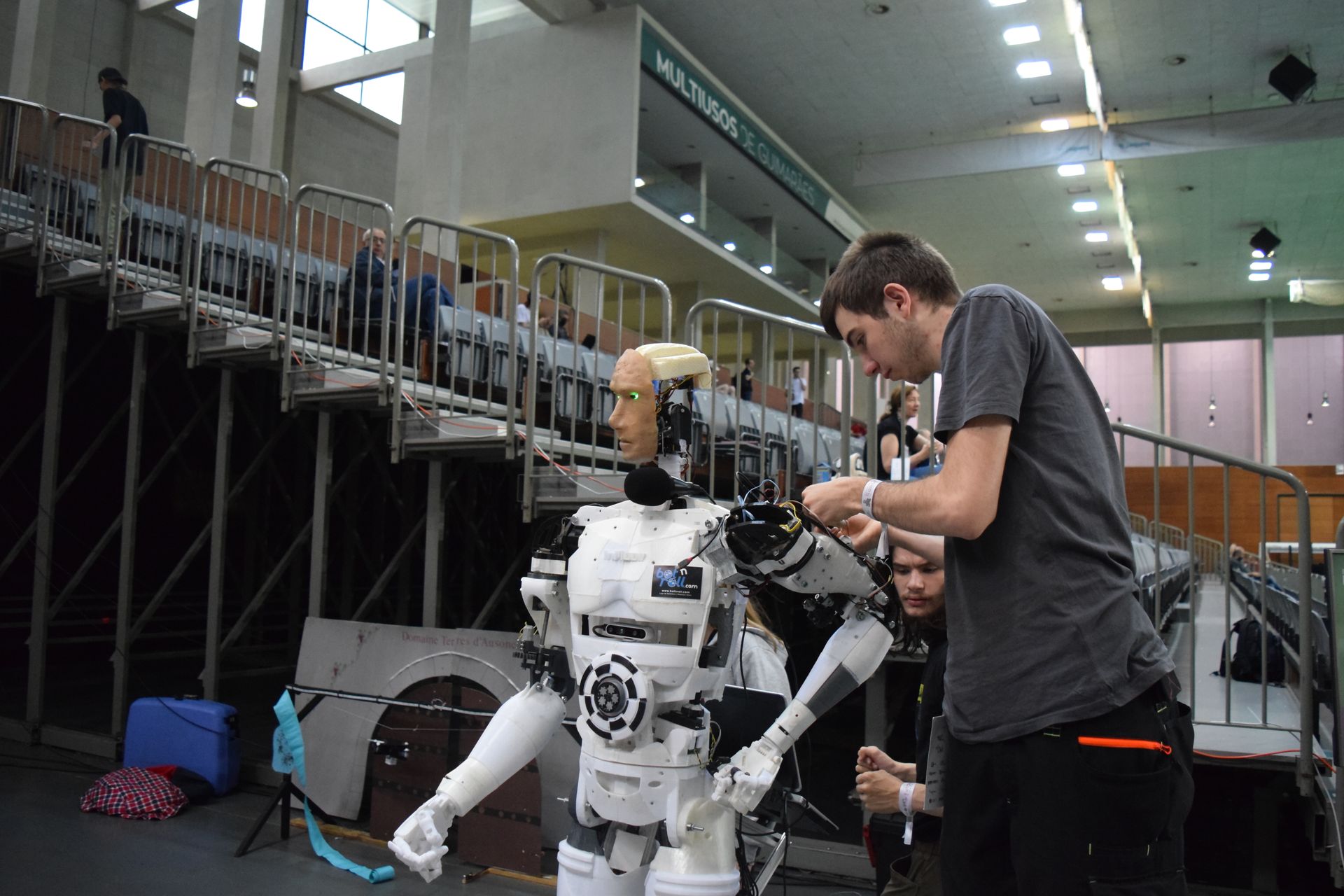
One of the toughest technical obstacles for humanoid robots has long been coordination: reaching for an object while maintaining balance and orienting the torso correctly requires managing dozens of joints simultaneously. Many robotic systems have historically handled this by breaking the task into pieces — stabilising first, then moving the arm — which tends to make movements slow and mechanical-looking.
Google DeepMind announced Gemini Robotics 2 on 30 July, a family of AI models aimed squarely at that problem. According to the company, the system gives robots the ability to plan and adjust their entire body, from torso to legs, as a single coordinated unit — letting a machine twist, lean and reach all at once.
In practice, that means a single integrated motion system that lets a humanoid robot walk, crouch, stretch and manipulate objects to clean up a cluttered room. Demonstration footage released by the company shows robots inserting a tape into a boombox, screwing in a lightbulb, and even tying up a garbage bag.
The system is built from three specialised models: a Vision-Language-Action model, an Embodied Reasoning model, and an on-device controller. That three-part structure separates high-level task planning — understanding what to do — from low-level motor control — figuring out how to physically do it — an architectural approach robotics researchers have long pursued.
Performance results vary considerably by task. The system achieved a 92% success rate on a task requiring precise whole-body control: unscrewing a lightbulb, demonstrating that fine motor skill and broader body coordination were being combined effectively.
But tests with a robot platform called Apollo 2 produced more mixed results: an 68.4% success rate picking objects up from a table, 45.7% from the floor, and 76.3% from a shelf.
The lower success rate for picking objects up off the floor illustrates a concrete challenge still facing the field: bending down requires shifting the body's centre of gravity while maintaining balance, perceiving the scene from a different visual angle, and applying precise grip in what is often a more constrained space for the hand to manoeuvre — all variables that must be managed simultaneously and in real time.
Still, researchers stress that this performance gap between tasks is expected, since each task demands a different combination of balance, perception and manipulation. The goal is not perfection at any single task but reasonably reliable general competence across a wide range of physical tasks.
Gemini Robotics 2 is part of Google's broader push into AI systems that operate in the physical world, a domain considered especially challenging because, unlike conversational AI models, it requires directly grappling with real-world uncertainty and physical constraints.
Experts say reliable, general-purpose humanoid robots for household or industrial settings are still likely years away from everyday use, but progress on this kind of whole-body coordination is seen as a sign that one of the field's most fundamental technical barriers — fragmented, sequential movement control — is beginning to be overcome.
Read next
Quantum advantage: how do we know a quantum computer's results are correct?
Teams including IBM, the University of Chicago, Algorithmiq, Qedma and RIKEN published three separate papers on the same day, 30 July, each claiming to perform calculations beyond the reach of classical computers — this time with built-in verification methods that can confirm the results are accurate. The work tackles the question that has long undermined 'quantum advantage' claims: if you can't check the answer classically, how do you know it's right?
CareCloud data breach: what happened to 350,000 patients' medical records
US health technology company CareCloud has confirmed hackers accessed one of its electronic medical record databases for at least six days in March, in a breach that affected roughly 350,000 people. The company began mailing notification letters in July; no known hacker group has yet claimed responsibility for the attack.

How AI is helping Google find and fix Chrome bugs faster
Google says it fixed 1,072 security bugs across two Chrome releases in June — more than the 1,036 bugs patched over 23 releases in the previous two years. The company credits the jump to AI agents scanning its codebase, including a workflow that surfaced a sandbox-escape vulnerability that had gone unnoticed for 13 years.

Do school phone bans work? What the data shows
A new Pew Research Center survey finds 77% of US adults support banning cellphones in class, and 48% now back all-day bans — up from just 36% two years ago. Here's what's driving the shift in opinion, and what the research actually shows.

Why are AI's top startups publishing less research than ever?
The field of AI, once known for its culture of open research, is entering a more closed era in which the leading startups are sharing their findings less and less. Here's what's driving the shift, and what it means for the wider scientific community.