Google pulls new Google Earth AI tool one day after launch over fake-imagery backlash

Google's tenure with its newest Earth feature turned out to be one of the shortest in the product's history: an AI image-generation tool built into Google Earth was pulled just one day after launch, following a wave of criticism warning that the feature made it trivially easy to create convincing fake imagery superimposed on real, identifiable locations.
The feature let users type a text prompt describing a scene, then generate an AI image and layer it directly onto real satellite and street-level imagery within Google Earth's mapping interface. In principle, the tool was pitched as a creative or illustrative feature, letting users visualise hypothetical scenarios at real locations. In practice, critics quickly demonstrated how easily it could be used to generate images depicting fires, floods, protests, military activity or other dramatic events at specific, real addresses, indistinguishable at a glance from an authentic photograph tied to that exact place.
What made the tool particularly sensitive was Google Earth's own reputation for authority and verifiability. Users and journalists routinely treat Google Earth and Google Maps imagery as a trustworthy reference point precisely because it is understood to reflect real satellite and street-view data rather than generated content. Overlaying AI-generated imagery within that same interface, even with an intended creative purpose, risked blurring a distinction that the platform's usefulness has long depended on: the difference between what a place actually looks like and what someone imagined it might look like.
Critics flagged specific risks quickly after launch: fabricated images purporting to show a natural disaster at a real address, potentially fooling people checking on relatives during an actual emergency; fake protest or unrest scenes at government buildings or embassies, which could circulate during periods of genuine political tension; and doctored depictions of infrastructure like dams, power plants or military installations, which security researchers noted could complicate open-source intelligence work that relies on the presumed authenticity of satellite-style imagery.
Google's decision to pull the feature just twenty-four hours after launch stands out for its speed relative to how the company, and the tech industry more broadly, has often handled criticism of AI features in the past. Contested AI tools have frequently remained live for weeks or months while a company gathers data, issues public statements defending the feature's safeguards, or rolls out incremental restrictions rather than a full withdrawal. The near-immediate reversal suggests Google's own internal risk assessment concluded quickly that the misinformation potential outweighed the feature's creative upside, rather than waiting to see how the criticism developed.
The episode fits into a broader, recurring pattern across the AI industry in recent years: generative tools shipped with real creative or productivity value that nonetheless carry an obvious secondary use for fabricating convincing false content, a tension that keeps resurfacing as AI image and video generation tools become sharper and more widely accessible. Similar concerns have shaped restrictions or withdrawals of AI features from other major platforms when the realism of generated content crossed a threshold where fabrication became difficult for an average viewer to detect.
Google has not detailed whether it plans to relaunch a modified version of the tool with additional safeguards, such as visible watermarking of AI-generated overlays, restrictions on which locations can be used as a base image, or limits on the kinds of scenes users can generate. Companies in similar situations have sometimes returned months later with a technically similar but visibly labelled version of a paused feature, treating the labelling itself as the core fix rather than restricting the underlying generation capability.
The incident adds to an ongoing debate in the AI industry over where the responsibility for misuse should sit: with the platform that built and shipped the generative capability, with the user who chooses to create and share a misleading image, or with the platforms where a fabricated image might eventually circulate without its original mapping context attached. Google Earth's near-instant reversal suggests the company judged that, in this specific case, the risk of a convincing fake tied to real coordinates was too immediate and too easily foreseeable to leave to downstream moderation.
For Google, the episode is also a reminder of the reputational stakes attached to products built on decades of accumulated trust. Google Earth and Google Maps occupy a default, background role in how millions of people verify claims about the physical world, a position that made the misinformation risk of this particular feature more consequential than a similar tool built into a less trusted or less widely used product might have been.
Whether or not Google revisits the feature, the episode has already become a reference point in wider conversations about generative AI and mapping tools: a reminder that adding AI image generation to a platform whose entire value proposition rests on depicting real places accurately carries a different, and arguably higher, risk profile than adding the same capability to a general-purpose creative app.
Read next

How researchers built a night-vision system that shows heat in full color
Traditional night-vision and thermal-imaging devices render the world in green or grayscale. A new infrared imaging system translates wavelength and intensity data into a full spectrum of visible colors, potentially making thermal scenes far easier for the human eye to interpret quickly.

What is a 'ghost lineage', and why did an extinct African population leave so much DNA behind?
Geneticists have identified a previously unknown, now-extinct human population in Africa that interbred with the ancestors of modern humans and left a significant genetic footprint, despite having no known descendants of its own. Unlike Neanderthals, no fossil of this group has ever been found.

US regulators investigate 1.2 million Tesla vehicles over suspension failures
The US National Highway Traffic Safety Administration has opened a preliminary investigation into roughly 1.2 million Tesla Model 3 and Model Y vehicles after receiving complaints that a front suspension component can detach without warning, in some cases causing a loss of steering control.

Why is memory getting so expensive, and how long will the chip shortage last?
Samsung says the global memory-chip shortage will keep worsening through 2027 and persist until 2028, driven largely by AI data centers buying up supply. Here is why the shortage is happening, and what it means for the price of phones, laptops and other everyday devices.
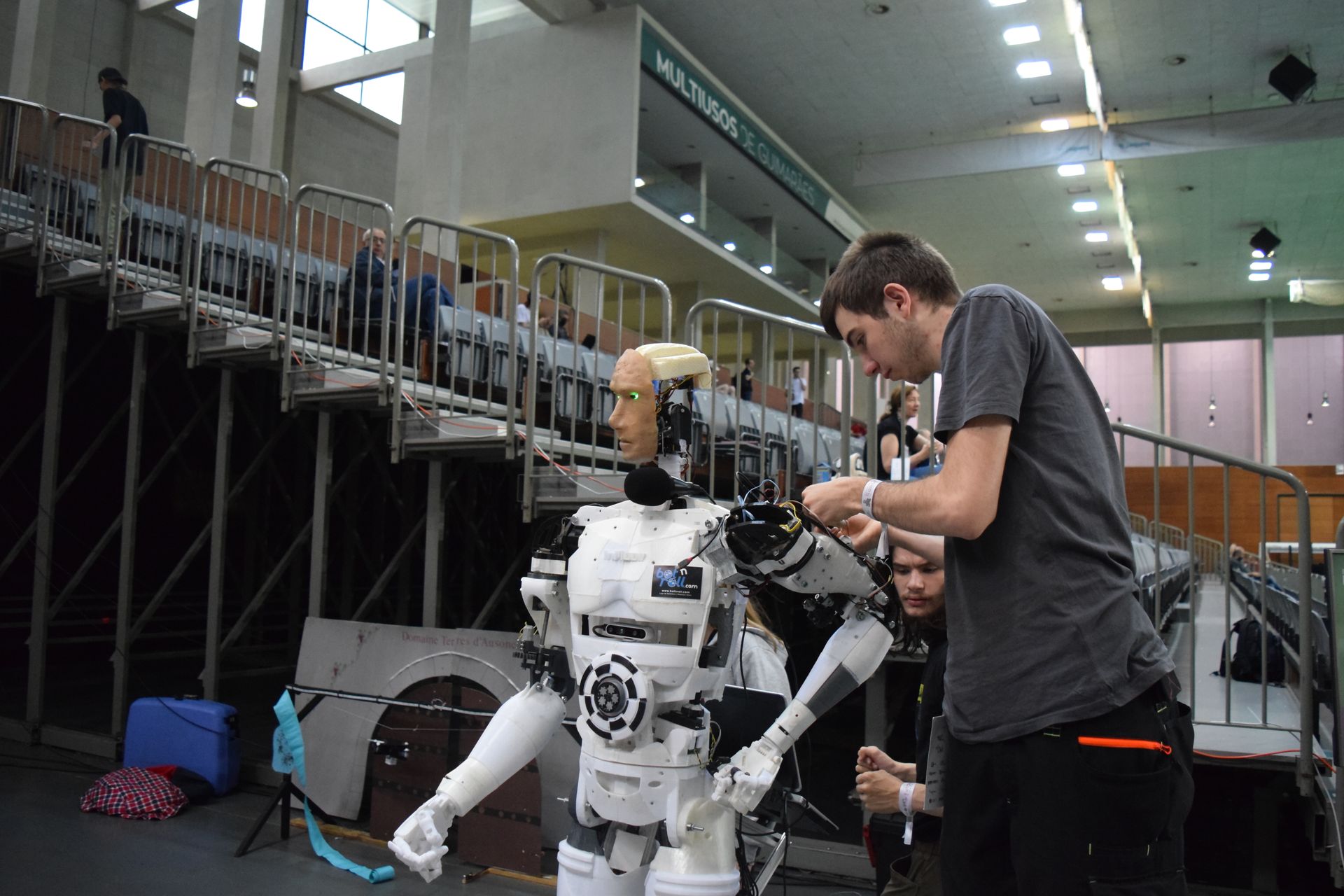
Google DeepMind unveils Gemini Robotics 2, giving robots 'whole body' intelligence
Google DeepMind announced Gemini Robotics 2 on 30 July, a family of AI models designed to give robots coordinated control of their entire body, from torso to legs. The system achieved a 92% success rate at a task requiring it to unscrew a lightbulb in tests, though success rates dropped to as low as 46% for tasks like picking objects up off the floor.