US regulators investigate 1.2 million Tesla vehicles over suspension failures

The National Highway Traffic Safety Administration has opened a preliminary investigation into approximately 1.2 million Tesla vehicles following complaints of a suspension failure that the agency says can lead to a loss of directional control. The probe covers 2018-2020 Model 3 sedans and 2021-2023 Model Y crossovers, spanning several model years and a substantial share of Tesla's total US vehicle fleet.
According to a filing from NHTSA's Office of Defects Investigation, the agency has received 156 complaints describing detachment of the front lower lateral link, a suspension component that helps control the position and alignment of a front wheel. When this link detaches, the wheel can lose proper alignment control, a failure mode the agency's filing specifically links to the risk of a driver losing directional control of the vehicle, particularly at higher speeds where sudden suspension geometry changes have the most severe handling consequences.
What has drawn particular attention from safety researchers is the description, in most complaints reviewed by the agency, of failures occurring with no advance warning. Some drivers did report unusual noises in the period before the failure, which the agency's filing notes as a potential early indicator, but many described the detachment as sudden and without any perceptible warning sign that would have prompted a driver to seek inspection or repair beforehand.
A preliminary investigation, in NHTSA's regulatory process, is an early-stage step rather than a final finding of a safety defect. The agency uses this phase to gather additional data directly from the manufacturer, including engineering analysis, warranty claims and any internal data Tesla holds on the failure rate of this specific component across the affected vehicle population. Depending on what that data shows, the investigation can be closed without further action, escalated to a more formal engineering analysis, or result in NHTSA requesting or requiring a recall.
Suspension component failures of this kind are not unique to Tesla; lower control arms and lateral links across many manufacturers are subject to wear over a vehicle's service life and have been the subject of past recalls across the auto industry when failure rates or severity crossed a regulatory threshold. What differentiates this case, safety analysts note, is less the type of component involved than the scale of the potentially affected fleet and the reported suddenness of the failure mode in the complaints reviewed so far.
Tesla has not issued a public statement specifically addressing the suspension complaints at the time of the agency's filing. Under standard NHTSA procedure, manufacturers are required to respond formally to information requests issued during a preliminary investigation, typically providing an initial substantive response within a set number of days, though public commentary from the company on an open investigation is not mandatory at this stage.
For owners of the affected vehicle ranges, safety researchers generally advise against panic but recommend attentiveness to warning signs specifically flagged in complaints: unusual clunking or knocking noises from the front of the vehicle, particularly over bumps or during turns, and any perceptible change in steering feel or vehicle tracking. Vehicles showing such symptoms are typically advised to be inspected promptly by a qualified technician rather than waiting for a formal recall notice, since a preliminary investigation can take months to conclude even if a defect is eventually confirmed.
The investigation adds to a pattern of regulatory scrutiny Tesla has faced in the US over various vehicle systems in recent years, spanning software-related driver-assistance features as well as mechanical components, reflecting the scale of Tesla's fleet size and its correspondingly larger sample size for complaint-driven investigations relative to smaller manufacturers. A large registered fleet generates more absolute complaints even at an identical per-vehicle failure rate compared with a smaller manufacturer, a statistical reality that complicates simple comparisons of investigation frequency across manufacturers.
The scope of the affected model years, spanning both the Model 3 sedan across three model years and the Model Y crossover across three separate model years, suggests the suspected component or its installation process may have been consistent across a broader stretch of Tesla's manufacturing history than a single production run, though NHTSA's filing does not draw a specific conclusion about root cause at this preliminary stage.
What happens next depends largely on what Tesla's internal data shows once submitted to the agency. If the failure rate and severity data support the complaint pattern, NHTSA can escalate toward a recall determination; if Tesla's data suggests the complaints represent isolated cases below a statistically significant threshold, the investigation could close without further regulatory action. Either outcome will likely take months to materialise, during which affected owners are advised to monitor for the specific warning signs the complaints have described.
Read next

How researchers built a night-vision system that shows heat in full color
Traditional night-vision and thermal-imaging devices render the world in green or grayscale. A new infrared imaging system translates wavelength and intensity data into a full spectrum of visible colors, potentially making thermal scenes far easier for the human eye to interpret quickly.

What is a 'ghost lineage', and why did an extinct African population leave so much DNA behind?
Geneticists have identified a previously unknown, now-extinct human population in Africa that interbred with the ancestors of modern humans and left a significant genetic footprint, despite having no known descendants of its own. Unlike Neanderthals, no fossil of this group has ever been found.

Google pulls new Google Earth AI tool one day after launch over fake-imagery backlash
Google shut down a newly launched Google Earth feature that let users generate AI images and superimpose them onto real satellite maps, just one day after release, following swift criticism that the tool could be used to fabricate convincing fake events at real locations.

Why is memory getting so expensive, and how long will the chip shortage last?
Samsung says the global memory-chip shortage will keep worsening through 2027 and persist until 2028, driven largely by AI data centers buying up supply. Here is why the shortage is happening, and what it means for the price of phones, laptops and other everyday devices.
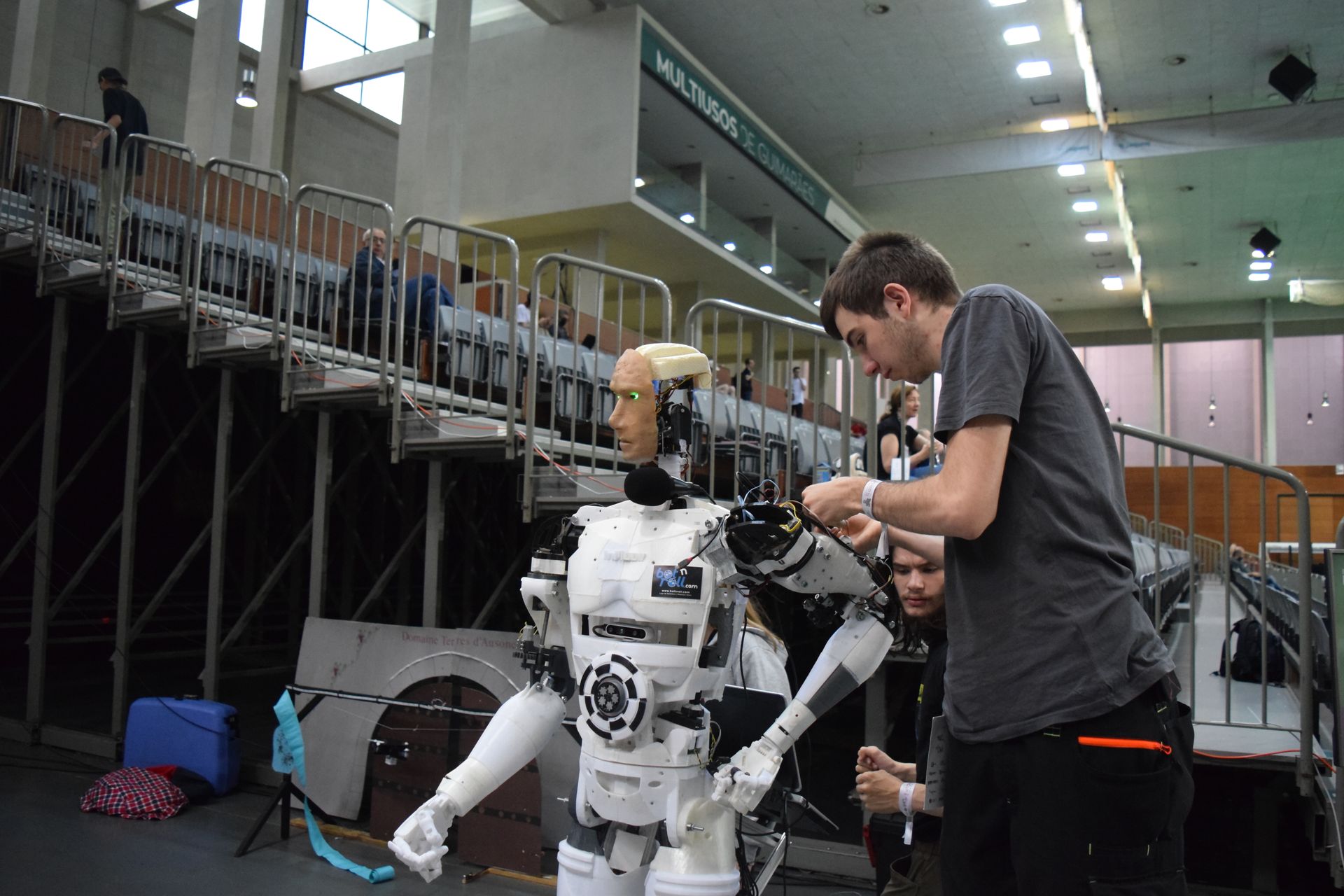
Google DeepMind unveils Gemini Robotics 2, giving robots 'whole body' intelligence
Google DeepMind announced Gemini Robotics 2 on 30 July, a family of AI models designed to give robots coordinated control of their entire body, from torso to legs. The system achieved a 92% success rate at a task requiring it to unscrew a lightbulb in tests, though success rates dropped to as low as 46% for tasks like picking objects up off the floor.