Why is memory getting so expensive, and how long will the chip shortage last?

If a new laptop, phone or game console has felt more expensive than it should be lately, there is a specific, traceable reason: a global shortage of memory chips that Samsung, one of the industry's two dominant manufacturers, now says will keep getting worse through 2027 before easing sometime in 2028. That is a multi-year window in which the basic building blocks of nearly every computing device are expected to remain in short supply and rising in price.
Memory chips come in two broad categories relevant here: DRAM, which handles a device's short-term working memory, and NAND flash, which handles long-term storage. Both categories are produced by a small number of manufacturers globally — Samsung, SK Hynix and Micron account for the overwhelming majority of world supply — which means a capacity crunch at any one of them ripples through the entire consumer electronics industry almost immediately, since there are no large alternative suppliers to absorb the excess demand.
The root cause of the current shortage is not a factory accident or a natural disaster, the kind of disruption that has caused past chip shortages, but a demand shock: the buildout of AI data centers. Training and running large AI models requires enormous quantities of high-bandwidth memory, a specialized and more expensive category of DRAM designed for the intense data-throughput needs of AI accelerator chips. As AI companies and cloud providers race to build out data center capacity, they are buying memory chips at a volume and a price point that consumer electronics manufacturers struggle to compete with.
Manufacturers naturally respond to a shortage by allocating more of their production capacity toward the most profitable products, and high-bandwidth memory for AI data centers currently commands significantly higher margins than the standard memory used in phones and laptops. That creates a direct tradeoff: every production line reallocated toward AI-grade memory is a production line not making the memory that goes into a mainstream smartphone, meaning consumer device supply tightens even though nothing has gone wrong in a traditional sense with the factories making those chips.
Samsung's own forecast, extending the shortage's worsening phase through 2027, reflects how far behind memory-manufacturing capacity has fallen relative to AI-driven demand growth. Building a new semiconductor fabrication plant, the facility where these chips are physically produced, typically takes several years from groundbreaking to volume production, meaning manufacturers cannot simply expand output quickly even if they wanted to respond immediately to the current price signals. The capacity being planned now will not meaningfully ease the shortage until new fabs come fully online, which is part of why Samsung's own timeline stretches into 2028.
For consumers, the practical effect shows up first in the products most sensitive to memory costs: entry-level phones and laptops, where memory represents a larger share of the total bill of materials than in premium devices, and gaming consoles, which typically rely on higher-end memory configurations to handle modern games. Analysts expect price increases to be more visible at the budget end of each product category than at the premium end, where manufacturers have more margin to absorb rising component costs without passing the full increase to customers.
The shortage also affects product design choices in ways that are less visible to consumers directly. Manufacturers facing higher memory costs sometimes respond by shipping devices with less memory than they otherwise would have, or by making memory upgrades pricier options rather than standard inclusions, effectively passing the shortage's cost through configuration choices rather than sticker price alone.
Some industry analysts see a parallel with previous cycles in the memory industry, which has historically been prone to boom-and-bust swings as manufacturers over-invest in new capacity during a shortage, only to face oversupply and crashing prices once that capacity comes online simultaneously across the industry. Whether the current AI-driven demand proves durable enough to avoid that pattern, or whether data center memory demand eventually plateaus while new fab capacity is still ramping up, will significantly shape how the shortage actually resolves once it does.
Governments in several countries with domestic chip manufacturing, including the US and South Korea, have taken an interest in the shortage given memory's role as foundational infrastructure for both consumer technology and AI development, a strategic asset in a way that few other component categories are treated. Policy responses have so far focused on incentivizing new fabrication capacity rather than intervening directly in pricing or allocation, reflecting a broader view that expanding supply, even slowly, is the only durable fix.
For now, the clearest takeaway for anyone shopping for a new device is that memory-related price increases are not a temporary blip tied to one product cycle, but a structural feature of the market that Samsung's own leadership expects to persist for roughly two more years. Devices bought sooner rather than later, at least on current pricing trends, are unlikely to get cheaper by waiting.
Read next

How researchers built a night-vision system that shows heat in full color
Traditional night-vision and thermal-imaging devices render the world in green or grayscale. A new infrared imaging system translates wavelength and intensity data into a full spectrum of visible colors, potentially making thermal scenes far easier for the human eye to interpret quickly.

What is a 'ghost lineage', and why did an extinct African population leave so much DNA behind?
Geneticists have identified a previously unknown, now-extinct human population in Africa that interbred with the ancestors of modern humans and left a significant genetic footprint, despite having no known descendants of its own. Unlike Neanderthals, no fossil of this group has ever been found.

US regulators investigate 1.2 million Tesla vehicles over suspension failures
The US National Highway Traffic Safety Administration has opened a preliminary investigation into roughly 1.2 million Tesla Model 3 and Model Y vehicles after receiving complaints that a front suspension component can detach without warning, in some cases causing a loss of steering control.

Google pulls new Google Earth AI tool one day after launch over fake-imagery backlash
Google shut down a newly launched Google Earth feature that let users generate AI images and superimpose them onto real satellite maps, just one day after release, following swift criticism that the tool could be used to fabricate convincing fake events at real locations.
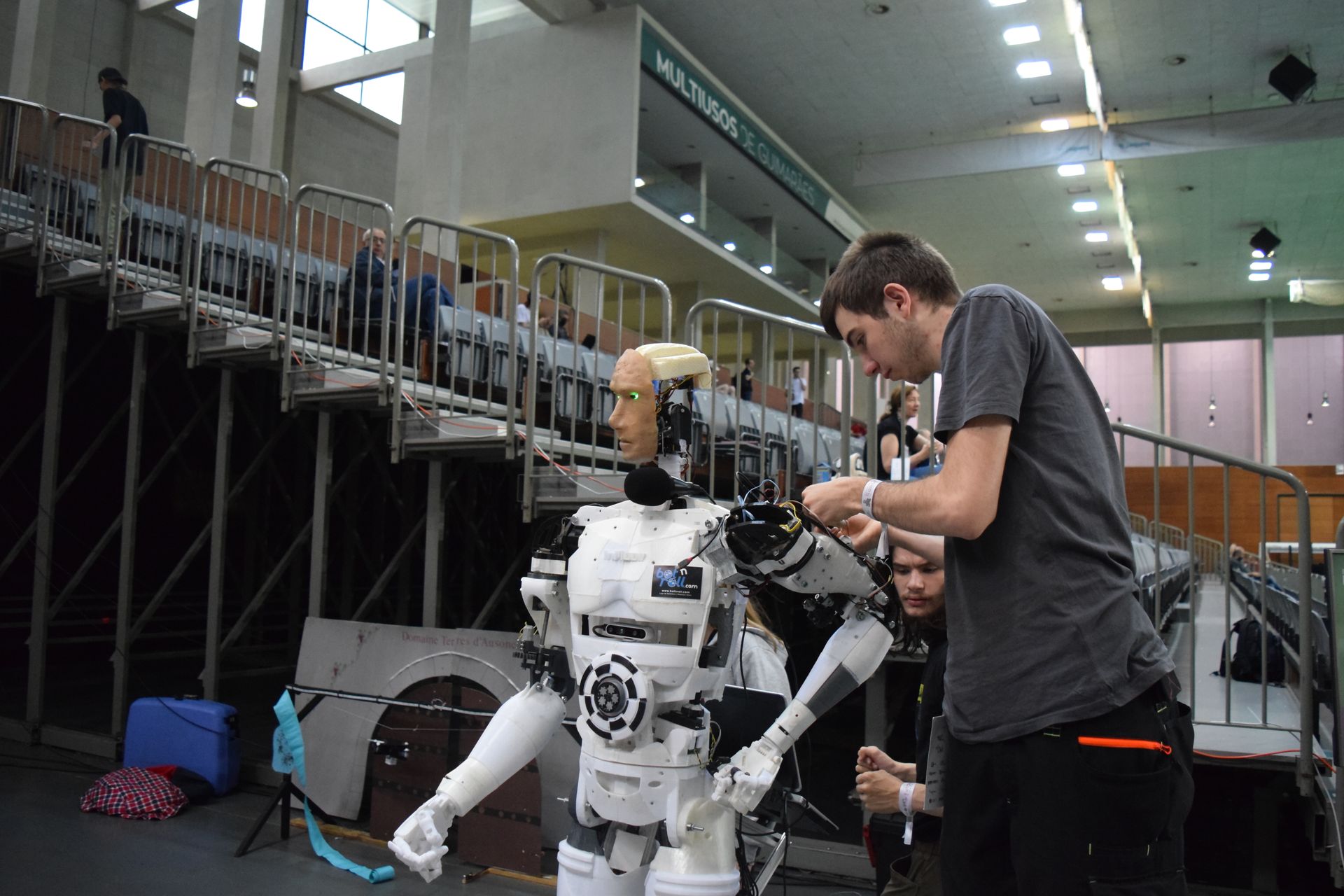
Google DeepMind unveils Gemini Robotics 2, giving robots 'whole body' intelligence
Google DeepMind announced Gemini Robotics 2 on 30 July, a family of AI models designed to give robots coordinated control of their entire body, from torso to legs. The system achieved a 92% success rate at a task requiring it to unscrew a lightbulb in tests, though success rates dropped to as low as 46% for tasks like picking objects up off the floor.