What are glueballs, and have physicists finally found one?
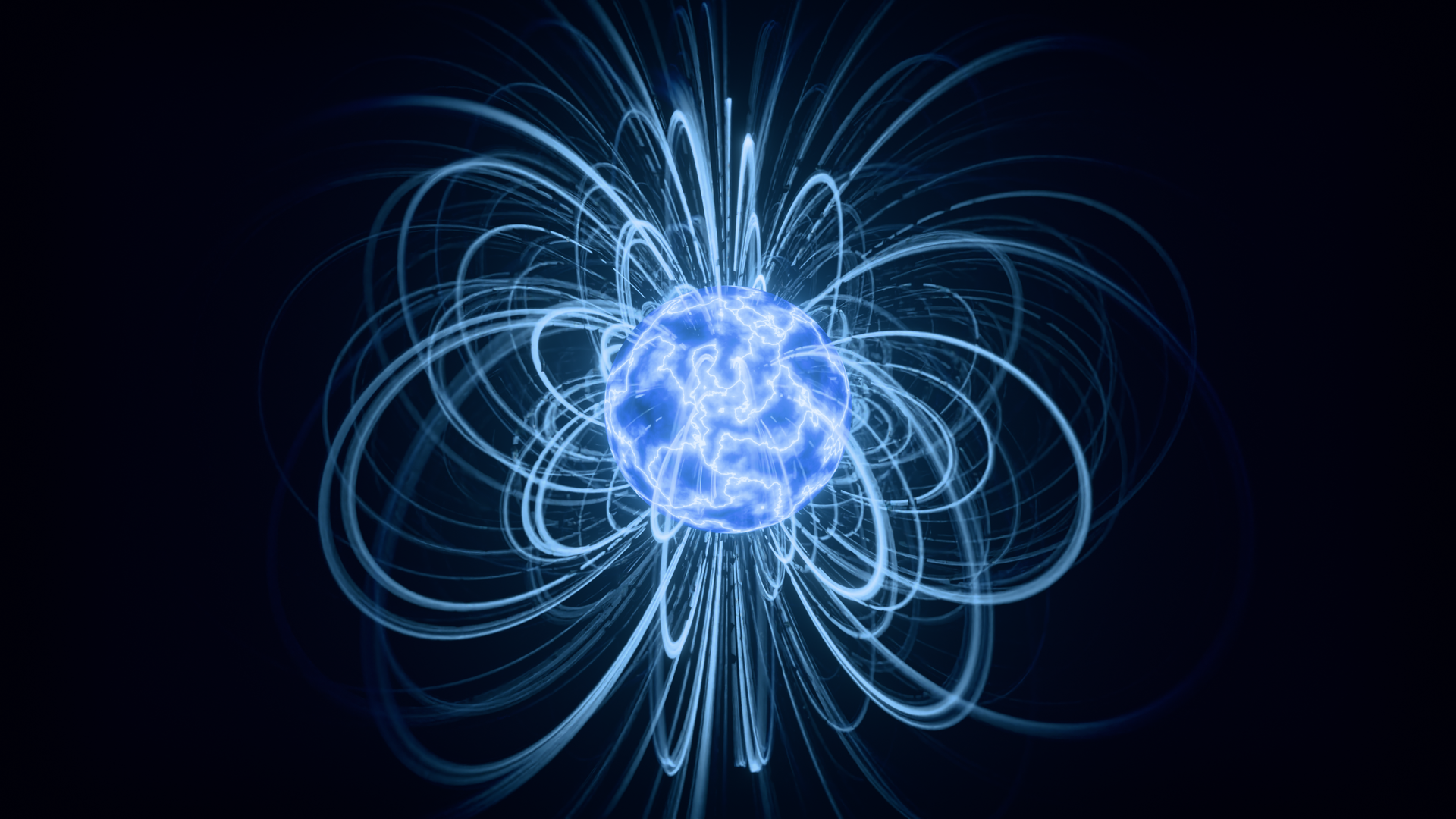
Ordinary matter, at the subatomic level, is built from quarks bound together by gluons, the particles that carry the strong nuclear force. For decades, theoretical physics has predicted that gluons should, under the right conditions, be able to bind directly to one another and form a particle made of pure force-carrier with no quarks involved at all — a hypothetical object physicists call a glueball. New experimental evidence has now produced what researchers describe as the strongest signal yet that such a particle genuinely exists.
The theoretical case for glueballs comes directly out of quantum chromodynamics, the physics framework describing the strong force that holds atomic nuclei together. Unlike the photon, which carries the electromagnetic force but does not interact with other photons, gluons carry a property called color charge and, crucially, do interact with each other. That self-interaction is what makes glueballs theoretically possible in a way that has no analog in electromagnetism.
Despite this solid theoretical grounding — glueballs have been predicted since not long after quantum chromodynamics itself was developed — actually finding experimental proof of one has proven extraordinarily difficult. The core problem is that pure glueball states are expected to mix quantum mechanically with ordinary particles made of quarks that have similar properties, making it nearly impossible to cleanly separate a glueball signal from more conventional particle behavior using existing detectors.
The new evidence comes from analysis identifying a particle whose properties align closely with theoretical predictions for a state dominated by glueball content, though researchers are careful with their phrasing. One physicist involved in interpreting the results described it as the strongest evidence yet that particles dominated by a glueball component can exist in nature — language that reflects genuine scientific caution rather than a declaration of unambiguous discovery.
That careful phrasing matters because of the mixing problem described above: even a particle that is mostly glueball in composition may still carry some admixture of ordinary quark-based matter, meaning physicists are unlikely to ever point to a particle and call it a "pure" glueball with total certainty. Instead, the field works in terms of how dominant the glueball component is within a given particle's overall quantum makeup.
Confirming glueballs matters beyond simply checking a box on a decades-old theoretical prediction. Because glueballs are made purely from the strong force's own carrier particles, studying them offers physicists a uniquely direct window into how the strong force behaves in isolation, without the added complexity of quark interactions layered on top — insight that could refine broader models of how matter is held together at the smallest scales.
The experimental technique behind this finding relies on analyzing patterns in particle collision data, looking for a resonance — a particle-like signal appearing at a specific energy and with specific quantum properties — that matches the theoretical fingerprint expected of a glueball-dominated state, rather than any of the known particle types that could otherwise explain the same signal.
Skepticism remains part of the normal scientific process here, as it should. Physics has a history of promising glueball candidates that, on closer examination or with additional data, turned out to be better explained by conventional quark-based particles or by mixtures that did not support a strong glueball interpretation. Researchers in the field are treating this latest result as compelling but not yet fully conclusive, pending independent confirmation from other experiments.
The search for glueballs sits within a broader, decades-long effort in particle physics to map out every particle predicted by the Standard Model and quantum chromodynamics specifically, filling in theoretical gaps that have persisted since the mathematical framework describing these forces was largely completed in the late twentieth century.
For now, the finding stands as one of the more compelling pieces of evidence yet assembled in a search that has occupied particle physicists for roughly half a century, illustrating both how precisely quantum chromodynamics can predict exotic states of matter and how difficult those predictions can be to confirm experimentally, even when the underlying theory has been trusted for decades.
Read next
How a specially designed font is being used to poison AI scrapers
A new tool called ShieldFont lets website owners embed text that reads normally to human visitors but turns into nonsense when scraped by AI training crawlers. The approach adds to a growing toolkit publishers are using to resist having their content harvested for AI models without consent.
Base iPhone 18 will reportedly miss Apple's usual fall launch
Apple's standard iPhone 18 will reportedly not launch alongside the Pro models this fall, arriving instead in early 2027, according to supplier comments spotted by MacRumors. The staggered rollout would continue a shift toward splitting Apple's iPhone launches across the year rather than releasing the full lineup at once.

Why AI pioneers Hinton, Li and Ng are defending open models amid safety fears
At the Ai4 conference, three of AI's most respected researchers — Geoffrey Hinton, Fei-Fei Li and Andrew Ng — debated whether open-source access to powerful AI models helps or harms safety. Their exchange captured a widening rift in the field over regulation, openness and how the West can keep pace as China's AI capabilities advance.

AI coding startup Cognition in talks to raise at $40B valuation
Cognition, the AI coding startup behind the Devin software agent, is reportedly in talks to raise new funding at a $40 billion valuation, just months after closing a $1 billion round valuing it at $26 billion. The pace reflects intense investor demand for AI coding tools since Cognition's acquisition of Windsurf.
Made by Google 2026: what to expect from today's Pixel 11 launch event
Google is set to unveil a wave of new Pixel devices at its annual Made by Google event on August 12th. Pre-event leaks have offered an unusually detailed preview of what's expected — from a broader Pixel 11 phone lineup to new wearables and possibly a whole new accessory category for the company.