How much water does AI really use? Putting data centres in the global water picture
Headlines warning that "AI data centres are draining our water" have multiplied in recent months. Ars Technica's analysis shows the gap between global totals and local impact. The data largely support the same observation: globally, AI data centres' share of total water use is small as a percentage — often under 1 per cent. But that is not the whole story.
US Department of Energy figures put national fresh water consumption largely in three buckets: thermoelectric power generation at about 41 per cent, irrigation at about 37 per cent and public water supply at about 12 per cent. Data centres consume both directly for cooling and indirectly via the upstream electricity chain; direct use is estimated at roughly 0.1 to 0.5 per cent of total fresh water consumption. AI-specific use is a fraction of that — meaningful in the total, but still relatively small.
A technical distinction often missing from coverage is the difference between water "withdrawal" and water "consumption." Withdrawal measures how much water is borrowed and largely returned; consumption is the water that evaporates or otherwise leaves the basin. Most large newspaper articles cite withdrawal figures, but the environmentally significant metric is consumption. The ratio between the two for data centres varies with cooling technology and climate.
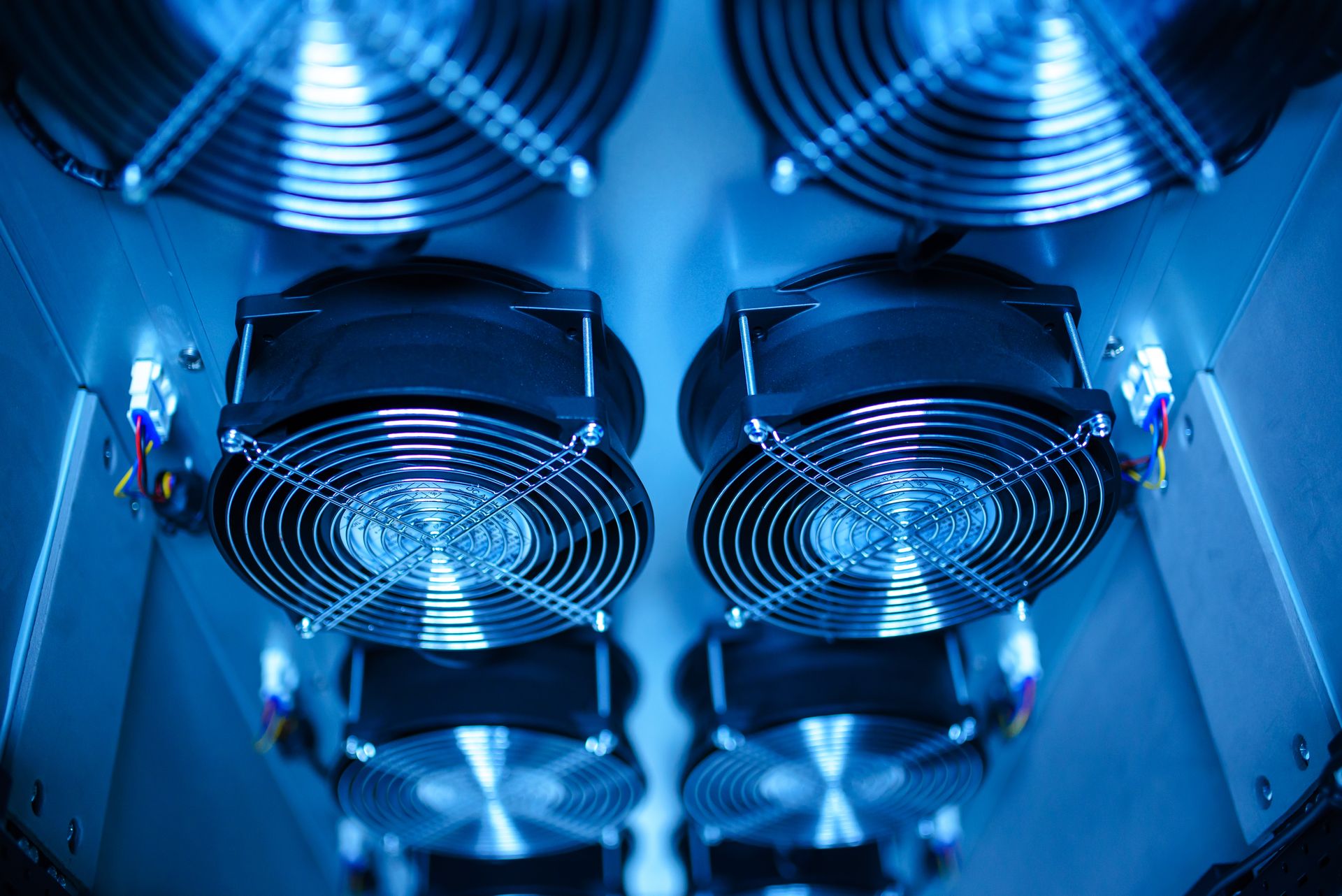
Data-centre cooling has two main approaches: air-cooled systems (chillers) and adiabatic or evaporative systems. The second evaporates water to reject heat, which lowers electricity consumption — but it consumes large quantities of water. Hyperscaler operators have moved over the last three years to hybrid designs that mix the two, using adiabatic cooling in cool and dry regions and air cooling in hot and humid ones.
The local dimension is the real story hidden behind the global average. In the Phoenix metropolitan area, data centres built or planned over the past three years account for a significant share of new municipal water allocation. In residential areas south of Madrid, including Arganda del Rey, the local water authority rejected a data-centre application against available capacity in 2025. Similar situations are being debated near Dublin. The "total is tiny" argument can be statistically true and still not change the reality of a local water crisis.
Climate and siting decisions are also shifting. Hyperscalers — Microsoft, Google, Amazon, Meta — are moving out of water-scarce regions and toward cool, water-rich ones such as Norway, Sweden and Finland. Microsoft's 2024 sustainability report said about 50 per cent of new builds are planned in low water-stress regions. That is sensible on water; it does raise electricity and infrastructure costs.
Alternative cooling technologies are also maturing. Liquid cooling — particularly two-phase immersion and tightly closed-loop liquid cooling — is becoming the only option as GPU density rises. These systems reuse a fixed coolant in a circulating loop rather than evaporating small quantities of water to outside air. Total water consumption can be 70 to 90 per cent lower than for evaporative air-based cooling.
On the regulatory side, the European Union's revised Energy Efficiency Directive now requires annual energy and water reporting for data centres above 500 kilowatts. In the United States, the EPA has published "data centre water disclosure" guidance, and California's recent state water management law has added local water authority approval as a condition for large new data centres. Turkey has no dedicated data-centre water legislation yet, but the Ministry of Environment circulated a draft for discussion early in 2025.
On the investment side, water is no longer a free input for data-centre operators. Microsoft's most recent Arizona project draws up to 100 per cent of its cooling needs from treated wastewater under a dedicated allocation contract. Google's Belgian facility is paired with an industrial wastewater plant in an effort to zero out the net water footprint. These structural choices raise capital costs but protect against long-term water risks.
The practical message for Vesper readers is to read "AI is draining our water" headlines with care. The honest answer depends on local geography, cooling technology and operator choice. What matters is not the headline percentage but what is being built in which water basin. When following large data-centre investment news in Turkey, paying attention to the cooling technology (air versus liquid) and to whether the water-allocation paperwork has been approved by the local water authority is the key to understanding the real environmental impact. This article is not investment or environmental advice.
Read next

What is MCP, and why does it matter that 21,000 servers were exposed
The Model Context Protocol, an open standard that lets AI assistants connect to outside tools and data, has hit a security inflection point after researchers found more than 21,000 unprotected servers exposed on the open internet. Here's what MCP is, why developers adopted it so fast, and why that exposure matters.

Judge gives Google one week to fix 'anticompetitive' download flow in Google Play
A federal judge has ruled that Google made it unnecessarily difficult for Android users to download alternative app stores, giving the company one week to fix the flow. The order will make third-party app stores more visible and accessible from within Google Play itself.

The world's largest all-electric aircraft flew its first test using just $5 of electricity
A venture backed by commercial airlines has completed the first test flight of what it calls the largest all-electric aircraft to fly, using roughly $5 worth of electricity for the flight. The company's longer-term goal is to develop a hybrid-electric, and eventually fully electric, commercial passenger aircraft.

How to tell if your AI platform account has been hacked
AI accounts on platforms like ChatGPT, Claude and Gemini are becoming an increasingly attractive target for hackers, given the personal conversation histories and linked payment details many of them hold. Here's how to check whether your account has been compromised and what to do about it.

Every fusion energy startup that has raised over $100 million
Fusion energy startups have collectively raised $7.1 billion to date, with the majority of that money concentrated in a handful of companies. Here's a look at the best-funded fusion startups and how their technical approaches differ.