AI cheating in universities: what happened when one professor brought back the in-person exam
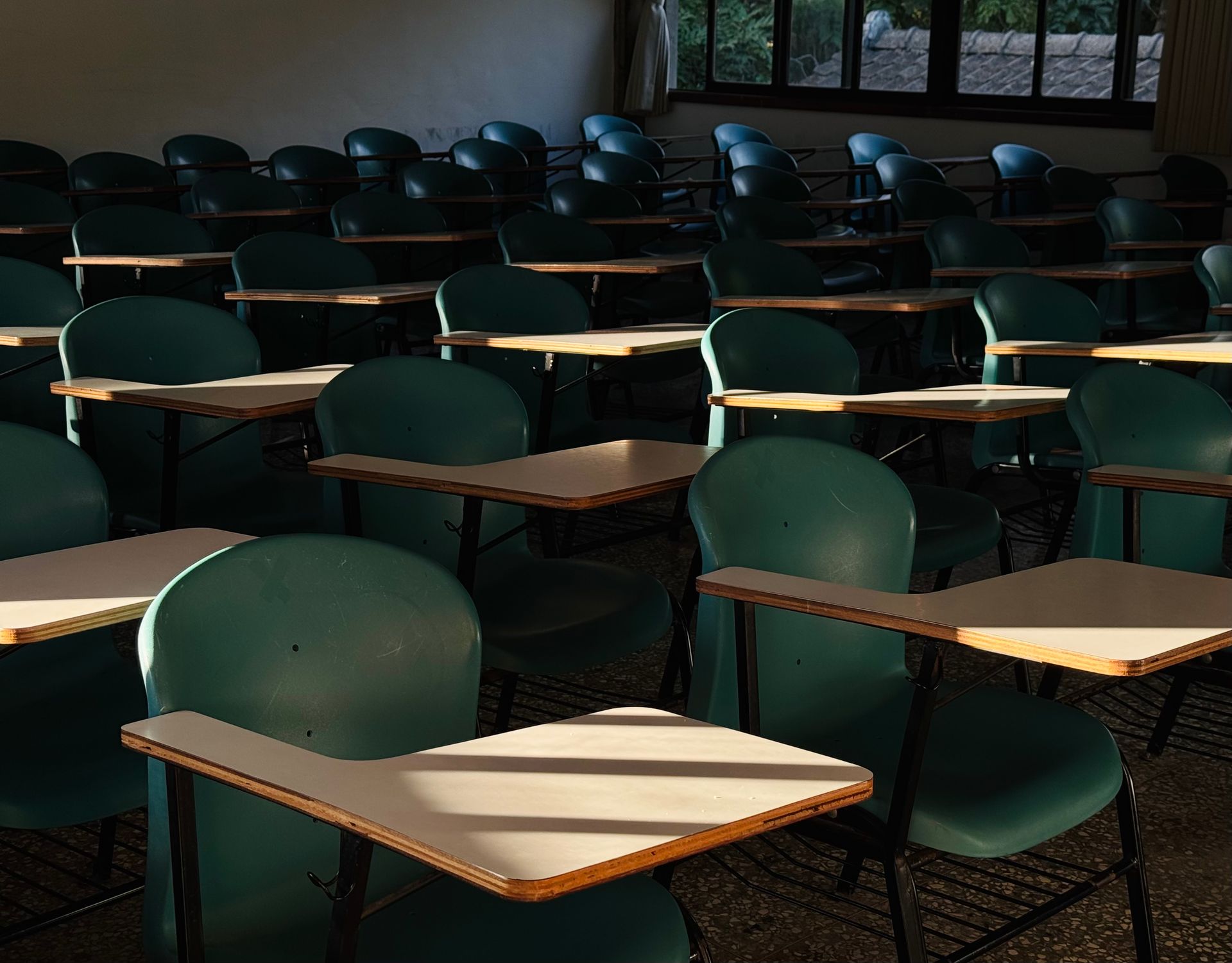
A single classroom experiment has become a talking point far beyond the campus where it happened. According to Ars Technica, a professor at an Ivy League university suspected that students were quietly relying on AI to complete their coursework. So he made a change that sounds almost old-fashioned: he brought back the supervised, in-person final exam. When the results came in, scores had fallen by roughly half.
The drop is striking, but its meaning is contested, and that is exactly why the episode resonates. One reading is that the take-home grades had been inflated by AI assistance, and the in-person exam simply revealed what students could do unaided. Another is that timed, high-pressure exams measure something different from coursework, and a decline was partly to be expected regardless of AI. Both can be true at once.
What the story crystallises is a problem now facing educators everywhere. Generative AI tools can produce essays, solve problem sets and write code well enough to pass many assignments, and they leave few obvious traces. Detection software is unreliable, prone to both false positives and false negatives, which means professors cannot simply catch and punish their way out of the issue.
The professor's blunt framing, quoted by Ars, was that unchecked AI cheating leads toward a failed society and that people cannot choose to become, in his words, idiots. Strong language aside, the underlying worry is serious: if students outsource the thinking that education is meant to build, they may earn credentials without acquiring the skills those credentials are supposed to certify.
That worry points to the deeper stakes, which are not really about catching cheats. Learning to write, reason and solve problems is effortful precisely because the struggle is where the skill forms. A tool that removes the struggle can also remove the learning, leaving a student who can generate a correct answer but cannot understand or defend it. The concern is less about honesty than about atrophy.
Yet the picture is not simply one of decline and panic. AI is also a genuinely useful tutor, capable of explaining concepts, giving instant feedback and helping students who lack access to human support. The same tool that lets one student skip the work lets another study more effectively, which is why blanket bans are as hard to defend as blanket permissiveness.
Universities are responding with a patchwork of tactics, none of them complete. Some are returning to in-person, handwritten or oral exams that are harder to outsource. Others are redesigning assignments to require personal reflection, live defence of ideas, or process documentation that a chatbot cannot easily fake. Each approach trades convenience or scale for a measure of integrity.
There is also a fairness dimension that is easy to overlook. In-person exams disadvantage some students, including those with disabilities or test anxiety, and heavy surveillance raises its own concerns. Any solution that restores academic integrity by making assessment more punishing risks trading one problem for another, which is why thoughtful institutions are moving carefully rather than reflexively.
The honest conclusion is that no one has solved this yet. The in-person final is a revealing diagnostic, not a scalable cure, and the halved scores are better understood as a symptom than a verdict. What the episode makes clear is that the old model, where trust and take-home work quietly coexisted, has been destabilised and will not simply snap back.
For students, educators and anyone watching how AI reshapes daily life, the classroom is a preview of a broader negotiation. Every field is now asking where a tool that can do the work ends and where the human skill that the work was meant to build begins. The professor's experiment did not answer that question, but it stated it with unusual force, which may be why it struck such a nerve.
Read next

Meta's 'super sensing' smart glasses: always-on recording and the privacy questions it raises
Meta is reportedly developing prototype smart glasses that continuously record audio and capture images every few seconds, feeding an always-aware AI assistant. According to the Financial Times, one proposed design would keep raw footage from the wearer, a setup that sharpens long-running questions about consent and surveillance.
Can video games teach robots to move? Inside the bet on a 'ChatGPT moment' for robotics
The startup General Intuition is betting that millions of hours of video game footage can train foundation models for physical AI, making smarter robots easier to build with far less real-world data. The idea points to why robotics has lagged behind language AI, and what a breakthrough might require.

Right to repair explained: what the John Deere FTC settlement means for owners
John Deere equipment owners will gain broader rights to repair their own machines under a settlement with the US Federal Trade Commission. The case is a milestone in the long-running right-to-repair fight, which asks who is really allowed to fix the increasingly software-laden products people buy.

What is the Fiat Topolino? America's cheapest new EV, and the micro-car idea behind it
The Fiat Topolino is arriving in the US at about $13,995, making it the country's cheapest new electric vehicle, but it tops out at 19mph and travels roughly 46 miles per charge. It is less a conventional car than a micromobility vehicle, and it poses a real question about what an affordable EV should be.

What is a firmware backdoor? The Tenda router flaw explained
A security advisory reports that multiple versions of Tenda router firmware contain a hidden authentication backdoor, letting attackers bypass the login. Here is what a firmware backdoor is, why home routers are a favorite target, and how to protect your network.