Olaf Tryggvason: the Viking king whose death is still a mystery
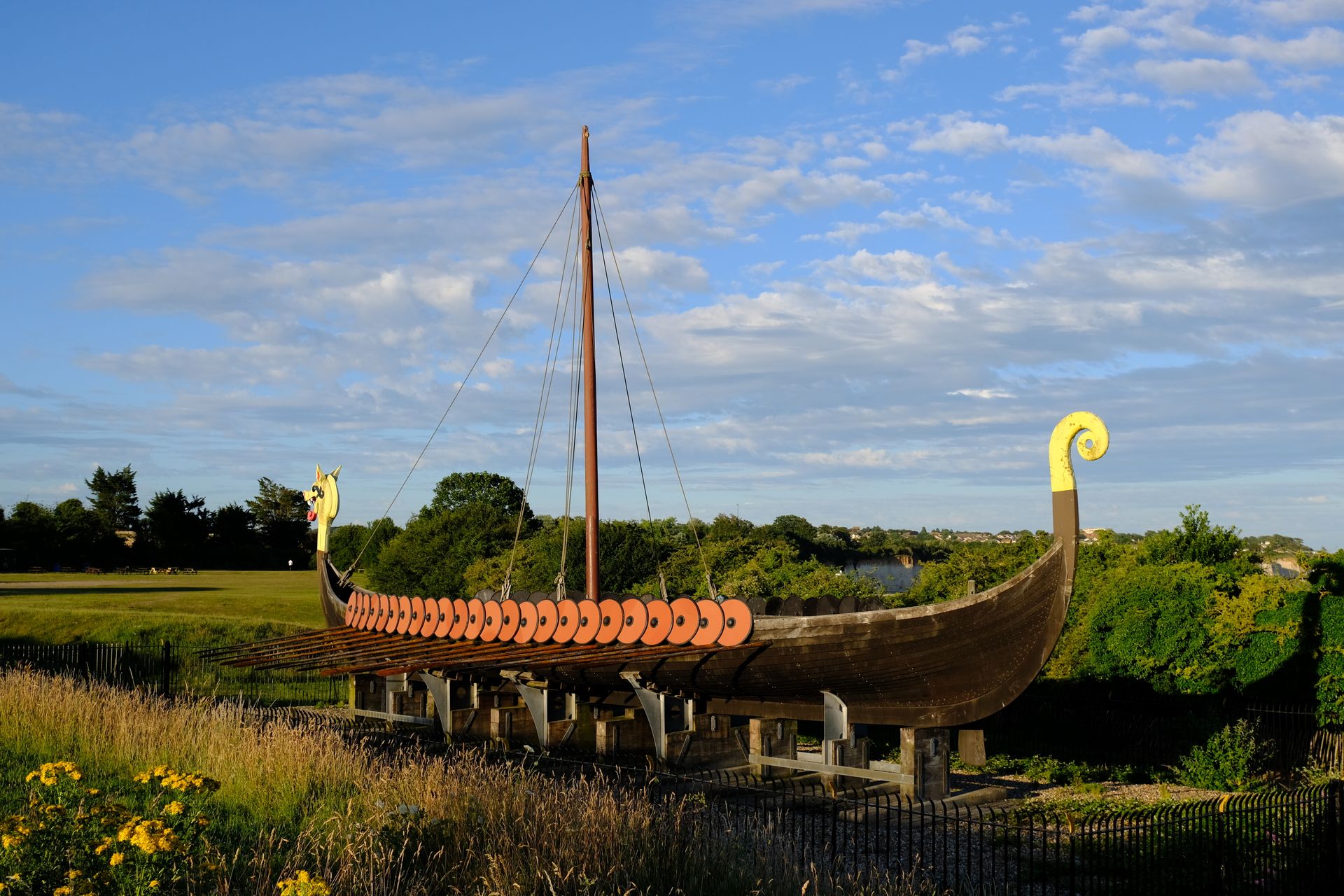
Around the year 1000, off the coast of the Baltic in a naval engagement remembered as the Battle of Svolder, King Olaf Tryggvason of Norway vanished from history in circumstances that medieval chroniclers found dramatic enough to retell for centuries — and that a handful of modern historians still find genuinely unresolved. What happened to him after his ship, the famed Long Serpent, was overwhelmed by a coalition of enemies remains one of the more debated open questions of the Viking Age.
Olaf's rise to power was itself the stuff of saga literature even before his disputed death. Born into a lineage claiming descent from Norway's earlier kings, he spent much of his youth as a Viking raider across the British Isles and continental Europe before returning to Norway around 995 to claim the throne, ruling for roughly five years during which he pursued an aggressive campaign to Christianize the country, a project that made him powerful allies and equally determined enemies.
That Christianization campaign is central to understanding why so many parties wanted Olaf gone by the time of Svolder. His methods, according to saga accounts, frequently combined religious conversion with coercion and violence against Norwegians who resisted abandoning their traditional beliefs, generating resentment among segments of his own population even as it won him standing with Christian rulers elsewhere in Europe.
The coalition that confronted him at Svolder brought together an unusual alignment of rivals: King Sweyn Forkbeard of Denmark, King Olof Skötkonung of Sweden, and the Norwegian jarl Eirik Hakonarson, whose family had lost power to Olaf and had every personal motive to see him removed. That three separate power centers set aside their own rivalries specifically to eliminate Olaf speaks to how seriously his growing influence was regarded across the region.
The battle itself, according to the saga accounts written generations later, unfolded as Olaf's fleet was ambushed while sailing home, with his own ships — including the Long Serpent, celebrated in saga literature as one of the most magnificent vessels of the age — becoming isolated and boarded one by one as allied ships fell away or were captured, until only the Long Serpent remained under sustained attack.
The most widely repeated account of Olaf's fate, recorded in later Icelandic sagas including Snorri Sturluson's influential Heimskringla, describes him leaping into the sea in full armor rather than surrender to his enemies, sinking beneath the waves and never being seen again — a death scene crafted with the narrative flourish typical of saga literature, which prized a dramatic, honor-preserving end for its heroes.
Almost immediately, however, alternative accounts began circulating. Some medieval sources report rumors that Olaf had in fact survived, shed his heavy armor underwater, and swum to a waiting ship or nearby shore, later living out his life abroad — in some versions as a pilgrim or monk in the Mediterranean — under an assumed identity rather than resuming his kingship.
Modern historians treat the survival accounts with considerable skepticism, noting that "the missing king who actually escaped" is a recurring motif across medieval and early modern European folklore, applied to numerous rulers whose deaths occurred under uncertain circumstances, and that no contemporary or near-contemporary source treats the survival story as more than rumor. Yet a small number of historians argue the sheer persistence and specificity of these accounts across independent sources merits more serious consideration than folklore alone would predict.
What is not disputed is the political outcome: Olaf's death or disappearance ended Norwegian resistance to the victorious coalition, and Norway was divided among the victors for over a decade afterward, undoing much of Olaf's short reign's territorial and political consolidation, even as his Christianization efforts left a lasting religious legacy that outlasted his own rule by centuries.
The enduring uncertainty around Olaf's actual fate has helped cement the Battle of Svolder as one of the Viking Age's most retold episodes, a story that sits at the genuine intersection of documented medieval politics and the kind of dramatic, unresolved ending that saga literature — and, centuries later, historians — have found irresistible to keep revisiting.
Read next

The 1863 Bear River attack, and the Shoshone effort to restore its site
In January 1863, US Army soldiers killed several hundred Shoshone people at a winter encampment along the Bear River, in what historians regard as one of the deadliest attacks on Native Americans in US history. More than 160 years later, the Northwestern Band of the Shoshone Nation is restoring the site's natural landscape as part of an ongoing effort to reclaim and interpret its history.
On this day in 1961: East Germany began building the Berlin Wall
In the early hours of 13 August 1961, East German authorities sealed the border between East and West Berlin, stringing barbed wire that would soon become a concrete wall. The Berlin Wall stood for 28 years as the most visible symbol of the Cold War division of Europe.

8 of history's greatest unsolved mysteries, from Jack the Ripper to the Princes in the Tower
Despite decades of forensic techniques and new archival finds, these eight cases remain among history's genuinely unsolved puzzles. From the identity of Jack the Ripper to the fate of the Princes in the Tower, none has ever been definitively settled.

On this day: IBM launches the PC that defined personal computing (1981)
On August 12, 1981, IBM unveiled the IBM Personal Computer (IBM 5150) at a press conference in New York. Departing from its usual fully proprietary approach to move fast, the company built it from outside-sourced parts with an open architecture — a machine that quickly became the corporate standard for personal computing.

How did Christianity conquer the Roman Empire?
A small Jewish sect that emerged on the margins of the Roman world in the first century AD became the empire's official religion within three centuries. Historians examine why Christianity survived and spread when so many other cults and belief systems did not.