8 of history's greatest unsolved mysteries, from Jack the Ripper to the Princes in the Tower
Some questions from history refuse to be settled, no matter how many historians, archivists and amateur sleuths take them on. Despite new archival finds, forensic techniques and no shortage of theories, the following eight cases remain genuinely open — puzzles the historical record has never definitively closed.
The identity of Jack the Ripper, the pseudonym given to whoever murdered at least five women in London's Whitechapel district in the autumn of 1888, remains the most famous unsolved case in criminal history. Contemporary police investigators compiled a long list of suspects, and more than a century of amateur and professional research — so-called 'Ripperology' — has produced dozens of competing theories, but no single suspect has ever been proven guilty beyond reasonable doubt, and the original police files leave the case formally unresolved.
In 1483, the two young sons of King Edward IV of England — 12-year-old Edward V and his younger brother Richard — were lodged in the Tower of London by their uncle, who then took the throne as Richard III. The boys were seen playing in the Tower grounds that summer and then never seen again. Whether they were murdered, and if so on whose orders, has been debated by historians for more than 500 years, with Richard III himself the leading suspect in most traditional accounts, though the evidence remains circumstantial and contested.
In 1587, English colonists established a settlement on Roanoke Island, off the coast of present-day North Carolina. When a supply ship finally returned three years later, in 1590, the colony's roughly 115 settlers had vanished, leaving behind only the word 'CROATOAN' carved into a post. Historians have proposed theories ranging from assimilation with nearby Indigenous communities to disease, famine or conflict, but no conclusive archaeological evidence has ever confirmed the colonists' ultimate fate.
For 34 years in the late 17th and early 18th centuries, a prisoner whose face was permanently covered by a mask was held in various French fortresses under the personal orders of King Louis XIV, his identity kept secret even from his jailers. Enlightenment writers, including Voltaire, helped popularize the legend of the 'Man in the Iron Mask,' and historians have proposed candidates ranging from a disgraced nobleman to an illegitimate royal relative, but the prisoner's true identity was never officially recorded and remains unconfirmed.
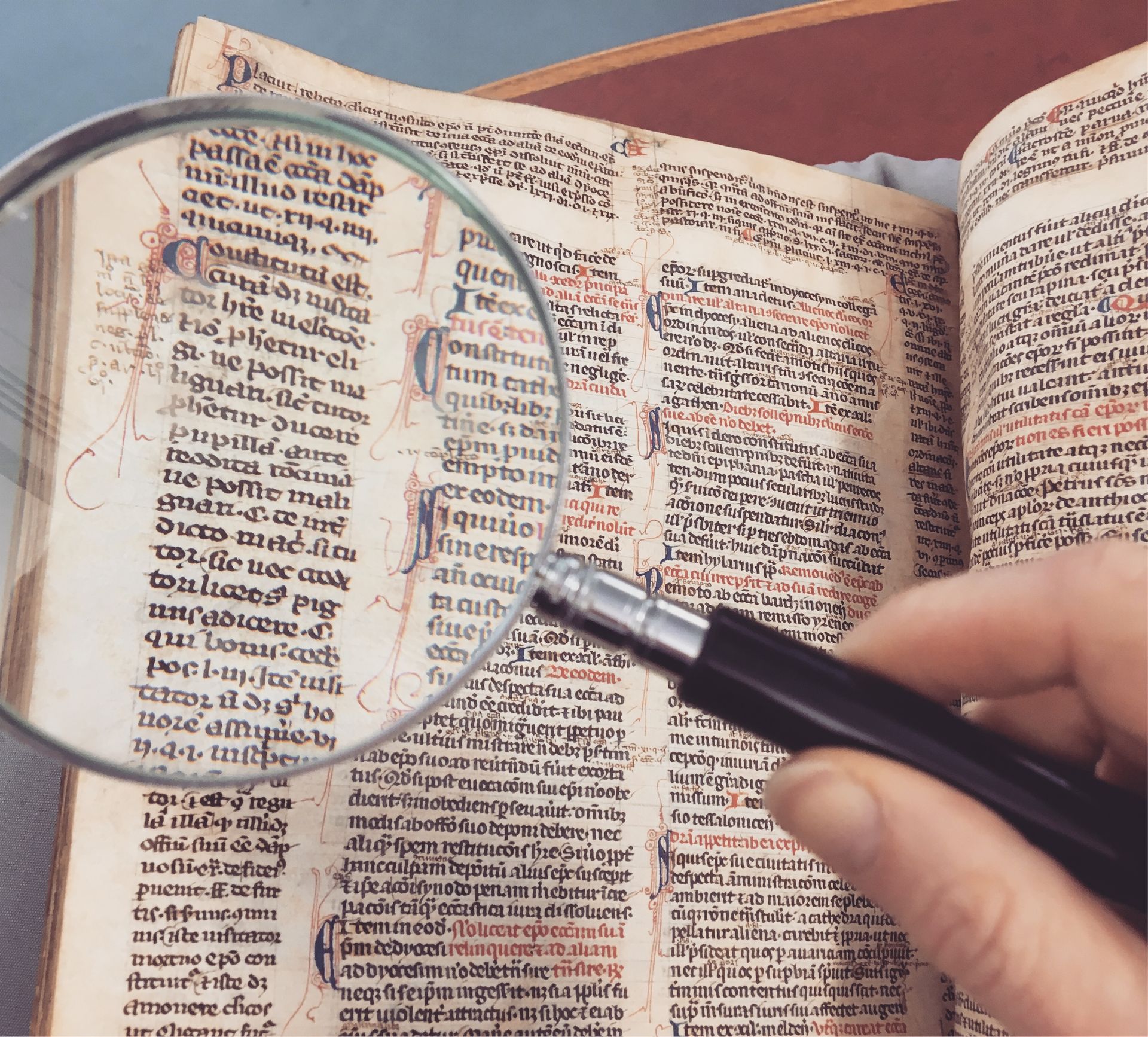
Housed today at Yale University, the Voynich Manuscript is a roughly 240-page book written in an unknown script and illustrated with unidentifiable plants, astronomical diagrams and unclear human figures. Radiocarbon dating places its parchment in the early 15th century, and generations of cryptographers, linguists and codebreakers — including some who cracked military ciphers during the World Wars — have failed to translate its text or agree on whether it encodes a real language, an invented one, or an elaborate hoax.
Built in stages over roughly 1,500 years starting around 3000 BCE on Salisbury Plain in southern England, Stonehenge's massive stone circle continues to raise more questions than archaeology has answered. Researchers broadly agree the site had ceremonial and astronomical significance, aligned with the solstices, and recent research has traced the origin of its bluestones to quarries in Wales — but the exact purpose of the monument, and precisely how Neolithic builders transported and erected stones weighing many tons without modern machinery, remains debated among archaeologists.
In December 1872, the merchant ship Mary Celeste was found adrift and abandoned in the Atlantic Ocean, her cargo largely intact, a six-month supply of food and water still aboard, and not a single crew member — ten people in total — ever found or heard from again. Investigators at the time and researchers since have proposed theories including a fume-triggered panic, mutiny, piracy and rogue-wave damage, but the true fate of the crew has never been established, making it one of maritime history's most enduring puzzles.
What unites these eight cases isn't a lack of investigation — quite the opposite. Each has drawn sustained attention from historians, forensic specialists and dedicated amateurs across decades or centuries, and each has, at various points, been declared 'solved' by one theory or another, only for later researchers to reopen the question. That persistence is part of what makes them such durable subjects: the historical record, however extensively examined, sometimes simply doesn't contain enough surviving evidence to settle a question beyond genuine doubt.
New tools continue to chip away at some of these mysteries — DNA analysis, multispectral imaging of old documents and increasingly sophisticated archaeological dating have all reopened questions once thought permanently closed. But for now, all eight remain open cases, a reminder that history isn't only what's been recorded and settled, but also what continues to be argued over, generations after the fact.
Read next

On this day: IBM launches the PC that defined personal computing (1981)
On August 12, 1981, IBM unveiled the IBM Personal Computer (IBM 5150) at a press conference in New York. Departing from its usual fully proprietary approach to move fast, the company built it from outside-sourced parts with an open architecture — a machine that quickly became the corporate standard for personal computing.

How did Christianity conquer the Roman Empire?
A small Jewish sect that emerged on the margins of the Roman world in the first century AD became the empire's official religion within three centuries. Historians examine why Christianity survived and spread when so many other cults and belief systems did not.

On this day: remembering Robin Williams, August 11, 2014
On August 11, 2014, American actor and comedian Robin Williams — who made generations of audiences laugh and cry — died at the age of 63. Across a career spanning more than four decades on stage and screen, he left a mark that keeps him remembered as one of cinema's most beloved figures.

The many lives of libraries: how they shaped civilization across centuries
From ancient royal archives to today's digital repositories, libraries have shaped culture, politics, and public life for millennia. Their history reveals how access to knowledge has always been intertwined with power.

On This Day: The Treaty of Sèvres was signed on August 10, 1920
On August 10, 1920, the victorious Allied powers of World War I signed the Treaty of Sèvres with the Ottoman government, a settlement that proposed partitioning much of Anatolia. The treaty was never ratified and was later superseded.