The many lives of libraries: how they shaped civilization across centuries

The concept of the library is nearly as old as writing itself. In ancient Mesopotamia, royal archives assembled collections of clay tablets to preserve administrative records and religious texts. These earliest libraries were the product of an era in which access to knowledge was confined to a narrow elite.
The most famous library of the ancient world was the Library of Alexandria, founded in the 3rd century BCE. It functioned not merely as a repository of books but as a research center that gathered the leading scholars of its time. Although the library's ultimate fate remains a subject of historical debate, its symbolic significance has endured to the present day.
In medieval Europe, libraries fell largely under the protection of monasteries. Monks preserved and multiplied ancient texts by copying them by hand — a process that played a critical role in the rediscovery of classical knowledge during the Renaissance.
The invention of the printing press in the 15th century fundamentally transformed the nature of libraries. Since books no longer required hand-copying, production costs fell and access to knowledge gradually spread to an increasingly wide audience. This shift moved libraries from a purely preservationist function toward one centered on distribution.
Libraries also stood at the center of scientific and intellectual life in the Islamic world. Institutions like the House of Wisdom in Baghdad translated and synthesized knowledge from diverse civilizations, contributing to major advances in mathematics, medicine, and philosophy.
The public library movement of the 19th century produced a significant transformation, democratizing access to knowledge. Libraries, which had previously been largely a privilege of the wealthy, increasingly began to be offered as a public service across many countries during this period.
Behind this transformation lay the idea that knowledge was a fundamental pillar of social progress. Public libraries, by offering the working class opportunities for education and personal development, came to be seen as a vehicle for social mobility.
In the 20th century, libraries evolved beyond books to become community gathering spaces. Reading rooms, children's programs, and community events transformed libraries into institutions at the heart of local communities.
The digital age has once again transformed the function of libraries. Alongside physical collections, digital archives and databases have extended access to knowledge beyond geographic boundaries. But digital inequality has emerged as a new access problem.
The long history of libraries shows that knowledge has always been a resource intertwined with power. The question of who gets to access knowledge — from ancient kingdoms to today's digital platforms — continues to shape the political and cultural structure of societies.
Read next

On This Day: The Treaty of Sèvres was signed on August 10, 1920
On August 10, 1920, the victorious Allied powers of World War I signed the Treaty of Sèvres with the Ottoman government, a settlement that proposed partitioning much of Anatolia. The treaty was never ratified and was later superseded.
Why did accused witches confess? What historians have found
Across 17th-century Europe and North America, thousands of people were accused of witchcraft, and many confessed. Historian Marion Gibson's research shows those confessions emerged from a complex mix of torture, social pressure, and the era's own understanding of the world.

On this day: the atomic bombing of Nagasaki (1945)
On August 9, 1945, the United States dropped a second atomic bomb on the Japanese city of Nagasaki — the last nuclear weapon ever used in armed conflict. The attack came just three days after the bombing of Hiroshima and marked a decisive turning point on the path to Japan's surrender.
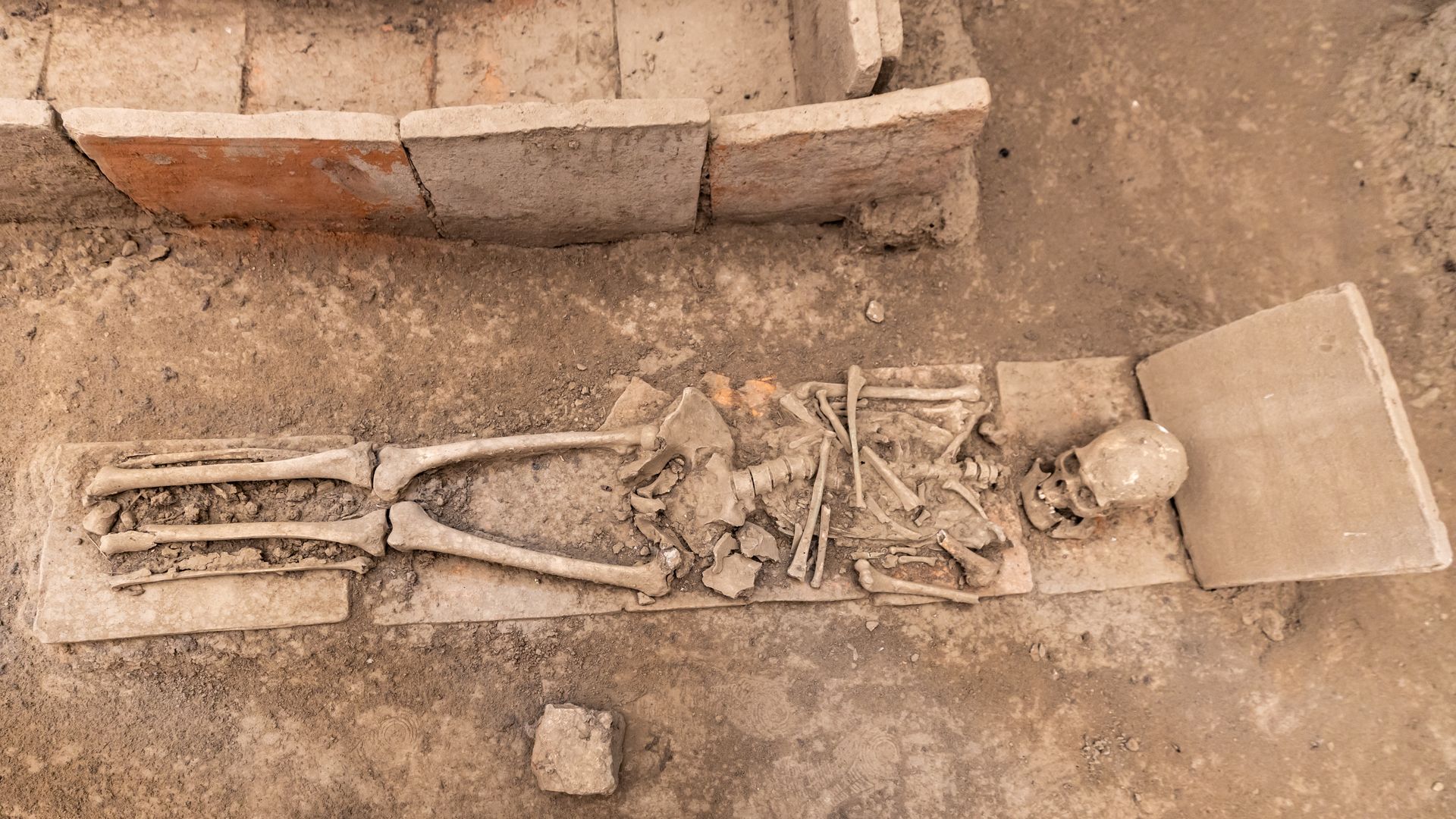
Why were these 18 Iron Age skeletons all buried the same strange way
The excavation of a roughly 2,000-year-old burial site revealed eighteen skeletons all buried upright, in the same unusual position. Archaeologists are weighing several theories about what the practice might mean.

On this day: Beijing turned an opening ceremony into legend on 08-08-08
On August 8, 2008, at exactly 8:08 pm, the opening ceremony of the Beijing Summer Olympics began — a historic spectacle built around the number eight's auspicious meaning in Chinese culture and directed by filmmaker Zhang Yimou. It became a defining symbol of China's arrival on the global stage.