On This Day: The Treaty of Sèvres was signed on August 10, 1920

On August 10, 1920, in the French town of Sèvres, a peace settlement was signed between the victorious Allied powers of World War I and the government of the defeated Ottoman Empire. Known as the Treaty of Sèvres, the document was one of a series of post-war treaties intended to determine the future of Ottoman territory.
Historians generally describe the treaty's terms as exceptionally severe and restrictive. Much of Anatolia was to be divided among various states and ethnic groups, leaving the Ottoman state's sovereignty confined to Istanbul and a small portion of central Anatolia.
Under the treaty, Izmir and its surrounding region would come under Greek administration, an independent Armenia and an autonomous Kurdistan were to be established in eastern Anatolia, and the Turkish Straits would fall under the oversight of an international commission. France and Italy were also to receive spheres of influence in various parts of Anatolia.
The delegation that signed the treaty represented the Ottoman government based in Istanbul. At the same time, however, a nationalist movement organized in Anatolia under the leadership of Mustafa Kemal Atatürk refused to recognize the Istanbul government's authority and was actively organizing resistance to the treaty's terms.
Historians note that the Treaty of Sèvres served as a turning point for the Turkish nationalist movement. The partition it proposed significantly boosted the legitimacy and popular support of the resistance movement forming in Anatolia.
That resistance effort, known as the Turkish War of Independence, lasted from 1919 to 1923 and ultimately concluded with the withdrawal of Greek forces from Anatolia. These military and political developments rendered the Treaty of Sèvres effectively unenforceable.
The Treaty of Sèvres never came into force, as it was not ratified by the Ottoman parliament and conditions on the ground made its implementation impossible. It was superseded by the Treaty of Lausanne, signed in 1923.
Unlike Sèvres, the Treaty of Lausanne became the document that internationally recognized the independence of the newly established Republic of Turkey and most of its present-day borders. Historians point to the contrast between the two treaties as a striking example of how a national resistance movement can fundamentally reshape diplomatic outcomes.
The Treaty of Sèvres holds a significant place in Turkish historical education and collective memory, frequently cited as one of the starting points of the national independence struggle. Historians describe the period surrounding the treaty's signing as a threshold marking both the end of the Ottoman Empire and the birth of modern Turkey.
Today, the 105th anniversary of the Treaty of Sèvres serves as a reminder of the era's complex diplomatic and military legacy. Historians emphasize that the treaty should be examined as part of a broader historical process that shaped both the collapse of empires and the emergence of new nation-states.
Read next

The many lives of libraries: how they shaped civilization across centuries
From ancient royal archives to today's digital repositories, libraries have shaped culture, politics, and public life for millennia. Their history reveals how access to knowledge has always been intertwined with power.
Why did accused witches confess? What historians have found
Across 17th-century Europe and North America, thousands of people were accused of witchcraft, and many confessed. Historian Marion Gibson's research shows those confessions emerged from a complex mix of torture, social pressure, and the era's own understanding of the world.
On this day: the atomic bombing of Nagasaki (1945)
On August 9, 1945, the United States dropped a second atomic bomb on the Japanese city of Nagasaki — the last nuclear weapon ever used in armed conflict. The attack came just three days after the bombing of Hiroshima and marked a decisive turning point on the path to Japan's surrender.
Why were these 18 Iron Age skeletons all buried the same strange way
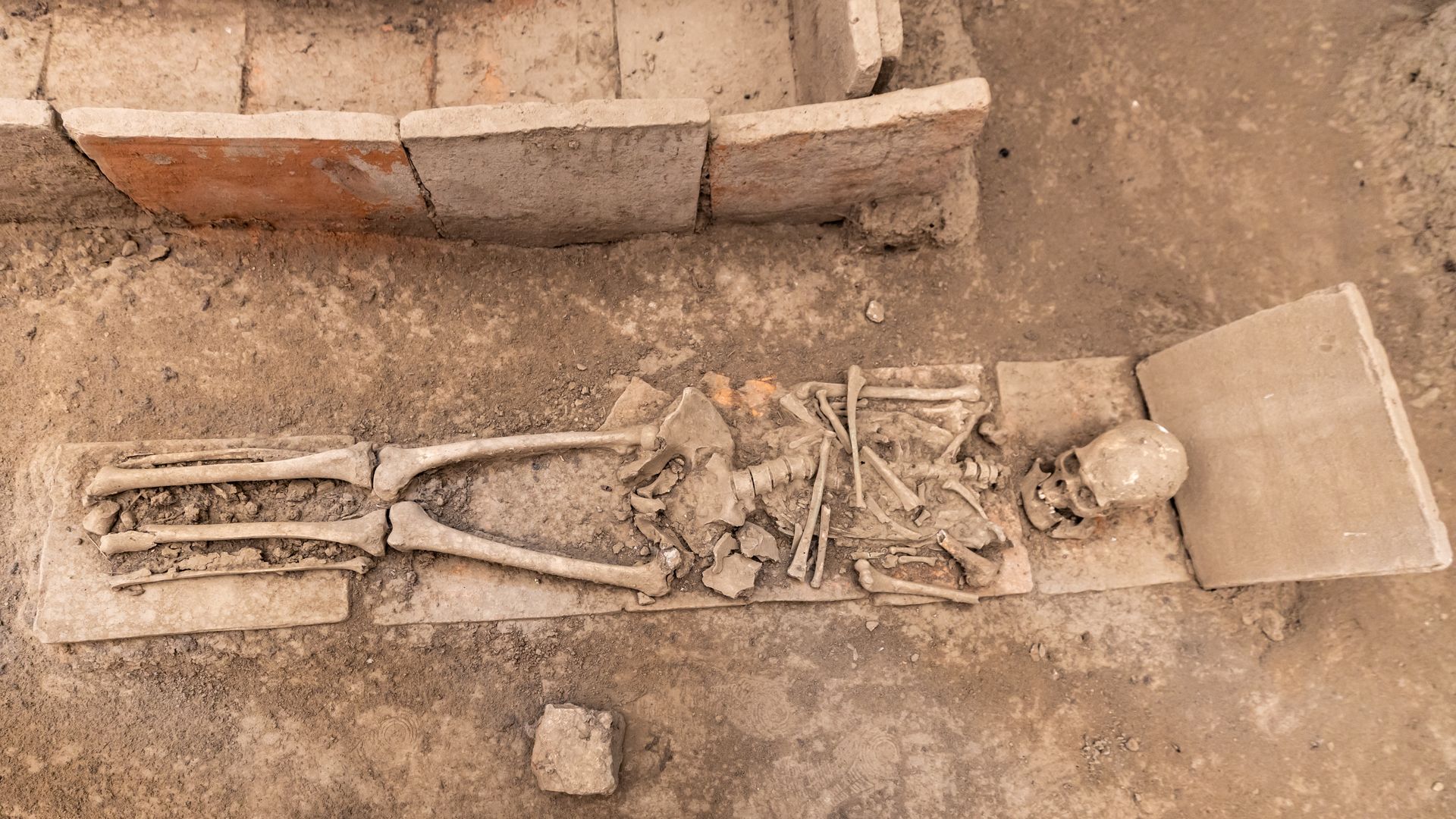
The excavation of a roughly 2,000-year-old burial site revealed eighteen skeletons all buried upright, in the same unusual position. Archaeologists are weighing several theories about what the practice might mean.

On this day: Beijing turned an opening ceremony into legend on 08-08-08
On August 8, 2008, at exactly 8:08 pm, the opening ceremony of the Beijing Summer Olympics began — a historic spectacle built around the number eight's auspicious meaning in Chinese culture and directed by filmmaker Zhang Yimou. It became a defining symbol of China's arrival on the global stage.