The journalist who took on corruption using a tool rarely used in American history: the plain truth

At the turn of the 20th century, American city governments operated, in many cases, as extensions of political machines that traded favors, contracts and protection for votes and cash, a system so normalized in some cities that exposing it required less investigative ingenuity than simple, sustained willingness to say plainly what everyone privately already knew. Lincoln Steffens, a reporter whose dogged methods and unflinching prose earned him a reputation among political bosses as, in the words of one, a "born crook that's gone straight," built his career on exactly that willingness.
Steffens came to journalism from a background in academic philosophy, studying in Europe before returning to the United States and taking up newspaper work in New York. What set him apart from many of his contemporaries wasn't access to secret documents or hidden sources, though he cultivated both over time, but a editorial commitment to describing municipal corruption in direct, unambiguous language rather than the vague, euphemistic terms that respectable newspapers of the era typically used when covering local politics.
His breakthrough came through a series of articles, later collected into the book "The Shame of the Cities," that examined corruption in St. Louis, Minneapolis, Pittsburgh, Philadelphia and other major American cities. Rather than treating corruption as an isolated scandal confined to one bad actor, Steffens presented it as a systemic feature of urban governance, showing how business interests, political bosses and, in many cases, ordinary voters had all developed a working relationship with graft that made reform difficult even when the facts of wrongdoing were widely known.
That framing was itself significant. Prior press coverage of municipal corruption often focused on individual scandals, a bribed official here, a rigged contract there, treated as aberrations from an otherwise functioning system. Steffens argued the opposite: that corruption was the system, sustained by a web of mutual interest between corrupt officials, the businesses that benefited from favorable contracts, and citizens who tolerated the arrangement because it delivered services or jobs, however inefficiently or unfairly distributed.
The term "muckraking," which came to define Steffens and a cohort of contemporaries including Ida Tarbell and Upton Sinclair, was coined somewhat dismissively by President Theodore Roosevelt in a 1906 speech, borrowing an image from John Bunyan's "The Pilgrim's Progress" of a man so fixated on raking muck that he couldn't look up to see a celestial crown above him. Roosevelt's point was that relentless focus on exposing wrongdoing, without corresponding attention to constructive reform, risked becoming its own kind of distortion. The muckrakers themselves, and many later historians, viewed the label rather differently: as an accurate description of necessary, unglamorous work that made subsequent reform possible by first establishing, in unambiguous public record, exactly what needed reforming.
Steffens's method, which relied less on undercover investigation than on direct interviews with the officials and businessmen actually running corrupt systems, many of whom spoke to him candidly, sometimes with a kind of resigned pride in their own effectiveness, produced reporting notable for how much of the wrongdoing was confirmed in the words of the people committing it rather than pieced together from anonymous sources. That directness, presenting corruption as confirmed fact rather than allegation, is part of what gave his reporting force that more cautious, euphemistic journalism of the period generally lacked.
The broader muckraking movement Steffens helped define fed directly into the Progressive Era reforms that followed, a period of American politics defined by efforts to professionalize government administration, regulate business practices and reduce the direct influence of party machines over municipal governance. While no single set of newspaper articles can claim sole credit for structural political reform, historians generally credit muckraking journalism with creating the public awareness and political pressure that made specific reforms, from civil service requirements to anti-trust enforcement, politically viable in a way they had not been previously.
More than a century later, Steffens's core insight, that describing wrongdoing plainly and specifically, without editorializing or euphemism, can itself be a form of political action, remains a foundational premise of investigative journalism. What made his work distinctive in its own era wasn't a novel reporting technique so much as a willingness to state facts about power and corruption that were, in a sense, already known to insiders but had never been put into print with quite that degree of unvarnished specificity.
Read next

Was 'Bad King John' really that bad? What historians now say
King John of England has gone down in popular memory as one of the country's worst monarchs, a reputation cemented by centuries of retelling and reinforced by his role as villain in the Robin Hood legend. Historians who study his actual reign describe a more complicated figure whose failures reshaped English governance.

On this day, 16 July 1969: Apollo 11 launches for the Moon
On 16 July 1969, a Saturn V rocket lifted off from Kennedy Space Center carrying Neil Armstrong, Buzz Aldrin and Michael Collins on Apollo 11, the mission that would land the first humans on the Moon four days later. Here's what happened on launch day, and why it remains one of the 20th century's defining moments.

The WWI-era reformer who urged America to welcome immigrants — and assimilate them
During World War I, progressive reformer Frances Kellor spearheaded efforts to celebrate Americanization Day, arguing that immigrants should fully embrace US culture to better adapt to their new home. Her campaign reveals the complicated, often contradictory currents running through America's immigration debates of the era.

Was Elizabeth Báthory really a serial killer? What historians now say
For centuries known as the "Blood Countess," Hungarian noblewoman Elizabeth Báthory's legend is being re-examined as historians revisit the surviving archival record. Researchers suggest at least part of the case against her may have been shaped by the political rivalries of her era.
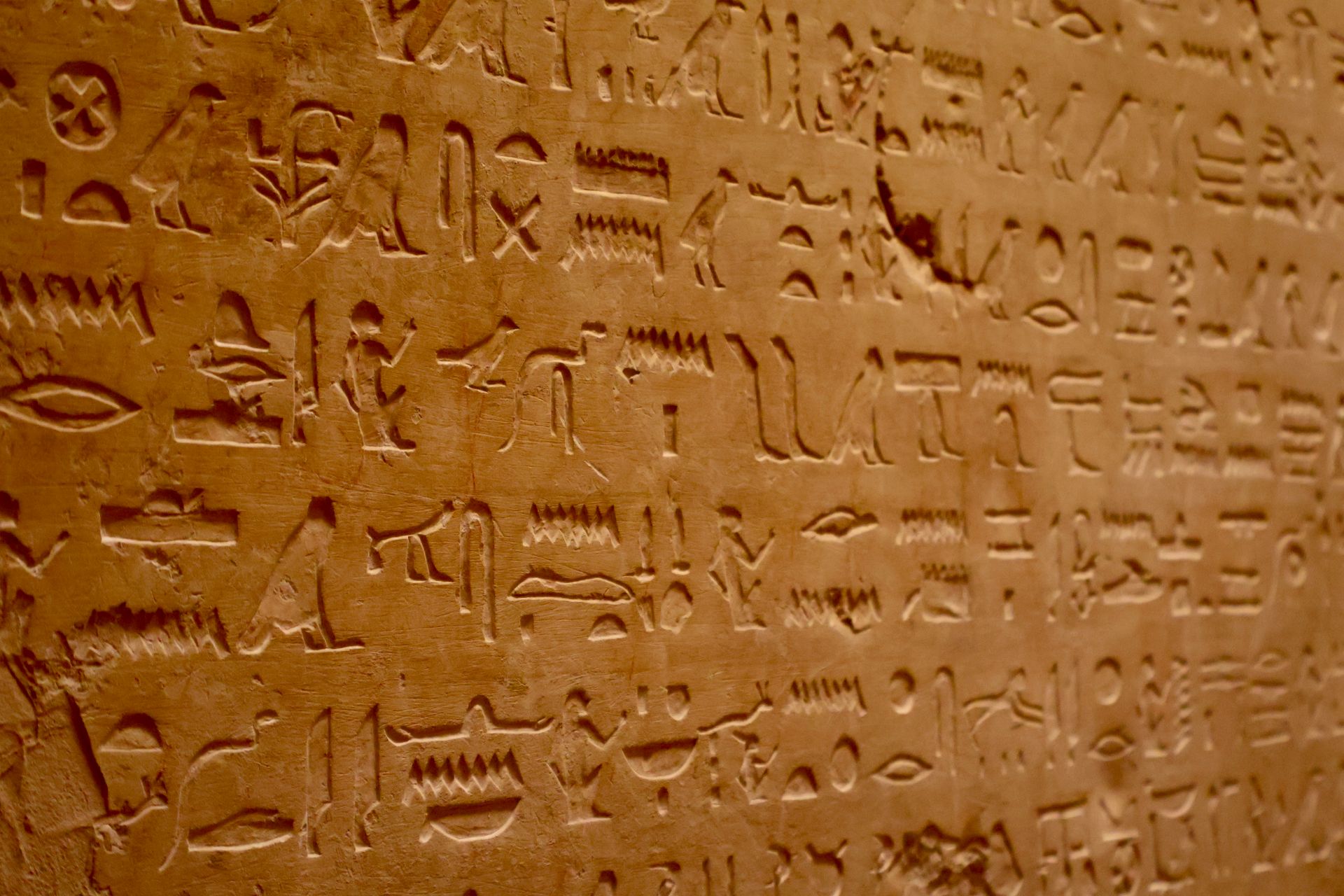
On this day: the 1799 discovery of the Rosetta Stone that unlocked hieroglyphs
On 15 July 1799, French soldiers rebuilding a fort near the Egyptian town of Rosetta unearthed a broken slab of stone. Inscribed with the same text in three different scripts, it would become the key that finally unlocked ancient Egyptian hieroglyphs after nearly two millennia of silence.