A jacket that harvests drinking water from the air: how UT Austin's research works

According to a research report from the University of Texas at Austin's news desk, picked up on Hacker News, a team in the mechanical engineering department has developed a portable jacket that can produce drinking water from atmospheric humidity. The design relies on a special hydrogel system that absorbs water from its surroundings and is built to be worn through the day.
The concept of atmospheric water harvesting is not new. Dew harvesting has been used in arid regions since the nineteenth century; modern solar stills date back to the 1950s. What is new is the development of smart materials — known as hygroscopic hydrogels — that bind atmospheric water and then release it on heating.
The material the UT Austin team has developed is a polymer-based hydrogel. It can absorb roughly 30 times its weight in atmospheric humidity, then release water vapour at low temperatures — above body temperature — and condense it into liquid water. The process can be driven by solar energy or by body heat.
The jacket's design highlights practical features. Hydrogel compartments are distributed across the back panel; over 12 hours it can produce about one litre of drinking water. Two side reservoirs hold the produced water, and a drinking tube sits at the shoulder. Total weight is about 1.5 kilograms — similar to a medium backpack.
Why a jacket? UT Austin researchers stress that access to portable water is a category of wealth. Today around 1.5 billion people live in regions without regular access to drinking-water infrastructure; a significant share is in semi-arid regions, especially the Sahel, the Middle East and South Asia. A garment-form device gives people the ability to move without that infrastructure.
The efficiency and limits are clear. The device works best when atmospheric relative humidity is above 30 per cent. In dry desert conditions — 10 to 20 per cent relative humidity — daily output may drop to 200 to 300 millilitres. The optimal temperature range is between 15 and 40 degrees Celsius. In wet or cold climates the device is less advantageous because drinking water is already more accessible.
On cost, the prototype production cost is reported at around 120 to 150 US dollars per jacket. The team is targeting 40 to 60 dollars once it enters series production. For comparison, a typical LifeStraw water filter is about 20 dollars; but LifeStraw needs an existing water source. The hydrogel jacket produces water from nothing.
Applications are broad. The first planned use is post-disaster emergency distribution — earthquake, flood and refugee-camp environments. The second use is extended outdoor activity — military operations, mountain expeditions and long-distance hikes. The third is as an agricultural water supplement for dry-region farmers.
The scientific competition is wide. The UT Austin team's work is being compared with parallel research at MIT — solar-powered cuboids and the Sorption-based Atmospheric Water (SAW) project — and with Berkeley's metal-organic framework (MOF) systems. Each sits at a different efficiency-cost point, but the underlying logic is the same: water from air.
The practical take-away for Vesper readers is that hydrogel technology is spreading rapidly not only into water harvesting but also into food packaging, drug release, agricultural irrigation and clothing. The UT Austin jacket is not yet commercial, but at prototype stage it is a concrete example of how wearable technology can address human water-access problems. For Türkiye's dry south-eastern regions, local hydrogel research stands out as a technology track that should not be missed in the next decade.
Read next

What is NASA's Deep Space Network? How it kept up with Artemis II
NASA's Deep Space Network keeps in touch with missions flying to the Moon and beyond through three giant antennas spread across three continents. Ars Technica explains how the system, which came close to breaking point during the Artemis II flight, held up and what that means for the future Artemis III and Mars missions.

Amazon data centres used 2.5 billion gallons of water: AI's hidden water footprint
Amazon's sustainability report has shown that its data centres consumed 2.5 billion US gallons of water last year. The Verge examined what that number means, which regions are bearing the load and how data centre water use should be measured in the age of artificial intelligence.
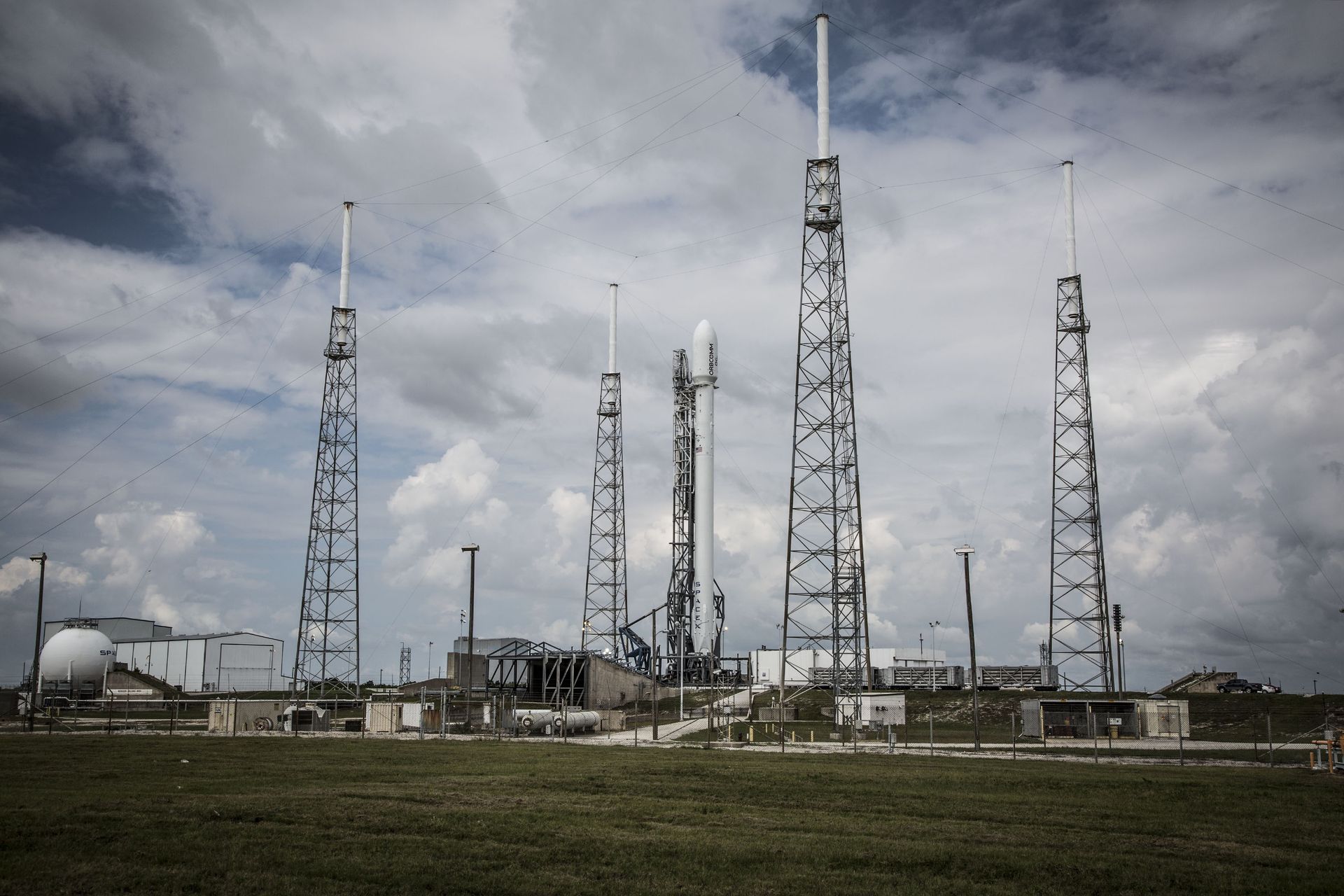
SpaceX prices shares at $135 in the largest IPO ever: what the listing means for the market
SpaceX has set its IPO share price at 135 US dollars, making it the largest stock-market debut by volume in history. TechCrunch reported the number of shares issued, the resulting company valuation and the position of existing SPV investors.
Jeff Bezos's Prometheus raises $12 billion to build an "artificial general engineer"
Jeff Bezos's new company, Prometheus, has said it has raised 12 billion US dollars to build an "artificial general engineer" that can run the design–build–test loop in the physical world end-to-end. TechCrunch reported the financing terms and the company's positioning against existing robotics and AI rivals.
How Wing's drone delivery moved from novelty to routine
Alphabet's drone delivery unit Wing has shifted, over the past year, from a TV story to a logistics watchlist entry. Operational figures reported by TechCrunch show drone delivery is no longer a novelty but a settled flow.