What is NASA's Deep Space Network? How it kept up with Artemis II

According to a wide-ranging analysis by Ars Technica, NASA's Deep Space Network — the DSN — came close to breaking point during the Artemis II Moon mission but ultimately "worked well." The episode has put on the agenda how critical the network is and how it must be renewed over the next decade.
What is the DSN? Three giant radio antenna complexes spread across three continents. Goldstone, California (United States); Madrid, Spain; and Canberra, Australia. The three sites are placed roughly 120 degrees of longitude apart so that, as the Earth rotates, a mission stays in communication with at least one antenna at all times. Each complex contains multiple dishes ranging from 34 to 70 metres in diameter.
Why such large antennas? Signals from deep space are extremely weak. Voyager 1, 22 billion kilometres away, transmits with only 22 watts of power; by the time the signal reaches Earth it arrives at about 10^-21 watts — about a trillionth of a mobile-phone signal. The bigger the antenna, the cleaner the signal it can pull in.
What happened during Artemis II? According to Ars Technica's reporting, the Artemis II flight put an unusually heavy load on the DSN because it demanded both high-rate telemetry (crew health data, system status) and high-bandwidth video and voice. When that coincided with other ongoing missions — the Mars rovers, the Voyagers, the James Webb Space Telescope — it produced serious reservation competition for the planning teams.
How did it hold up? The network's control centre at JPL booked missions in hourly slots. Some science data had to be deprioritised during Artemis II's high-demand windows. Adding one of the back-up 34-metre antennas raised capacity by 30 per cent at critical moments. As one NASA engineer cited by Ars Technica put it, "we were operating right at the upper edge of the system design."
The DSN's age is a problem. Some of the antennas at Goldstone date from the 1960s; even with a regular maintenance programme, the RF amplifiers, receivers and mechanical control systems are nearing end of life. An independent assessment published by NASA in 2024 put the modernisation need at around 4 to 5 billion US dollars but said current budgeting cannot cover that figure.
The options ahead are several. First, refurbishing the existing antennas. Second, building arrays of smaller, more numerous antennas — which is both cost-effective and lets parts of an array be taken offline for maintenance. Third, particularly for high-rate links, moving to optical (laser) communication. NASA's LCRD and DSOC pilot programmes are testing laser communication today.
International cooperation options include ESA's ESTRACK (three antennas in Europe) and JAXA's Usuda complex (Japan), which run mutual back-up arrangements with the DSN. The China Deep Space Network is being built as an independent network; for political reasons, there is no direct reservation-sharing with the United States. Türkiye benefits indirectly from ESTRACK capacity through its partnership with the European Space Agency.
On cost scale. A fully equipped 34-metre antenna installation costs about 100 to 150 million dollars; a 70-metre exceeds 400 million. Annual operating costs per complex sit in the 50 to 100 million dollar range. For comparison, the James Webb Space Telescope programme cost 10 billion dollars; the DSN is an infrastructure that supports mission communications continuously, not as a single hit.
The practical take-away for Vesper readers is that, as humanity prepares to return to the Moon and head to Mars, the space race is not only about rocket technology — communication infrastructure is just as critical. For Türkiye's space vision, ground station partnerships, antenna siting and data processing centres are long-term investment opportunities. The DSN's Artemis II performance is a clear warning that the system has reached the edge of its envelope and must be renewed.
Read next

A jacket that harvests drinking water from the air: how UT Austin's research works
Engineers at the University of Texas at Austin have developed a wearable jacket that pulls drinking water from atmospheric humidity. The design relies on a special hydrogel that absorbs water; it offers a broad range of applications from daily use to emergency settings.

Amazon data centres used 2.5 billion gallons of water: AI's hidden water footprint
Amazon's sustainability report has shown that its data centres consumed 2.5 billion US gallons of water last year. The Verge examined what that number means, which regions are bearing the load and how data centre water use should be measured in the age of artificial intelligence.
SpaceX prices shares at $135 in the largest IPO ever: what the listing means for the market
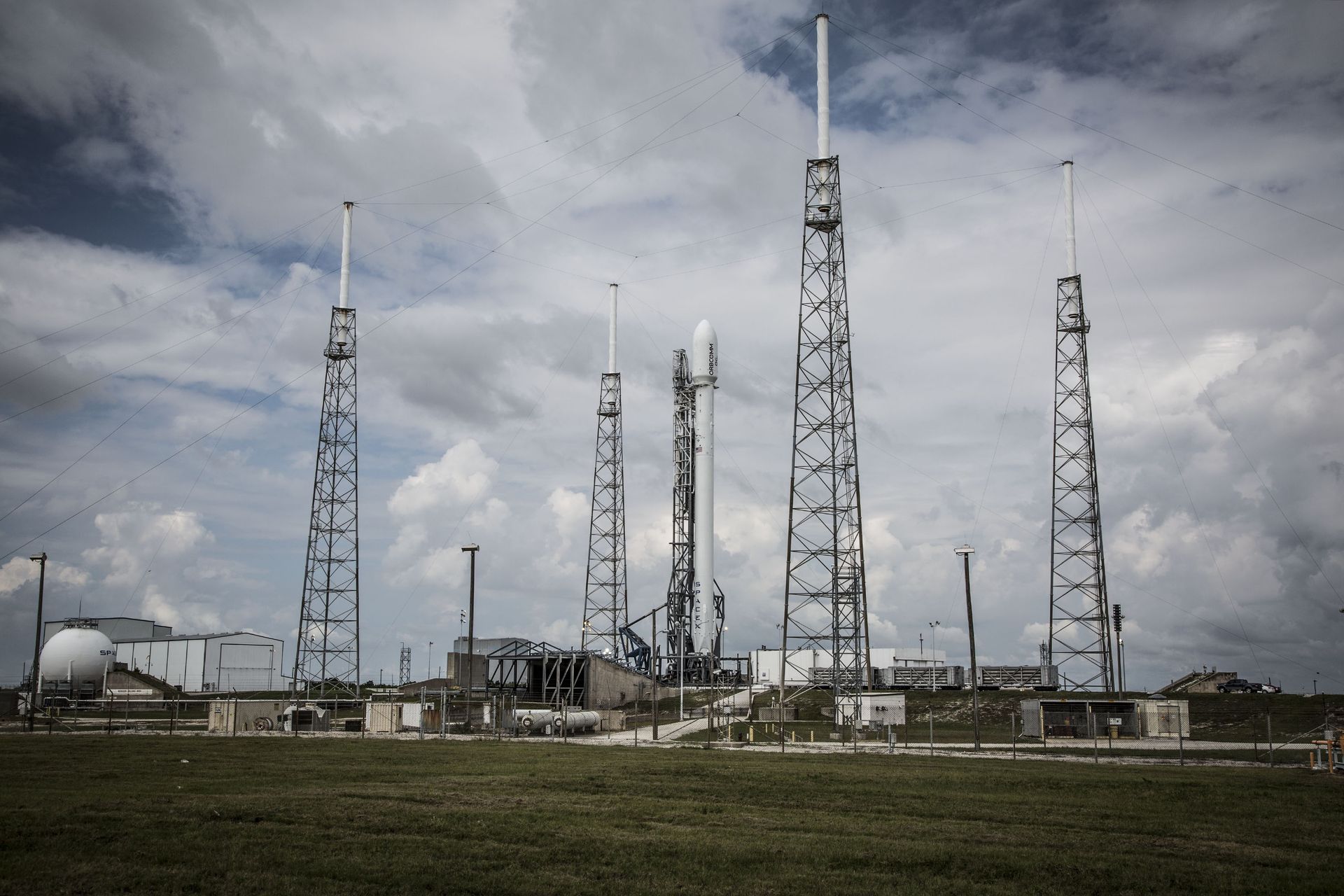
SpaceX has set its IPO share price at 135 US dollars, making it the largest stock-market debut by volume in history. TechCrunch reported the number of shares issued, the resulting company valuation and the position of existing SPV investors.
Jeff Bezos's Prometheus raises $12 billion to build an "artificial general engineer"
Jeff Bezos's new company, Prometheus, has said it has raised 12 billion US dollars to build an "artificial general engineer" that can run the design–build–test loop in the physical world end-to-end. TechCrunch reported the financing terms and the company's positioning against existing robotics and AI rivals.

How Wing's drone delivery moved from novelty to routine
Alphabet's drone delivery unit Wing has shifted, over the past year, from a TV story to a logistics watchlist entry. Operational figures reported by TechCrunch show drone delivery is no longer a novelty but a settled flow.