A history of the English alphabet: how 26 letters took shape
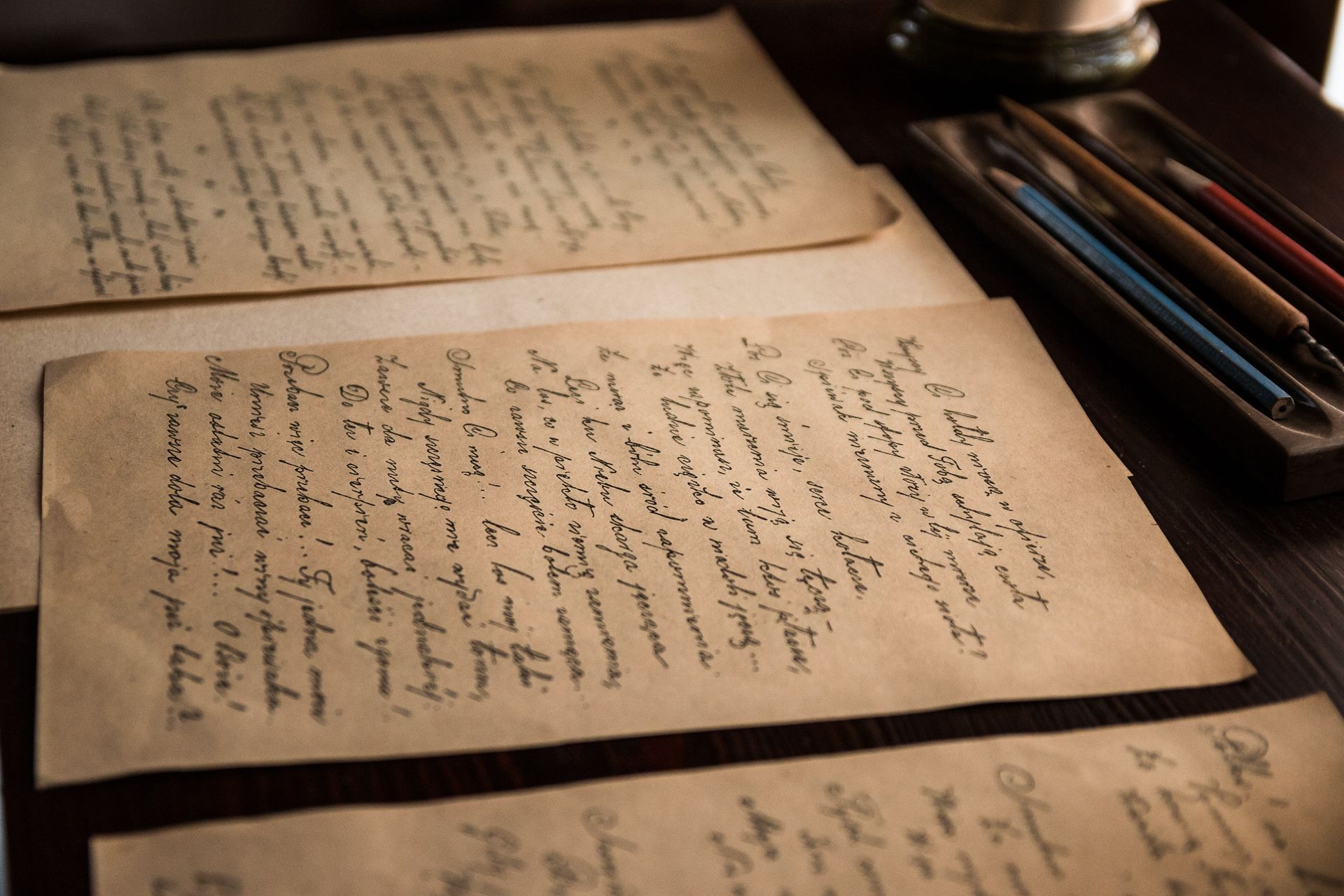
The 26 letters that English speakers rattle off from A to Z can feel timeless and inevitable, as though they had always existed in their current form. In fact the alphabet has a long and surprising history, one that stretches back thousands of years and across several civilisations, and that includes letters that were once used in English but have since vanished.
The story begins far from England. The distant ancestor of the alphabet emerged in the ancient Near East, where scribes developed the radical idea of using a small set of symbols to represent individual sounds rather than whole words or syllables. This early alphabetic principle was a breakthrough, making writing far easier to learn than systems with hundreds of characters.
From those origins the alphabet was carried and adapted by the Phoenicians, a seafaring people whose trade spread their script around the Mediterranean. The Greeks adopted and modified it, crucially adding letters for vowel sounds, which the earlier systems had largely left out. The Greek alphabet in turn shaped the writing of many later cultures.
The most direct ancestor of the English letters is the Latin alphabet of ancient Rome, itself derived from Greek by way of the Etruscans in Italy. As Roman power and administration spread across Europe, so did the Latin script, becoming the standard way of writing across much of the western part of the continent and eventually reaching the British Isles.
English, however, did not simply inherit the Roman alphabet unchanged. Old English, the language of the early medieval period, used additional letters to capture sounds that Latin had no symbols for. Characters such as thorn and eth represented the th sounds, while others, like wynn, stood for the w sound, giving early written English a look quite different from today.
Over the centuries those extra letters faded away. The arrival of printing, with type often imported from the continent that lacked the special English characters, hastened their decline, and printers substituted familiar combinations. The letter thorn, for instance, was gradually replaced, and its old form is the reason mock-antique signs sometimes write the word the as ye.
Other letters joined the alphabet late. The clear distinction between the letters i and j, and between u and v, developed only gradually, with the pairs long treated as variants of a single letter before settling into the separate forms used now. The letter w, as its name suggests, began as a doubled u. Such changes mean the neat 26-letter sequence is a relatively recent arrangement.
The order of the letters is itself a historical inheritance. The familiar sequence, from A through Z, was passed down largely from the Phoenician and Greek ordering, preserved through Latin and into modern usage, so that a child reciting the alphabet today is echoing a sequence set in place thousands of years ago.
Spelling and pronunciation add further complexity to the English case. Because the language borrowed heavily from other tongues and because its sounds shifted over time while its spellings often did not, the relationship between the 26 letters and the sounds they represent is famously irregular, a source of difficulty for learners and a subject of endless fascination for linguists.
Understanding this history changes how the alphabet looks. Far from a fixed and natural set of shapes, the 26 letters are the product of borrowing, adaptation and loss across millennia, carrying within them traces of ancient scribes, Roman engravers and medieval English monks. The next time someone recites their ABCs, they are running through one of the longest-lived inventions in human culture.
Read next

The Battle of Little Bighorn: why Custer's Last Stand still mystifies historians
A century and a half after the Battle of Little Bighorn, the 1876 clash in which Lieutenant Colonel George Custer and his men were defeated by a coalition of Native nations, historians still debate exactly what happened. Here is what the record shows and why questions remain.

On this day, 2 July 1937: Amelia Earhart vanishes over the Pacific
On 2 July 1937, the pioneering American aviator Amelia Earhart disappeared over the central Pacific during an attempt to fly around the world. Her fate remains one of aviation's most enduring mysteries, and her legacy shaped the place of women in flight.

The Black surfmen of Pea Island: the crew behind a legendary sea rescue
The Pea Island Life-Saving Station on North Carolina's Outer Banks was crewed by an all-Black team of surfmen who carried out one of the most celebrated sea rescues of the era. Their story, highlighted by Atlas Obscura, is a landmark in the history of the US Life-Saving Service.

How Pompeii was rediscovered: the story of the buried Roman city
The Roman city of Pompeii was buried by the eruption of Mount Vesuvius in AD 79 and lay hidden for centuries before being rediscovered and excavated. Its recovery transformed how we understand daily life in the Roman world, according to accounts of the site's history.

On this day, 1 July 1916: the first day of the Battle of the Somme
On 1 July 1916, the Battle of the Somme began in northern France, opening one of the largest and costliest battles of the First World War. Its first day is remembered as among the most lethal in British military history, and the campaign has come to symbolise the scale of loss on the Western Front.