The discovery that changed how scientists think about memory: a look at the 2026 Kavli Prize work

How memory works is one of the oldest questions in neuroscience. For decades researchers knew that short-term recall of an event runs on electrical signals while long-term recall depends on structural changes in synapses. This year's Kavli Prize in Neuroscience honours the work that built the bridge between the two: synaptic tagging. The IBM Think summary argues the discovery carries implications for basic biology and for AI design.
The three winners are Karim Nader of New York University, Richard Morris of the University of Edinburgh, and Ryohei Yasuda of the Max Planck Florida Institute. Over more than a decade their experiments showed how stimuli in the hippocampus are selected and which ones are transferred to long-term memory.
The core proposal is that when an event happens, synapses in the hippocampus undergo a brief molecular marking. The mark is not, on its own, durable on the scale of minutes; but if a second cue, a reminder or an emotional link arrives soon afterwards, the tagged synapse triggers protein synthesis and strengthens structurally. Untagged synapses fade.
The mechanism explains why we remember little of everyday life yet some moments persist in detail. A teacher's offhand comment is lost; an emotionally charged moment with the same teacher stays vivid decades later. Synaptic tagging says that second synapse was consolidated by an emotionally weighted event.
The most direct clinical application is post-traumatic stress disorder (PTSD). Karim Nader's classic 2000 Nature paper showed that memories are "re-consolidated" when recalled. That means under specific conditions a memory can be edited, an active research area in PTSD care. In trials, drugs like propranolol (a beta-blocker) given as a traumatic memory is recalled can reduce its emotional charge.
A second application is Alzheimer's disease. In the early stages, short-term memory is preserved but transfer to long-term memory is impaired. In Nader's model, the protein-synthesis pathways that enable that transfer are disrupted. This offers a molecular mechanism for why Alzheimer's patients cannot recall what they learned minutes earlier.
The AI angle is what IBM Think foregrounds. Today's large language models and neural networks have no equivalent of synaptic tagging. All training examples are weighted equally; AI lacks the "important vs trivial" distinction. IBM researchers argue the approach could inspire next-generation network architectures: selective memory activation, dynamic learning rates, a separate consolidation circuit for long-term knowledge.
This would address a real weakness of current AI: "catastrophic forgetting". A neural network trained on a new task can lose what it knew before. The human brain does not behave this way; we keep accumulating new things while preserving the old. Synaptic tagging offers a mechanism that may, in time, inform a fix.
Large AI labs including Google DeepMind and OpenAI are exploring this terrain. "Episodic memory" modules, replay-buffer designs and hybrid memory architectures draw conceptually on synaptic-tagging principles. The basic theoretical breakthroughs have not yet translated into substantial performance gains, but the direction of travel is consistent.
The Kavli Prize carries a $1m award. In their acceptance remarks, Nader, Morris and Yasuda stressed that the findings have implications far beyond neuroscience — for education theory, therapy and cognitive technology. For education, for example, it explains why spaced repetition outperforms a single long study block: each review reactivates the synaptic tag and triggers protein synthesis. That gives a biological basis to the popularity of "spaced repetition" learning technology.
The overall message is that the question of how memory works remains far from fully answered, but synaptic tagging is one of the most important theoretical advances of the past thirty years. As IBM Think notes, how far that theoretical advance reaches — into clinical care for PTSD and Alzheimer's, into AI and education technology — will become clearer over the next decade.
Read next

Can some coral reefs survive global warming? Scientists are racing to find them
Coral reefs are among the ecosystems most rapidly damaged by global warming. Ars Technica reports on the scientists searching for heat-tolerant coral colonies that could act as 'seed reefs' in the warmer oceans of the future.
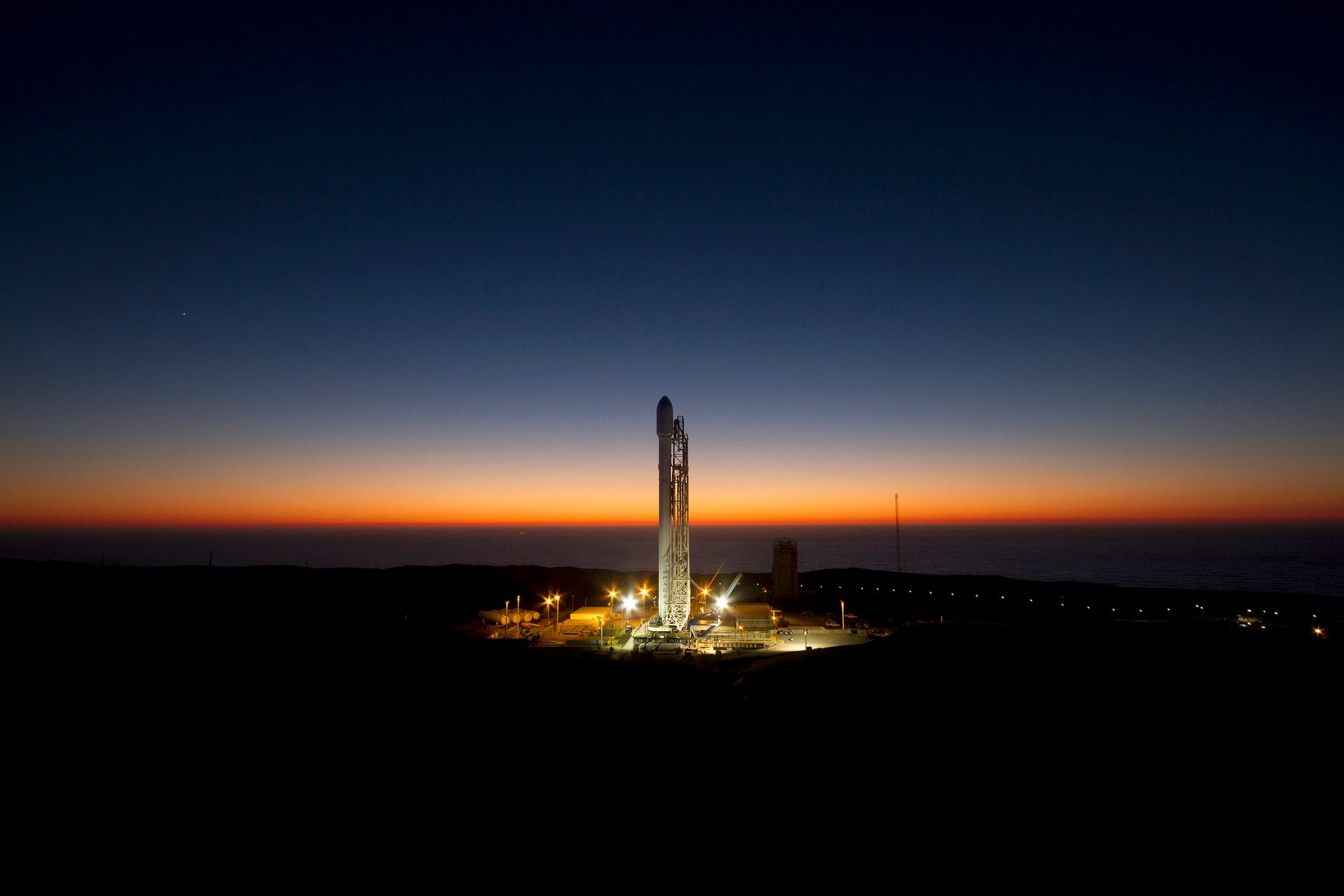
NASA picks Eric Schmidt's rocket company for a 2028 mission to Mars
NASA has picked Relativity Space — the rocket company former Google chief executive Eric Schmidt acquired in 2025 — to deliver its next low-cost Mars mission. The Verge says the $1.2bn contract targets a launch window in the summer of 2028.
Telegram ban in India sparks a rush to VPNs and rival messaging apps
India's ban on Telegram has driven tens of millions of users to VPNs and alternative messaging apps. TechCrunch reports the move has reignited a wider debate on content moderation and data compliance.
Every fusion startup that has raised over $100M: where private capital has taken nuclear fusion
TechCrunch lists the 14 nuclear fusion startups that have crossed the $100m fundraising mark. Total private capital in the sector now passes $9bn, with approaches ranging from magnetic confinement to inertial and hybrid designs.

Why is DuckDB so fast? Columnar storage, vectorised execution and a modern analytical engine design
The open-source analytical database DuckDB has become a standard component in data-science tool stacks over the past three years. A new technical post highlighted on Hacker News walks through the three core design choices behind the engine's speed — columnar storage, vectorised execution and zero-copy integration.
